The Shifting View on Anthropofagia
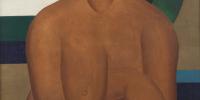
Tarsila is closely associated with the establishment of the Brazilian art movement known as cultural “cannibalism,” or “Anthropofagia”: the then-radical idea that a truly Brazilian art would emerge by ingesting all the different cultures that intermingled within the country, rather than simply copying European styles.
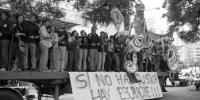
Faced with a lack of prosecution of those accused of crimes against humanity committed during Argentina’s military dictatorship, family members and descendants of the country’s estimated 30,000 disappeared took action.
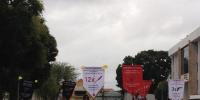
Acción #CronicaDaMorteAnunciada que consistió en la creación de 9 estandartes con informaciones sobre asesinatos a “País do Santo” para denunciar sus muertes por motivos de racismo afroreligioso en la ciudad de Belém, Brasil.
It has been a long and exhausting battle for the bike activists in Puebla one of the cities in Mexico. Collectives and activist groups have long pushed for including bike infrastructure around the city, in a horizontal, democratic way.
Regina Galindo is a Guatemalan performance artist that uses her body as a means to explore many of the human rights violations in Guatemala. In one of her performances, " no perdemos nada con nacer," or " we don't lose anything by being born," the artist "disposes" of herself in a plastic bag.
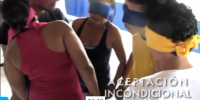
Students from the School of Communication and Art of the University of Sao Paulo perform a skit titled 'Blind Ones' as a protest against consumerism inside a shopping mall of Natal, capital of Rio Grande do Norte state, December 9, 2013.
Related Story:
Brazil shopping malls: New epicenter for social protest?
The starting point of this artistic project, carried out by MAPA within its Laboratory of Artists in Colombia, is the disappearance of one of the oldest "barrios" downtown Bogotá: El Cartucho.
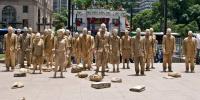
A troupe of approximately thirty women and men of various ages, sizes, ethnicities and performance backgrounds marched through the performance art space of SESC-Vila Mariana in Sao Paulo and then through the streets of downtown Sao Paulo, silent, blind folded, dressed in business attire, and covered completely with a gray mud. The performances walked slowly in unison at turtle's pace.
For over 60 years, Colombia has been facing war between guerrilla groups, the State, paramilitary groups and drug dealers. Hundreds of thousands of people have been killed, raped, displaced and threaten by this armed conflict. The common trait of this tragedy has been the people being in the middle, the people that still today pay the consequences.
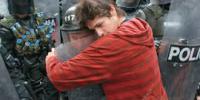
During 2011, students around Colombia decided to create a National Student organization that would organize thousands of them to reject a harmful educational reform (Reforma a la ley 30). Before this year, student organizations were characterized by their segmentarity and old fashion yet violent ways to protest.
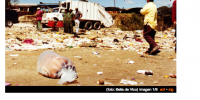
In 2008, my work as an artist took me to a gigantic landfill outside Rio de Janeiro called Jardim Gramacho. After operating for more than 30 years, the sanitary facility, once one of the largest in the world, had reached its maximum capacity and was on the eve of closing permanently.
From Public Delivery:
"The Land Mark series was a civil disobedience campaign. Over 2001 and 2002, Allora and Calzadilla, together with a group of activists, encroached into one of the United States Navy Bombing range in a beach of Vieques, Puerto Rico. The U.S. Military and NATO have used this location for various military exercises for more than 60 years.
Beating Cancer is a hard task. Cancer patients spend endless days in the hospital receiving a multitude of tolling treatments that we understand are necessary to save our lives. However, when you're a kid, it isn't always so easy to understand what's going on. As the chemo kills bad cancer cells, it also kills good cells in your body, which causes various unpleasant side effects.
A CUBAN artist's controversial photographs of children being hung from crosses has landed him in hot water.
Erik Ravelo took a series of photos of children hung like Jesus from a cross, but in the place of the cross were soldiers, surgeons, priests and Ronald McDonald.
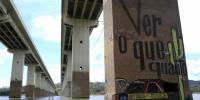
A grey minivan rattled through São Paulo’s hilly suburbs, loaded with spray cans, paint rollers, buckets and a ladder as five street artists drove to the Atibainha river, rap lyrics blaring from their speakers.
On the sweltering afternoon of 26 February, they painted colourful protest murals on the legs of a bridge that crosses one of São Paulo’s most important water sources, nestled in the Serra da Cantareira mountain range.
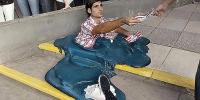
A young man melting into a puddle of himself is something you don’t see everyday, much less in a busy public square. Yet this humourous but surprisingly effective spectacle is the latest effort by the Red Cross of Argentina to raise awareness about climate change.
Sublevarte, a Collective of Mexican artists, was born out of the ENAP (National School of Fine Arts) of UNAM (the National Autonomous University of Mexico), during the student strike of 1999-2000, the longest student strike in history.
“It might not seem that an act of public laundry could unsettle a president with a well-deserved reputation for inflexibility, corruption, and brutality. But mass washing ceremonies were a key element in getting rid of Peru’s unpopular president, Alberto Fujimori, after more than a decade in power.
Many artists are inspired to bring climate change into their work after a direct experience with it. Catherine Sarah Young hopes her work helps people understand and talk about their experiences with climate change.
A converted school bus with the sawed-off top is taking Mexico City visitors on the "Corruptour", a visit to the country's seedy underbelly of murderous misdeeds and multibillion-dollar graft by public officials.
From this article: https://www.bbc.com/news/magazine-27632527
A campaign by one of Brazil's biggest football clubs to encourage fans to become organ donors has led to a massive rise in the number of life-changing transplants and reduced waiting lists for organs in the area almost to zero.
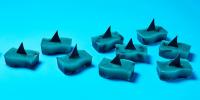
Vegan-friendly cosmetics brand LUSH is launching the “Shark Attack” campaign to save sharks from slaughter on World Oceans Day (June 8). Starting today, LUSH will re-launch its popular vegan Shark Fin Soap online (available in-store starting June 8) and donate 100 percent of the $5.95 sales price to The Rob Stewart Sharkwater Foundation, an organization created to continue the work of late ocean conservationist and filmmaker Rob Stewart.