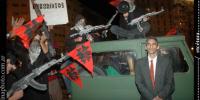
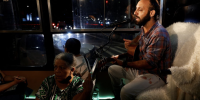
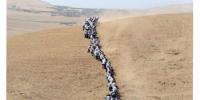
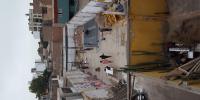
La Casa Negra is a moving artist squat that occupies houses destined for demolition as temporary venues for site specific performance art in Barranco (Lima, Peru). Artists use all of the available rooms (kitchen, bathrooms, stairs, backyard) to enact a series of critical art pieces, while using the space as a demonstration of artist resilience in an increasingly gentrifying neighborhood.
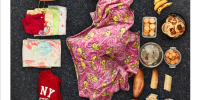
In response to an earlier project called "Daily Bread, Gregg Segal collaborated with the United Nations Refugee Agency to bring awareness to the crisis of refugees fleeing Venezuela through his project "Un-Daily Bread."
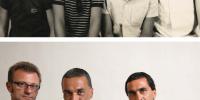
"On 17 December 1976, 18-year-old Eduardo Raúl Germano was abducted in Rosario, Argentina. Following the commemoration of the 30th anniversary of the 1976 coup d’état, Gustavo Germano, Eduardo’s brother, began working on the photography exhibition "Ausencias" (Absences). Born in 1964 in the Argentinean Province of Entre Río, Gustavo Germano started taking photographs of the journeys he made across Latin America in 1987.
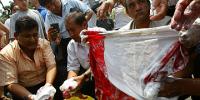
“It might not seem that an act of public laundry could unsettle a president with a well-deserved reputation for inflexibility, corruption, and brutality. But mass washing ceremonies were a key element in getting rid of Peru’s unpopular president, Alberto Fujimori, after more than a decade in power.
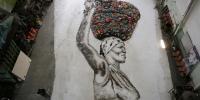
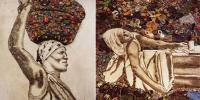
Over the course of 3 years, from 2006 until 2009, the production team behind the film Wasteland (2010), also known as "Lixo Extraordinário" followed Brazilian, Brooklyn-based mixed-media artist, Vik Muniz, as he traveled back to Brazil to create self portraits with the catadores (tr. garbage pickers) of Jardim Gramacho, one of the largest city dumps in the Americas.
This project consisted of an articulation between research, public policy and art. Corpovisionarios por Colombia was implementing a social change initiative in one of the poorest and most violents neighborhoods in Cali, Colombia. The demographic information showed that the most implicated population in the violence and murder cases were young men. They informed their masculinity through ideas of territory and its violent protection.
Spanish organization the ANAR Foundation (Aid to Children and Adolescents at Risk) releases a campaign that takes advantage of the process of lenticular printing to send an offer of help to abused children without alerting their abusers, even if they’re walking together.
Lenticular printing is a process that allows for different photos to be seen depending on the angle the image is viewed from.
SAO PAULO, May 16 (Reuters) - At one of Latin America's largest commuter bus terminals in Brazil's gritty downtown Sao Paulo, 84-year-old Rerizenil de Paula Santos waits on a bus decorated with neon lights and bright graffiti amid the hustle and bustle of rush hour.
“ARTICULO 6: narratives of gender, strength and politics” is an activist design project that aims to raise awareness about the case of forced sterilizations implemented during the government of Alberto Fujimori in Peru.
Five hundred volunteers with shovels gathered at a huge sand dune on the outskirts of Lima, Peru, and over the course of a day moved it by several inches. Alÿs developed the idea after first visiting Lima in October 2000. The political context was inescapable: “This was during the last months of the Fujimori dictatorship. Lima was in turmoil with clashes on the streets, obvious social tension and an emerging movement of resistance.
A group of young adults under the name of "Love Tijuana" (Amemos Tijuana) celebrated the one year "Birthday" of a pothole located at the Via Rapida (Tijuana's Freeway) with balloons, banners, and even hats.
In 2008, my work as an artist took me to a gigantic landfill outside Rio de Janeiro called Jardim Gramacho. After operating for more than 30 years, the sanitary facility, once one of the largest in the world, had reached its maximum capacity and was on the eve of closing permanently.
The Haitian Creole word "konbit" denotes the idea of similar talents joining together to work towards a common goal. The founders — a group of photographers, educators, and artists — came up with the idea for Fotokonbit a few years ago to "empower Haitians to tell their own stories and document their community", but it was the 2010 earthquake that gave the group new urgency.
ARTS/CULTURE
FOKAL is the hub in Haiti where locals and international visitors from all walks of life -- artists, writers, citizens, activists-- come together to discuss the most pressing nation- and community-building issues, enjoy cutting edge artistic expressions, and share their ideas.
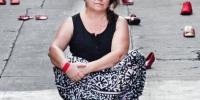
Elina Chauvet’s red shoes are worldly. They’ve been in Milan, Italy, and Grand Rapids, Michigan. Not just one pair, but hundreds — red boots, red heels, red toddler shoes. They’re not there to see the sights, but to take up space. Especially when the women or girls who would have worn them no longer take up any space, except in the lives of their loved ones.
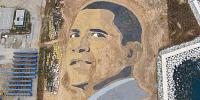
Jorge Rodríguez-Gerarda is a cuban Artist that was born in 1966. One of his projects was naed Expectations in which he did with sand and grave a massive image of Barack Obama, as a way to reflect all what this presidential candidate representated in terms of change.
On the 5th of May 2021, the subway's 12-line partially collapsed, killing 24 people and injuring more than 70. Onboard, were children, young women and men, and the elderly. The accident also killed a man and injured a woman who was driving a car, upon which the train fell.
The poorly conditions of the subway structure had been repeatedly reported by neighbors living nearby. No institutional response was given.
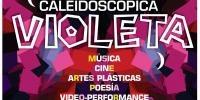
Caleidoscópica Violeta, is a creative space for reflection, dialogue, critique, and praxis of pop contemporary feminism. It is also an initiative that seeks to reflect on the role of women in the history of modern art. Historically, the role of women in art has been stolen by the patriarchy. Recognizing this as a feminist artist, I propose this festival as a way to open new spaces for women protagonists in the arts.
Beating Cancer is a hard task. Cancer patients spend endless days in the hospital receiving a multitude of tolling treatments that we understand are necessary to save our lives. However, when you're a kid, it isn't always so easy to understand what's going on. As the chemo kills bad cancer cells, it also kills good cells in your body, which causes various unpleasant side effects.
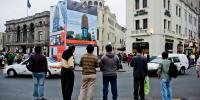
"Los Palcos del Descubridor" (The Discoverer's Box Seats) was a project created by Sebastian Burga and José Aburto in 2012 that consisted of a large-scale installation on the street and a media campaign on the Internet.
The work simulated the upcoming construction of an apartment building that would replace Lima's Teatro Colón, a historical landmark.
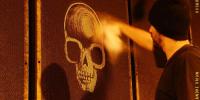
Visual artist Alexandre Orion removes soot in an artful manner to produce skulls in the tunnels of the polluted city of Sao Paulo. Orion does so in an attempt to create intervention, raise awarenes, and decrease pollution. "From the ocular cavities of so many dead, his work looks out on the living and interrogates people passing by; it quietly criticizes our omission, our comfortable acceptance of pollution." ( Jose De Souza Martins)
Directed by Fernando Sariñana, Todo el poder centers around the politics and corruption that shroud the Mexican police system. Featuring Demián Bichir as Gabriel, a filmmaker whose career has left him assaulted and robbed in broad daylight more times than he cares to remember, the film itself was inspired by Sariñana's personal experience with urban crime oftentimes perpetrated by the police themselves. ~ Tracie Cooper, Rovi
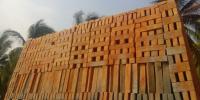
A wall will go up in Washington Square Park on Sept. 7, but come down by the end of the day.
Called “Muro,” this wall will be the artist Bosco Sodi’s first public installation in New York, in partnership with Paul Kasmin Gallery. It will be more than 6 feet high and about 26 feet long, made with 1,600 clay timbers fired in Oaxaca, Mexico.