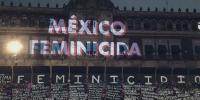
Ahead of Monday’s planned protest, police set up a barricade around the presidential palace, which a spokesperson described as a “peace wall” to prevent vandalism, the Guardian reported. But protesters said the barrier was symbolic of the president’s refusal to take on the issue, noting that he frequently makes a show of traveling in drug cartel-controlled parts of Mexico but felt unsafe ahead of their protest.
New York Times
January 28, 2012
By SIMON ROMERO
SÃO PAULO, Brazil — This mega-city’s authorities have waged war for years against what they call “visual pollution,” banning billboard advertising, demolishing abandoned skyscrapers and planning to raze concrete eyesores like the elevated highway known as the Big Worm.
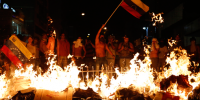
In Venezuela, the far right opposition has protested against the leftist regime of Maduro. Violence has swept through the capital, Caracas, and other cities throughout the country. Meanwhile, the Western world has had its eye on Ukraine, and received relatively little news coverage of what is actually going on in Venezuela. An epidemic of misinformation has spread as a result.
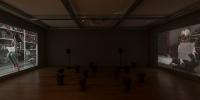
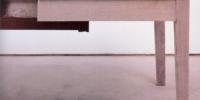
Doris Salcedo talked extensively with victims of the violence in Colombia. For the project titled Unland she spoke specifically with children who had witnessed the murder of their parents. This piece was a poetic response and representation of their testimony. Salcedo combined halves of tables together to make a whole. In the seam where the tables joined Salcedo meticulously sewed the tables together using white silk thread, dark hair and bone.
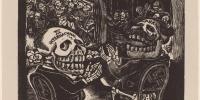
Born on June 30, 1902, in Mexico City, Leopoldo Méndez would become one of Mexico’s most significant and beloved graphic artists of the twentieth century. Méndez was one of eight children in a poor household. At a young age, Méndez used art as a means to bring joy to the Mexican community and attended the Academy of San Carlos located in Mexico City.
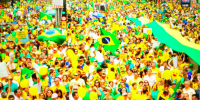
Vem Pra Rua is a nonpartisan, democratic, and pluralist movement that emerged in response to society’s fight for a better Brazil. Brazilians of all regions, social classes, and ages began mobilizing at the end of 2014—building on the 2013 marches that protested corruption, inequality, and other socio-economic and political problems.
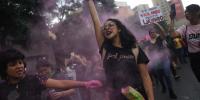
On August 16, 2019 thousands of women marched in various cities across Mexico. One particular case may have triggered them, but these marches were an answer to the systematic violence against women and girls in our country.
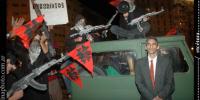
The notorious, wanted, and merciless leader of the Sinaloa drug cartel in Mexico,"Jouquin "El Chapo" Guzman, was captured by Mexican Marines last month. This marked a small victory for Mexico's fight to rid the country of its corrupted drug trade. How did this happen? Through intelligence of course, but let us remember Anonymous in Mexico.
Boricua artist Castorillo discusses the crisis, diaspora, and the enduring significance of the Young Lords Party for Puerto Rican social movements today using illustrations:
The following is a description of the action that Huffington post published online on 6/25/2011:
"Student demonstrators took to the streets of Santiago dressed as goblins and ghouls from Michael Jackson’s 'Thriller' video in their latest spirited pursuit of higher education reforms."
In São Paulo, just like in many other metropolitan regions, public transport is not as effective as it could be. Buses and trains usually run overcrowded, late and on limited hours, so that owning a car increases a lot one’s comfort. But not everybody can afford to have one, so a clear and recurrent class distinction occurs: public transport is mostly used by poor people.
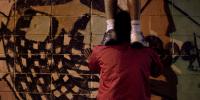
A grey minivan rattled through São Paulo’s hilly suburbs, loaded with spray cans, paint rollers, buckets and a ladder as five street artists drove to the Atibainha river, rap lyrics blaring from their speakers.
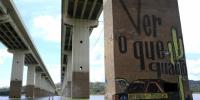
On the sweltering afternoon of 26 February, they painted colourful protest murals on the legs of a bridge that crosses one of São Paulo’s most important water sources, nestled in the Serra da Cantareira mountain range.
As part of USAID's "My Comunidad-Mi Agua" program in Peru, "Pamparadio" was a radio show run by two adolescents from the community of Iquitos, a jungle province. Armed with a gigantic speaker on the top of a community center and an AM radio frequency, Marco Jhastin Anchec and Cledy del Aguila Mozombite single-handedly ran "Pamparadio" as a celebration of potable water, how to make it, and how to take care of it.
The Search for Identity in a Country of ‘Disappeared’
By Marcela Valente
‘Theatre for Identity’ is the theme of a novel undertaking in the Argentine capital, where 41 plays are being put on every Monday in 14 theatres.
Six months before Hurricane Maria wreaked havoc in the Caribbean, a group of Puerto Rican artists were invited to participate in a residency program in Miami by local art organizations. The artists were offered abandoned storefronts-turned-studios at a historic downtown mall, where they’d exhibit their work during Miami Art Week in December to engage an art world that often overlooks the island territory.
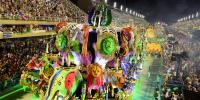
"A week-long party characterizes Brazil’s Carnival, the Mardi Gras of the southern hemisphere. Celebrations and parades are held throughout the country, most notably in the city of Rio de Janeiro and the Brazilian states of Bahia and Pernambuco. Carnival celebrations vary in length and content, depending on the area.
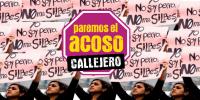
This is an organization and online platform that registers cases of street harassment in Peru and disseminates information about the subject. People can report cases and get in touch with the organization to talk or learn more about what to do when being sexually harassed.
It was October 31st, 2012, when a new artist appeared on social media. In a series of video clips, she proposed with a soft and slow speech that Peru hide its poverty. Her project consisted of installing vinyl pieces to avoid what she called "the visual pollution." She titled the project Don't be poor, be fashion(able).
The starting point of this artistic project, carried out by MAPA within its Laboratory of Artists in Colombia, is the disappearance of one of the oldest "barrios" downtown Bogotá: El Cartucho.
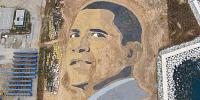
Jorge Rodríguez-Gerarda is a cuban Artist that was born in 1966. One of his projects was naed Expectations in which he did with sand and grave a massive image of Barack Obama, as a way to reflect all what this presidential candidate representated in terms of change.
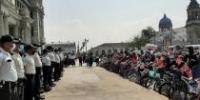
Non-profit organizations and a multitude of Guatemalan girls protested together demanding justice and security from the government. Guatemala's insecurity and cases of girls' disappearances have increased over the years. The protest started outside the Government Ministery (Ministerio de Gobernación) early in the morning, where protestors gathered riding their bikes.