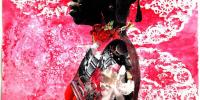
Drama Queens Ghana's “MoonGirls” is an Afrofuturistic graphic novel series. Through an Afrofuturistic lens, “MoonGirls follows the adventures of 4 African "supersheroes" with varying superpowers to save the world from a diverse range of forces; from patriarchy, rape culture to pollution and global warming.
The term “Afrofuturism” was coined in the 1990s by the cultural critic Mark Dery, who recognized a preoccupation with the future in the work of a number of black artists. Ever since, it has remained a term that is retrospectively applied to seemingly disparate artists, from Missy Elliot to Toni Morrison. What unites the movement is a shared fascination with the black experience, particularly in America.
Mandela's notion of manhood changed over time. In the early days, he evoked the image of toughness to deal with an enemy that would not respond to reason. When it became possible to secure peace through talking, Mandela adapted. After his release his image was one of warmth and inclusiveness, embracing those who feared majority rule and even his former enemies.
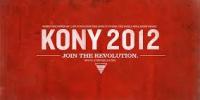
In 2004, the United Nations called the LRA crisis in northern Uganda the “most forgotten, neglected humanitarian emergency in the world.” Invisible Children was founded to change that and to fight against the false notion that our responsibility to each other stops at our own nations’ borders.
Can you finish the lyric? “Your driver could be LGBTQ, Your Tailor could be LGBTQ,…” If you can’t, you may be a part of the majority who doesn’t know about the song Wo Fie. However, for those in the LGBTQIA+ community, and followers of Ghanaian musician Angel Maxine, the song has become a Pride month anthem.
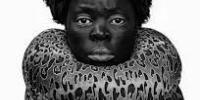
Zanele Muholi, the self-proclaimed visual activist and photographer, investigates the fraught relationship between post-apartheid South Africa and its queer community, who, despite being constitutionally protected since 1996, remain a constant target of abuse and discrimination.
In the Democratic Republic of Congo or DRC, sexual violence is a community-wide problem. Rape, in the DRC has been used as a weapon of war and sadly continues to increase even after. According to the peacebuilding NGO Search for Common Ground or SFCG, it is estimated that there are over 400,000 surviving rape victims living in the DRC today. In this environment violence against women has become normative behavior.
On April 15 in northern Nigeria, 200 school girls aged 15-18 were kidnapped by an extremist Muslim group called Boko Haram, whose name in the Hausa language means “Western education is a sin.” In hopes of viral pressure on Nigerian authorities to try to recover the girls, campaigns have started on the White House website, on Change.org and on Facebook to demand: “Bring Back Our Girls.” The campaigns quickly gained global attention, with Michelle Obama,
Created a platform to showcase disparities that are therein in public basic schools verses the private schools.
Simple a call to duty bearers to act on the deplorable physical learning environment existing in the public schools , because the environment impacts teaching and learning.
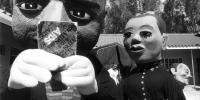
"Puppets Against Aids was launched by Gary Friedman on 1st December 1988 in time for 'World Aids Day' in Johannesburg, South Africa. During 1987, Friedman had been studying with Muppet master, Jim Henson, in Charleville-Mézières, France. Henson provided the initial financial contribution to launch the African Research and Educational Puppetry Programme 'Puppets Against Aids'.
Godfrey Mwampembwa, popularly known as Gado, has been holding politicians accountable for nearly 30 years. Now, his concern has shifted to the coronavirus.
In a quiet office on the third floor of a building in Nairobi’s central business district, the cartoonist known by his pen name, Gado, was sketching a satire about the coronavirus.
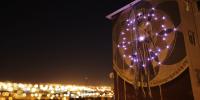
In Cape Town, South Africa the design firms Design Indaba Trust and Thinking have teamed up with artist Faith47 to help raise funds to bring more light to their urban city. Their goal is to raise funds to light up 700 meters of Manwabisi Park, which will ultimately reduce the crime rate in the area through more light. In order to get the community involved in the project, they have combined street art with community engagement.
The collective Ndaku Ya La Vie Est Belle, a group of Kinshasa street performers turn their bodies into living sculptures, and use them to political ends. Among the artists is Jared, who regularly takes to the streets dressed as Robot Annonce. The costume, made from broken radio parts, is designed to raise awareness of fake news. “People receive so much incorrect information and many inaccuracies are spread. I want to fight this,” says Jared.
In an endeavor to raise awareness at the local and international level, Razia organized the Mifohaza Masoala (Wake Up Masoala) music and environmental festival, which took place at the edge of the Masoala Rainforest in October 2011. The concert featured some of Madagascar’s most thrilling performers, and the festival was a tremendous success, with over 10,000 people in attendance.
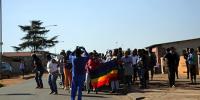
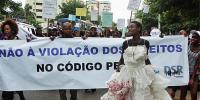
Rights activists in Mozambique have marched through the capital Maputo to protest a colonial era law still included in new legislation that allows rapists to go unpunished if they marry their victims.
The "marriage effect" clause sees convicted rapists given a five-year suspended sentence if they marry their victims and stipulates that the perpetrator should stay married to the victim for at least five years.
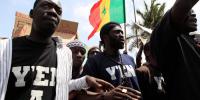
"Y’en a Marre (“We're Fed Up") first emerged in 2011 as a grassroots campaign against injustice and inequality in Senegal. Spearheaded by the hip hop group Keur Gui Crew in response to local power outages, the nascent protest movement went on to mobilize against the controversial bid by Senegalese president Abdoulaye Wade to remain in office for a third term.
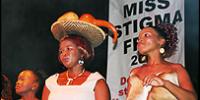
To change Bostwana’s regional misconceptions about HIV, Kesego Basha-Muebli, founded the Miss HIV stigma free pageant. A pageant designed for women who are currently receiving health and wellness counseling and HIV antiretroviral treatment to come out to their friends and family as being HIV positive.
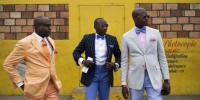
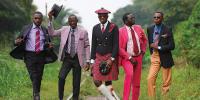
Their name, Sapeurs, comes from the French slang se saper, meaning to dress with class, but also from the acronym of their social group : La Société des Ambianceurs et des Personnes Élégantes (the Society of Ambianceurs and Elegant Persons). La Sape can be traced back to the early years of colonialism.
In Women Are Heroes, JR introduces women who sometimes look death in the face, who go from laughter to tears, who are generous, have nothing and yet share, who have had a painful past and long to build a happy future.
When can fashion be considered an act of social activism — even subversion?
The streets of Brazzaville, Republic of the Congo’s capital (Congo-Brazzaville), have seen plenty of violence and suffering over the years. But a group of local fashionistas known has “sapeurs” are lifting spirits and celebrating life by following a simple commandment: Dress to impress.
I am a visual activist. Most of what I have done over the years focuses on black LGBTQIA+ and gender-non-conforming individuals from South Africa and other neighbouring countries. It’s about making sure we exist in the visual archive. I call myself a visual activist — or, rather, a cultural activist, because this work is not only about the arts; I’m focusing on education, I’m dealing with culture in a way that confronts a number of issues.
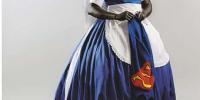
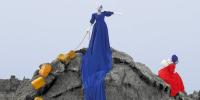
The work of South African artist Mary Sibande tells the tale of her alter-ego Sophie, a domestic worker who finds refuge in dreams where she emancipates herself from the ghoulish realism of an ordinary existence, cleaning other people's homes.
Exploring the construction of identity within post-apartheid South Africa, Sibande's work probes the stereotypical contextualisation of the black female body.
ONGOING ORGANIZATION:
CALLED: Iranti [pronounced írantì] is the Yoruba word for ‘memory’. Largely found in South West Nigeria and parts of Benin Republic, the Yoruba people consider memory a prized form of intelligence which determines how often one remembers what they see and hear.
Although we are in the supposedly modern and advanced year of 2020, there are still at least 500 million women and girls that lack adequate facilities for menstrual hygiene management, according to the World Bank Organization.
“Most people can’t imagine a futurist Africa,” says Ethiopian photographer Aïda Muluneh. She challenges this in her project, Water Life, exploring real-world issues with an otherworldly twist.
Muluneh went to Dallol, Afar, Ethiopia, an extreme landscape where it is dry and hot to capture the essence of water to life. Through her work, Muluneh highlights how water scarcity is mainly a burden on women.