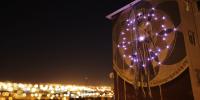
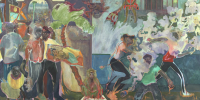
In Cape Town, South Africa the design firms Design Indaba Trust and Thinking have teamed up with artist Faith47 to help raise funds to bring more light to their urban city. Their goal is to raise funds to light up 700 meters of Manwabisi Park, which will ultimately reduce the crime rate in the area through more light. In order to get the community involved in the project, they have combined street art with community engagement.
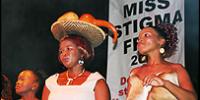
To change Bostwana’s regional misconceptions about HIV, Kesego Basha-Muebli, founded the Miss HIV stigma free pageant. A pageant designed for women who are currently receiving health and wellness counseling and HIV antiretroviral treatment to come out to their friends and family as being HIV positive.
The Green Belt Movement (GBM) was founded by Professor Wangari Maathai in 1977 under the auspices of the National Council of Women of Kenya (NCWK) to respond to the needs of rural Kenyan women who reported that their streams were drying up, their food supply was less secure, and they had to walk further and further to get firewood for fuel and fencing.
Djerbahood Project, which took place during the months of July and August on a small island called Djerba and is located in the Gulf of Gabes. Better known as the island of dreams, the tiny village of Djerba boasts a traditional and authentic Tunisian setting which acted as a blank canvas for hundred and fifty street artists from thirty different countries.
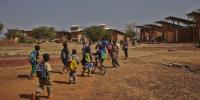
Not far from the Burkina Faso capital of Ouagadougou, approximately 30 kilometers, lies Operndorf Afrika, a village that’s governed by art and a global exchange of culture.
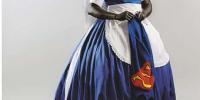
The work of South African artist Mary Sibande tells the tale of her alter-ego Sophie, a domestic worker who finds refuge in dreams where she emancipates herself from the ghoulish realism of an ordinary existence, cleaning other people's homes.
Exploring the construction of identity within post-apartheid South Africa, Sibande's work probes the stereotypical contextualisation of the black female body.
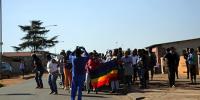
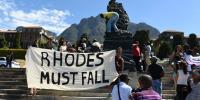
This series of protests began on the UCT campus in an effort to remove the bronze statute of Cecil Rhodes in the center of campus due to the belief that Rhodes represents the oppressive colonization of South Africa that eventually led to apartheid.
Can you finish the lyric? “Your driver could be LGBTQ, Your Tailor could be LGBTQ,…” If you can’t, you may be a part of the majority who doesn’t know about the song Wo Fie. However, for those in the LGBTQIA+ community, and followers of Ghanaian musician Angel Maxine, the song has become a Pride month anthem.
Zanele Muholi, the self-proclaimed visual activist and photographer, investigates the fraught relationship between post-apartheid South Africa and its queer community, who, despite being constitutionally protected since 1996, remain a constant target of abuse and discrimination.
Made by Danish filmmakers Lotte Løvholm, Karen Andersen & Nanna Nielsen, Lagos in the Red follows Nigerian performance artist Jelili Atiku. Atiku uses his body as a prop as a means of sensitizing people to the problems that Nigeria - both as a people and a country - face.
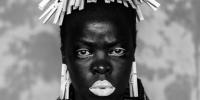
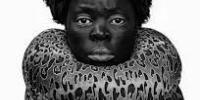
In the portrait Bester I, Mayotte, the sitter’s eyes stare directly at the camera, practically boring a hole in the lens. Their lips are painted white, their hair and ears adorned with clothespins. The self-portrait of Zanele Muholi is striking on its own, but it does not stand alone.
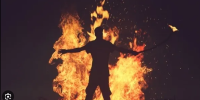
A video that was first posted on X (formerly Twitter) on November 8, of a Congolese man setting himself on fire has gone viral. The gruesome clip has started a discussion on whether a genocide is occurring in the DRC and is being ignored by both Africa and the rest of the world.
Although we are in the supposedly modern and advanced year of 2020, there are still at least 500 million women and girls that lack adequate facilities for menstrual hygiene management, according to the World Bank Organization.
What is it like living with AIDS? This heart-wrenching video for South Africa’s Topsy Foundation brings us through 90 hard days in the life of someone living with it. Be sure to watch it all the way to the end. It’s worth it:
Did you catch that? If you didn’t, watch it again. Spoiler after the jump.
ONGOING ORGANIZATION:
CALLED: Iranti [pronounced írantì] is the Yoruba word for ‘memory’. Largely found in South West Nigeria and parts of Benin Republic, the Yoruba people consider memory a prized form of intelligence which determines how often one remembers what they see and hear.
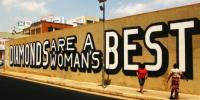
Africa has had a devastating history of blood diamond wars. Blood diamond refers to a diamond mined in a war zone and then sold to finance an invading army's war efforts, usually in Africa where more than two-thirds of the worlds diamonds are extracted.
This site specific social / political word play was painted on the exterior wall of Johannesburg's largest diamond trader Jewel City.
Joseline de Lima was wandering the dusty alleys of her working-class neighborhood in the capital of Togo one day last year, when a disturbing thought crossed her mind: Who would take care of her two boys if her depression worsened and she were no longer around to look after them?
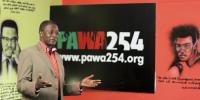
Kenyan-based photographer Boniface Mwangi has captured his country's political and civic turmoil since the controversial presidential election in 2007. The violence and disorder he witnesses daily motivated him to take action, setting up a creative hub for activism called PAWA 254.
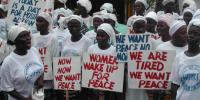
Pray the Devil Back to Hell is the extraordinary story of a small band of Liberian women who came together in the midst of a bloody civil war, took on the violent warlords and corrupt Charles Taylor regime, and won a long-awaited peace for their shattered country in 2003.
One of the most pressing questions before us in the United States now is how to resolve the tension between our personal visions and needs, on the one hand, and the demands of being a member of a community, on the other.