For more than 30 years, the Guerrilla Girls have travelled the world exposing sexism and inequality in the art industry, and this week they proved Hong Kong was no exception.
Three members of the anonymous feminist collective—calling themselves Frida Kahlo, Käthe Kollwitz and Zubeida Agha—spoke at the University of Hong Kong on Monday, dressed in their signature black outfits and gorilla masks.
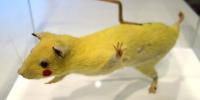
Chim↑Pom, a Tokyo-based art collective, garnered significant attention with their provocative project "Super Rat," which debuted in 2011. This work involved capturing urban rats from Tokyo's bustling Shibuya district, taxidermying them, and transforming them into real-life representations of Pikachu, the iconic character from the Pokémon franchise.
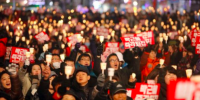
The dramatic demonstration of people power on the streets, called the “Candlelight Revolution,” was sparked off by President Park’s abuse of power and corruption. She had shared classified information on state affairs with her close confidantes, including Ms.
"100 Questions About Sex from Children" is an annual touring sex education exhibition founded and curated by Se A, a leading advocate of inclusive sex education in China. Since its launch in 2021, the exhibition has been held in major cities such as Shenzhen and Guiyang, with plans to expand into regions where sex education and gender awareness remain underdeveloped.
Art of the Umbrella movement refers to artistic works created as part of the Umbrella Movement in Hong Kong which demanded democracy in the election of the territory's top leader. Most of the physical works of art are located within the three main protest sites of Admiralty, Causeway Bay and Mong Kok.
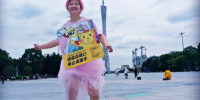
In March 2016, Chinese feminist activists had planned to launch a crowdfunding campaign against sexual harassment advertisements, and they worked hard to raise 40,000 yuan in a month and a half. However, after perfunctory, evasive, and rejection by the relevant departments, anti-sexual harassment advertisements finally failed to go online.
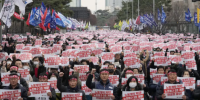
In Seoul, thousands of protestors who represent organized labor marched in Seoul on Saturday denouncing the governments attempt to force thousands of striking truckers back to work after they all walked out over a dispute in the price of freight.
In Cut Piece—one of Yoko Ono’s early performance works—the artist sat alone on a stage, dressed in her best suit, with a pair of scissors in front of her. The audience had been instructed that they could take turns approaching her and use the scissors to cut off a small piece of her clothing, which was theirs to keep. Some people approached hesitantly, cutting a small square of fabric from her sleeve or the hem of her skirt.
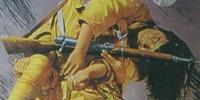
Chen Boer's first heroine film, which she co-wrote and directed, was "Daughter of China," about female soldiers in the Northeast Anti-Japanese United Army. They didn't have much filmed material at the time, but as a feminist, Chen Boer clearly wanted to record the sacrifices and contributions of Chinese women in the War of Resistance against Japanese Aggression.
Better Cotton Initiative (BCI) was registered in 2009 and headquartered in Geneva, Switzerland. It is a non-profit international membership organization with representative offices in China, India, Pakistan, and London. It has more than 400 member organizations around the world, mainly including cotton growers, cotton textile enterprises, and retail brands. The group aims to promote what it calls "Better Cotton" around the world.
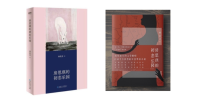
Fang Si-Qi’s First Love Paradise, a 2017 novel by Taiwanese writer Lin Yi-han, has become one of the most haunting and politically charged literary works in the Chinese-speaking world. Although presented as fiction, the novel closely mirrors Lin’s own lived experience of being groomed and sexually abused by a private tutor during her adolescence.
In a private Tokyo dinner party artist Mao Sugiyama served his genitals to five of the events guests. Several months prior to the event he chose to have his genitals surgically removed. He released invitations to the event on social media, 70 paid attendees were present for the event.
Self-identifed as asexual, Sugiyama stated that he intended to raise awareness for "sexual minorities, x-gender, asexual people."
She seeks to utilize her feminist art to spread awareness on mental health issues. Sravy is a nomad in her own right, and throughout her experiences in Asia she has noticed that there are stimas surrounding women's autonomy and how they handle mental health struggles.
In time for the 30th Anniversary of the famed EDSA People People Revolution, a two-day pop-up museum in Camp Aguinaldo serves as a vivid reminder of a significant period in Philippine History.
The interactive museum, which is composed of nine halls, recreates the martial law victims’ struggle for democracy, including the events that led to the bloodless revolution in 1986.
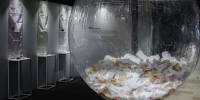
March 20, World Sleep Day is approaching, Chongqing Fuling wine town square placed 2 transparent sleep house, staff in the form of performance art to call on people to "put down the phone, sleep at ease". It is reported that the purpose of World Sleep Day is to make people pay attention to the importance of sleep and sleep quality, to remind people to pay attention to sleep health and quality.
Gao Yaojie (Chinese: 高耀潔, Gao Yaojie; 19 December 1927 – 10 December 2023) was a Chinese gynecologist, academic, and AIDS activist based in Zhengzhou, Henan, China. Gao was honoured for her work by the United Nations and Western organizations whilst spending time under house arrest.
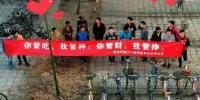
“Girl’s Day” in China was supposed to be a way for boys on college campuses to show the girls how much they care. This year it went too far.
Have you heard about “Girl’s Day?” It’s a big holiday for Chinese college students. Every year on March 7, students throughout the country celebrate the day as a campus version of International Women’s Day.
Direct Cause: The event that on November 24, several people died in a fire in a residential building in Urumqi, Xinjiang province, due to delayed disaster relief due to the COVID-19 lockdown policy in China, and the indifference of the government towards the incident and the block of message.
Primary Cause: The three-year-long lockdown policy and the government’s excessive control over speech and thought led to social discontent.
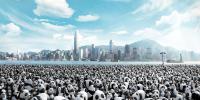
Grangeon's long-running traveling exhibit, Pandas on Tour, features 1600 papier-mâché pandas. That's approximately one for as many as there are left in the world (recent estimates actually place the number slightly below that, at 1596).
China's underground hiphop became an art movement since early 2000s. With characteristics of self-expression, localization and social criticism, Chinese hip hop music quickly gained popularity among students and working-class Chinese. Some notable music groups from Beijing include Yin Ts'ang (隐藏) and In3er (阴三儿).
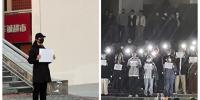
Late last month, Chinese citizens took up a creative means of protest over the nation’s strict “zero-COVID” policy. In a place with little tolerance for large public demonstrations, protesters have been holding up blank pieces of paper. Their ingenuity inspired a local artist Yolanda He Yang to stage a public art demonstration to subtly communicate their dissent.
It can be important to reflect on the artistic recounts of activists experiences under state imprisonment. In a revealing interview with Artspace, Chinese artist and dissident Ai Weiwei reflects on his 81-day secret detention in 2011 and the psychological strategies used to dismantle identity and autonomy.
“I am a silkworm.” Liang Shaoji has repeatedly used this phrase to describe his work, underscoring his preoccupation with the materiality of silk and the technology of sericulture, or silk farming. For more than twenty-five years, Liang Shaoji has raised silkworms and trained them to spin silk onto different objects in his Nature series.
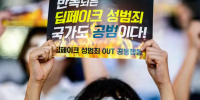
A few dozen women, wearing white masks, held up signs protesting against pornographic deepfakes. On the afternoon of Friday, August 30, several South Korean feminist collectives demonstrated in Seoul to fight these sex crimes that are flooding the country.
“Rose Boy” (玫瑰少年) refers to Yeh Yung-chih, a 15-year-old junior high school student in Taiwan who died on April 20, 2000, after years of bullying due to his non-conforming gender expression. Though the official cause of death was ruled accidental—he allegedly slipped in a school bathroom—the circumstances surrounding his death, including prior complaints from his mother about repeated verbal and physical harassment, drew widespread public attention.