It can be important to reflect on the artistic recounts of activists experiences under state imprisonment. In a revealing interview with Artspace, Chinese artist and dissident Ai Weiwei reflects on his 81-day secret detention in 2011 and the psychological strategies used to dismantle identity and autonomy.
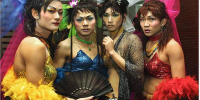
The documentary film "The Two Lives of Li Ermao" recorded the bumpy life experience of a transgender Li Ermao and her unique and moving story.
"Others only live one life, I live two." Looking back, the "two lives" are not only the emotional disillusionment and the swing of identity that Li Ermao has experienced in the past 17 years, but also her helpless but accurate summary of her life.
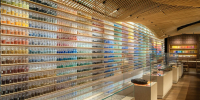
Established in 2015 in the Tennōzu neighborhood of Tokyo, and attracting industry professionals and art enthusiasts from both Japan and abroad, PIGMENT TOKYO has emerged as an art supply store specializing in the materials and tools used in traditional Japanese painting, such as mineral pigments, washi paper, and brushes. However, it’s more than just a store.
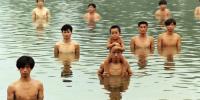
Zhuang Huan invited more than 40 men - laborers, fishermen, construction workers––who had recently migrated to Beijing from other areas of China to participate. Zhang Huan said, “In order to find these workers, I visited many of the shacks where they live.”
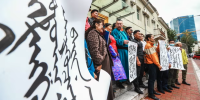
Thousands of ethnic Mongolians have protested across northern China in opposition to Beijing plans to replace the Mongolian language with Chinese in some school subjects.
Japan has begun discharging nuclear wastewater into the ocean four times a year, each time lasting 17 consecutive days. Under their 30-year plan, it is estimated that approximately 1.34 million tons of wastewater from the Fukushima nuclear power plant will be released into what was once a clean and fertile sea. Countless marine species are forced to leave their natural habitats. About 7.6 billion people in the world face life threats.
The “Occupy Men’s Toilets” movement, initiated by Chinese feminist activists including Li Tingting (Li Maizi) and Wu Rongrong, emerged in 2012 as a creative, non-violent protest against gender inequality in access to public facilities.
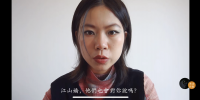
On Feb 17, 2020, the official account of The Central Committee of the Communist Youth League on Weibo announced the launch of its virtual idols "Hongqiman" and "Jiangshanjiao", and set up a new official microblog, and called on people to "come and support the League Idols".
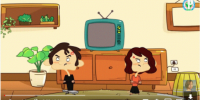
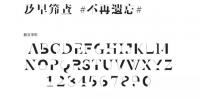
On Sept 21, 2017, the professional committee of dementia and related diseases of China geriatric health association, together with many caring enterprises, jointly launched a public welfare activity entitled "no longer forget", hoping to call on the public to pay attention to Alzheimer's disease and promote early screening.
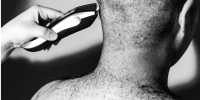
In this black-and-white image, there are no strands of hair or remnants of makeup to be found, except a shaved head belonging to a South Korean. Jeon photographed this image in 2019 for her exhibition that aimed to "destroy the socially defined idea of a woman” (Kuhn 1). The visuals in this image is a brazen response to the conventional beauty standards that has been gripping South Korean women.
Chuu Wai Nyein felt an overwhelming sense of guilt when she first arrived in Paris from Myanmar at the end of April. “I was pushed to leave the country, but it was not how I wanted to leave,” says the 28-year old. As an artist working for the last ten years, mostly in the central city of Mandalay, Chuu built up an international reputation for her expressive paintings of women.
Her name is ISIS-chan. And she's how nerds around the world are trying to silence violent ISIS terrorist propaganda.
It starts with the vibrant worldwide community that loves Japanese anime. Some of them have created a cute animated character as a sort of ISIS mascot.
The goal? Hijack the terrorist group's message and replace it with a girl that's oh-so-adorable.
A mainland couple allowed their 2-year-old son to relieve himself by the road at Mangkok, Hong Kong and conflicted with local pedestrians who took photos of the child caused quite a stir among Chinese netizens. While the majority of mainland netizens show understanding for the couple, HongKongers think differently.
New Beijing, New Marriage is a documentary shot by Fan Popo, a Chinese gay rights activist in 2009. The film recorded that a gay couple and a lesbian couple, who were volunteers instead of real homosexual couples, were having their wedding photos taken at Qianmen Street on Valentine’s Day. Qianmen Street is a crowded and famous shopping street in Beijing.
'Jealousy Ms. Vy' is a creative project of the Institute of Occupational and Environmental Health, in collaboration with musician Khac Hung, singer Min and singer Erik.
Through this project, we look forward to empowering and trusting the community, so that we can join hands to combat COVID-19 (aka nCoV-2019).
More than 30 South Korean college students shaved their heads in front of the Japanese embassy in Seoul on Tuesday to protest Japan's decision to release water from its crippled Fukushima nuclear plant into the sea.
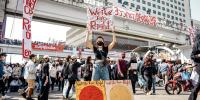
Police periodically dispersed crowds, who chanted and held placards but did not stop the event from taking place, though there is an anti-pandemic ban on gatherings larger than 10 people.
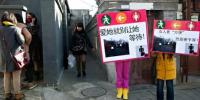
Women around the world fed up with long lines for the ladies’ restroom have a new folk hero: a Beijing college student leading her own version of an “occupy” movement in southern China.
Photo taken on Oct. 15, 2020 shows a "comfort women" statue in Berlin, capital of Germany. The statue was built to commemorate the more than 200,000 girls and women from 14 countries and regions, so-called "comfort women," who were sexually enslaved by the Japanese military during World War II. (Xinhua/Shan Yuqi)
She seeks to utilize her feminist art to spread awareness on mental health issues. Sravy is a nomad in her own right, and throughout her experiences in Asia she has noticed that there are stimas surrounding women's autonomy and how they handle mental health struggles.
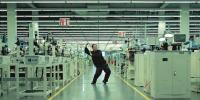
Whose Utopia? is a color film which is 19 minutes 58 seconds long. It was originally commissioned by the Siemens Arts Program back in 2005. The projector-style video is based on the work and social lives of assembly line workers at OSRAM’s light bulb factory in the Pearl River Delta in China. This area has received huge numbers of immigrants from inland provinces seeking work and better lives in the wake of Beijing’s booming economy.
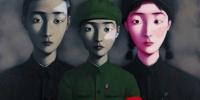
The immediate prototypes of Zhang Xiaogang’s Big Family series are formal group photographic portraits from the 1950’s and 60’s, including those of Zhang’s own family, a source of the painter’s “endless reveries.” From these old black-and-white pictures Zhang Xiaogang derived the series’ paradigmatic features: a subdued, nearly monochromatic palette; a thickly layered but flat surface, without overt evidence of brushwork; a general compositional restric
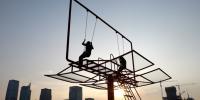
Architect Didier Faustino strips a billboard down to its skeleton, repurposes it as a swing set, and names it Double Happiness. This "urban reactivation device" needs to become a world wide phenomenon. Imagine billboard swing sets waiting at every destination. The climb looks worth the view.
A group of South Korean activists is determined to send copies of The Interview across the North Korean border, despite threats from the state to respond with “cannons or missiles” if the plan succeeds.