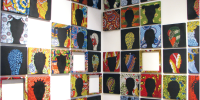
Established Cape Town based artist Brett Murray returns to Goodman Gallery Johannesburg with Hail to the Thief II. This body of satirical work continues his acerbic attacks on abuses of power, corruption and political dumbness seen in his 2010 Cape Town show Hail to the Thief.
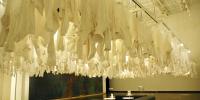
NORTHFIELD, Minn. — Exactly 1,281 white garments hang from the ceiling of the Perlman Teaching Museum’s Braucher Gallery. The collared shirts, knit sweaters, tights, and other items of clothing glow with an eerie luminosity.
Josep Renau Berenguer was a Spanish painter, photomontager, muralist and communist militant.
Renau was the son of an Art teacher. Due to his father’s low income, he had to work various jobs during his youth and teenage years to maintain a middle class position.
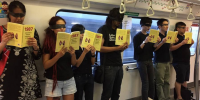
A group of activists took to the trains to protest the horrendous treatment that the Singapore government meted out upon 22 individuals who were detained 30 years ago under an operation that was entitled,"Operation Spectrum" with the use of the Internal Security Act (ISA).
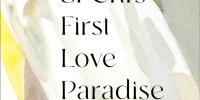
The author behind ‘The First Paradise of Fang Siqi,’ a novel that Han described as ‘a young girl falling in love with her rapist,’ has sent shockwaves through Taiwanese society.
On April 27, aspiring Taiwanese author Lin Yi Han committed suicide, leaving behind only her first, and sadly last, novel. The story, entitled “The First Love Paradise of Fang Siqi,” concerns the mental struggles of a young girl who is raped by her teacher.
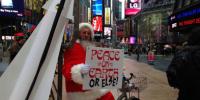
On November 13, 2012, Joey Skaggs dressed up as Santa Claus and rode a three-wheeler to the United Nations in New York, NY. Skaggs’ bike was equipped with a fake mobile rocket launcher and a sign that read “ Peace on earth, or else!” A group of elves also accompanied Santa to the UN, and they alternated between handing out green toy soldiers to bystanders and singing their altered version of Jingle Bells, as seen below:
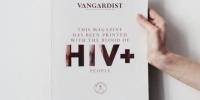
Thanks to dramatic advances in drug therapy, infection with HIV has been transformed from a death sentence to a chronic, manageable disease. HIV-positive patients can even enjoy a normal life expectancy if treatment is successful. So we needn’t worry about this virus anymore, right? Sadly, that seems to be the misinformed idea held by many.
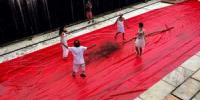
A site-specific art intervention intended as a call to action in response to Brazil's water crisis. Strategically planned to coincide with UN World Water Day, Gota D'Agua gathered onlookers around an abandoned Olympic size swimming pool at the foot of Edificio Raposo Lopes, a towering luxury condominium building situated on a steep incline overlooking Rio de Janeiro.
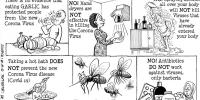
Godfrey Mwampembwa, popularly known as Gado, has been holding politicians accountable for nearly 30 years. Now, his concern has shifted to the coronavirus.
In a quiet office on the third floor of a building in Nairobi’s central business district, the cartoonist known by his pen name, Gado, was sketching a satire about the coronavirus.
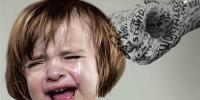
Institute of psychology in Shenyang, a major city of China, recently reveals 6 most frequently used utterances in verbal abuse of children among local parents: “Garbage”, “You know nothing but eating”, “Pig head”, “Shame on you”, “Why don’t you die”, “No one else is lamer than you”.
On Sept 21, 2017, the professional committee of dementia and related diseases of China geriatric health association, together with many caring enterprises, jointly launched a public welfare activity entitled "no longer forget", hoping to call on the public to pay attention to Alzheimer's disease and promote early screening.
March 20, World Sleep Day is approaching, Chongqing Fuling wine town square placed 2 transparent sleep house, staff in the form of performance art to call on people to "put down the phone, sleep at ease". It is reported that the purpose of World Sleep Day is to make people pay attention to the importance of sleep and sleep quality, to remind people to pay attention to sleep health and quality.
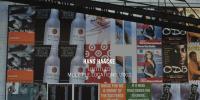
Marking the six month anniversary of September 11th, a poster designed by artist Hans Haacke appeared on scaffolding and media walls throughout New York City. The poster itself was blank and white, consisting only of die-cut silhouettes of the World Trade Center towers. The posters effectively reminded the pubic that September 11th created a ubiquitous filter through which everyday realities have become measured or seen.
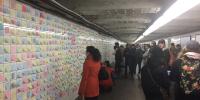
During her concession speech yesterday, Hillary Clinton uttered a simple, terrifying sentence: "Donald Trump is going to be our president." For many Americans—New Yorkers especially—the sickening reality of a Trump presidency is impossible to fathom. A few hours later, a rogue therapist set up shop in the 14th Street tunnel between Sixth and Seventh Avenues.
Heroin sold in the northeast, specifically in New York, Pennsylvania, and New Jersey tends to come in little glassine baggies. The art comes from the individual and unique "stamp" on said baggie sold to a user.
The Dove Campaign for Real Beauty is a worldwide marketing/public relations campaign launched in 2004 that includes advertisements, video, workshops, sleepover events and the publication of a book and the production of a play. The principle behind the campaign is to celebrate the natural physical variation embodied by all women and inspire them to have the confidence to be comfortable with themselves.
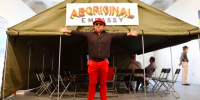
Richard Bell has often called himself ‘an activist masquerading as an artist’. Aboriginal journalist and radio broadcaster Daniel Browning has suggested that Bell is also ‘a megaphone.
The user muchachafanzine on instagram is an activist who writes a "decolonial native xicana feminist fanzine". They are an online activist and they spread their message through their page, the zine, and through merchandise. Daisy Salinas began Muchacha Fanzine as a feminist punk zine in 2011. Over the years, Muchacha has grown into a larger, submission-based compilation of work by marginalized voices from around the world.
IMAPCT are youth activists who view the creative arts and leadership training as a way to develop ourselves and change the world in a positive way. They believe that they must be the message that bring through hardwork, focus, discipline, unity and the principles of S.O.S. safe space, outstanding effort and service to their family friends and community.
National Museum of Women In the Arts:
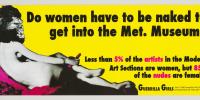
To maintain their anonymity, group members wear gorilla masks in public and adopt the names of historic women artists, such as Käthe Kollwitz and Frida Kahlo, as pseudonyms.
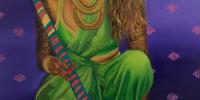
“Badass Indian Pinups” is a series of paintings by Indo-Canadian artist Nimisha Bhanot, that features paintings of Indian women being confident and sexually liberated.
"Sun Mu is not the artist’s actual name. It’s a nom de plume that uses a combination of two Korean words that translate to ‘The Absence of Borders’. It not only represents what he feels is the transcendence of art but also the literal military demarcation line that keeps the Korean people separated.
Born in Nigeria in 1975, Péju Alatise, is a multimedia artist focusing on the experience of women and girls, particularly in her native country but with resonance across the world.
In France, abstention, vote of protest, lassitude or violent reactions rise from all over the crisis of our "representative democracy ».
What about thinking the other way round ? What if we reappropriate the iconography of the election?