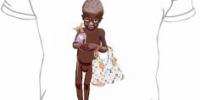
Danish 26-year-old art student Nadia Plesner designed this T-shirt depicting a Darfurian child holding a Louis Vuitton handbag as commentary on global disparity as it relates to war, developing nations, commercialism, and media.
In 2006, the fashion house sued Plesner for her appropriation of their trademark. The case was subsequently dismissed.
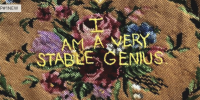
Tiny Pricks is a public art project created and curated by Diana Weymar. Contributors from around the world are stitching Donald Trump’s words into textiles, creating the material record of his presidency and of the movement against it. Tiny Pricks Project holds a creative space in a tumultuous political climate.
Energy BBDO launches its latest activation on behalf of Change The Ref, a leading gun-control organisation which was formed to empower our Future Leaders.
The activation, ‘New Recruits’ is Change the Refs latest effort to ignite a movement to ban ‘weapons of war’. The event took place last Saturday in Montclair NJ and was hosted by Manuel and Patricia Oliver.
Delhi- based graffiti artist who goes by the name Daku went around South Delhi, one of the poshest places in the city, and painted on overflowing garbage cans.
Since the fall of the Berlin Wall on November 9th, 1989, the cement segments that remain have stood as something more symbolic than just a wall. With installations in every continent, except for Antarctica, the East Side Gallery is the most authentic existing part of the Berlin Wall.
Two reflective stickers in a bathroom stall. When you sit down you can see your face in the bottom one. When you stand you can see your face in the top one, your groin in the bottom one. The top one says "Public", the bottom one says "Private". Or maybe the top one says "Private", and the bottom one says "Public". Which one is correct?
On January 12, 2016, Shanghai's temperature dropped to its lowest of the year. A little girl was seen selling matches in the cold wind on Bund street. The little girl, wearing a classic dress, wrapped in an ocher-red scarf and carrying a small bamboo basket full of matches, gave matches to passers-by.
Rooted in Native American and indigenous practices,[11] restorative justice is a set of principles and practices that aims to help communities heal from conflict and harm by developing a common understanding of the root causes and effects.[12] Restorative justice can occur in a variety of different contexts: in the workplace, at schools and within, or instead of, the criminal justice system.