Students at art colleges across China are taking a strong stance in the midst of the largest wave of protests to have gripped the country since 1989. As demonstrations against the government’s strict Covid-19 policies erupted across the country over the weekend, students rallied on campuses to create protest art and graffiti.
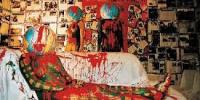
Shu Yong is an artist who has been passionate about environmental protection in recent years. "The Earth Is Bleeding" was created in 1998. The creation was carried out in a studio of more than ten square meters.
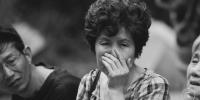
Zuoxiao Zuzhou is a Chinese singer whose accented, croaky voice is hardly ever in tune. But for his fans he's the voice of a generation — one of the very few voices who dare to speak out. After a collaboration, Cowboy Junkies member Michael Timmins called him "China's Leonard Cohen."
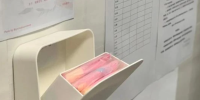
From October to December 2020, Chinese university students nationwide launched a viral movement to install “menstrual pad mutual aid boxes” in women’s restrooms—free, wall-mounted containers stocked with disposable pads on a take-one, replace-one basis. Nearly 250 campuses joined within weeks. Some sustained their boxes for over a year, while others saw them vanish after bureaucratic pushback, logistical hurdles, or dwindling volunteer resources.
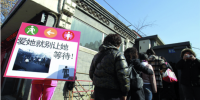
A photography project on China's marriage market has recently reignited the debate about marriage in China, and the phenomenon of women deemed too old to marry, or "leftover women" in the country.
In 2016, Zhou Zhenfeng, who was a student at a college in Hebei at the time, discovered that there were a lot of waste tires in the streets and alleys. Zhou Zhenfeng learned that tires are made of infusible or refractory polymer elastic materials. It takes hundreds of years for these materials to decompose in the soil to the extent that they do not affect the growth of plants.
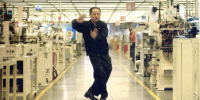
Whose Utopia? was made by the Chinese artist Cao Fei and filmed at the OSRAM lighting factory in Foshan in the Pearl River Delta in southern China during 2005 and 2006. It was commissioned as part of a project entitled ‘What Are They Doing Here?’ that was run by the Siemens Art Program from 2000 to 2006 and involved Chinese artists undertaking six-month-long residencies at industrial facilities across the country.
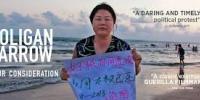
Nanfu Wang feels safe in New York. Surveillance, that essential preoccupation of the documentarian in America, is a chokehold from which she has been temporarily released. From her Brooklyn apartment, the Chinese filmmaker prepares for the release of her debut feature documentary, Hooligan Sparrow.
The “Occupy Men’s Toilets” movement, initiated by Chinese feminist activists including Li Tingting (Li Maizi) and Wu Rongrong, emerged in 2012 as a creative, non-violent protest against gender inequality in access to public facilities.
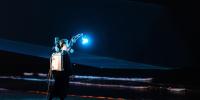
March 20, World Sleep Day is approaching, Chongqing Fuling wine town square placed 2 transparent sleep house, staff in the form of performance art to call on people to "put down the phone, sleep at ease". It is reported that the purpose of World Sleep Day is to make people pay attention to the importance of sleep and sleep quality, to remind people to pay attention to sleep health and quality.
If there’s one thing we know for certain about China in 2019, it’s that people there love their apps. They use WeChat to talk with friends; they spend hours battling virtual enemies on PUBG; they binge-watch short videos on Douyin. And so why shouldn’t the Communist Party get in on the action?
China's only seaside theater festival has been held in the resort town of Aranya in north China's Hebei Province. Artists from around the world traveled there to take deep dive into the world of dramatic performance. For theatergoers, there were interactive activities including cross-border installations such as seaside talks, environmental drama readings, screenings, theater houses, parades and bonfires by the sea.
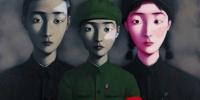
The immediate prototypes of Zhang Xiaogang’s Big Family series are formal group photographic portraits from the 1950’s and 60’s, including those of Zhang’s own family, a source of the painter’s “endless reveries.” From these old black-and-white pictures Zhang Xiaogang derived the series’ paradigmatic features: a subdued, nearly monochromatic palette; a thickly layered but flat surface, without overt evidence of brushwork; a general compositional restric
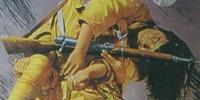
Chen Boer's first heroine film, which she co-wrote and directed, was "Daughter of China," about female soldiers in the Northeast Anti-Japanese United Army. They didn't have much filmed material at the time, but as a feminist, Chen Boer clearly wanted to record the sacrifices and contributions of Chinese women in the War of Resistance against Japanese Aggression.