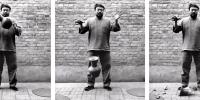
Dropping a Han Dynasty Urn (1995) by Ai Weiwei is a highly provocative work of art. This series of three black and white photographs portray the artist holding a 2,000-year-old Han dynasty urn that, frame by frame, he drops, it falls, and shatters. As much a work of photography as a work of performance art, in each still an unaffected Ai looks directly at the camera aware of his destructiveness.
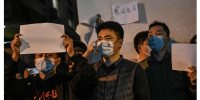
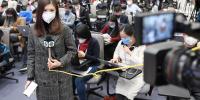
Protests erupted in cities and on campuses across China this weekend as frustrated and outraged citizens took to the streets in a stunning wave of demonstrations against the government’s “zero covid” policy and the leaders enforcing it.
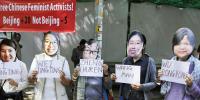
Nancy Lindisfarne and Jonathan Neale write: Five Chinese feminists have been arrested for planning to protest against sexual harassment. They face five to ten years in jail. This post explains the background to the case, and suggests ways that other activists around the world can show solidarity.
Chen Boer's first heroine film, which she co-wrote and directed, was "Daughter of China," about female soldiers in the Northeast Anti-Japanese United Army. They didn't have much filmed material at the time, but as a feminist, Chen Boer clearly wanted to record the sacrifices and contributions of Chinese women in the War of Resistance against Japanese Aggression.
The video DON’T COVER UP, STEP UP is a public service announcement raising the issue of gender-based violence. In the video, a vlogger teaches her fans how to cover up bruises with makeup after she has been beaten by her husband. There is a twist in the story as the husband enters the scene at the end of the video.
In 2009, the dissident artist created a work to honour the thousands of children who died in the Sichuan earthquake. He recalls how the project, Remembering, angered China’s rulers – and changed his career for ever
This is an edited extract from The Start podcast
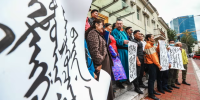
Thousands of ethnic Mongolians have protested across northern China in opposition to Beijing plans to replace the Mongolian language with Chinese in some school subjects.
In her 2021 graduation project from the Central Academy of Fine Arts (CAFA), Chinese performance artist Zou Yaqi staged a provocative social experiment titled “21-Day Survival Challenge.” For three weeks, Zou assumed the persona of a wealthy socialite, using counterfeit luxury items, strategic self-presentation, and social engineering to access elite spaces in Beijing—such as five-star hotel lobbies, first-class airport lounges, and high-end restaurants
Late last month, Chinese citizens took up a creative means of protest over the nation’s strict “zero-COVID” policy. In a place with little tolerance for large public demonstrations, protesters have been holding up blank pieces of paper. Their ingenuity inspired a local artist Yolanda He Yang to stage a public art demonstration to subtly communicate their dissent.
By NAZANIN LANKARANI
PARIS — Five years after his rise to the top of the Chinese contemporary art market, Yue Minjun has something new to smile about.
Best known for his large-scale paintings depicting his own smiling face, Mr. Yue, who is based in Beijing, has long been a star of the Chinese contemporary art scene, having achieved commercial success through a highly singular aesthetic.
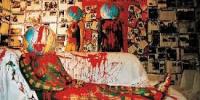
Shu Yong is an artist who has been passionate about environmental protection in recent years. "The Earth Is Bleeding" was created in 1998. The creation was carried out in a studio of more than ten square meters.
Zhang Huan is a very talented performance artist in China. In the famous work "Twelve Square Meters", he was covered with fish oil and honey sitting in a dirty public toilet in Beijing's East Village for an hour, not only making swarms of flies greedily surround him, but also People feel extremely uncomfortable and even nauseous.
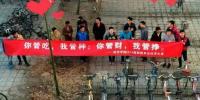
The young Chinese feminists shaved their heads to protest inequality in higher education and stormed men’s restrooms to highlight the indignities women face in their prolonged waits at public toilets.
“Girl’s Day” in China was supposed to be a way for boys on college campuses to show the girls how much they care. This year it went too far.
Have you heard about “Girl’s Day?” It’s a big holiday for Chinese college students. Every year on March 7, students throughout the country celebrate the day as a campus version of International Women’s Day.
Nanjing, a picturesque city lying by the Yangtze River, owes its fame to its favorable geographic position, galaxy of talents and profound historical background. Having served as the capital of ten dynasties in ancient China, its splendour has remained and even enlarged with an extended population up to 600,000 when the government of the Republic of China set up its capital there in 1927.
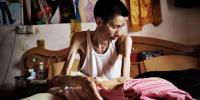
Photographer Sim Chi Yin spent more than three years documenting a Chinese gold miner who is suffering from the deadly lung disease silicosis. Despite the odds, his loving relationship with his wife has kept him alive much longer than anyone expected.
Song Dong's Waste Not consisted of a single installation comprising over 10,000 commonplace, domestic items of daily life that had been used and amassed by the artist’s mother (Zhao Xiangyuan) over fifty years.
Sima Qian: China's 'grand historian' By Carrie Gracie BBC News, Beijing
Speaking truth to power has always been a high-risk strategy in China. Its rulers tend to prefer flattery, and writers who forget this do so at their peril. China's "grand historian" - 2,000 years ago - was one of many who have paid a terrible price.
On January 17, 2011, Hong Yuping (洪玉萍), from Fujian Province, contacted Yu Jianrong (于建嵘), at the Chinese Academy of Social Sciences (CASS), about her family’s plight and requested assistance: In June 2009, their son, Yang Weixin (杨伟鑫), then age six, was abducted from their hometown, Quanzhou, and they had been searching for him ever since.1 In early 2010, Hong had recognized Yang Weixin in a photo of three children begging outside a Xiamen train statio
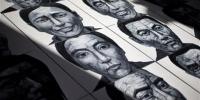
Beijing-based artist Liu Yi is working on a series of black-and-white portraits he knows will never be shown in a Chinese gallery. His varied subjects — men and women, young and old, smiling and pensive — have one thing in common: They are Tibetans who have set themselves on fire to protest repressive Chinese rule.
The 9,000 bottles of water on display at an art gallery in Beijing last month appeared identical to those of Nongfu Spring, one of China’s most popular spring water brands, with one jarring difference. Inside each bottle was brown, murky groundwater collected from a Chinese village.
Many girls in China may have seen the advertisements of egg donation as a surrogate, in hospitals, schools, public toilets, shared bikes, ATMs...... They are everywhere and the number of this kind of advertisements is large. Though there are lots of girls who have never seen such advertisements or would never believe in them, there would still be some girls who would dial the numbers on the advertisements.
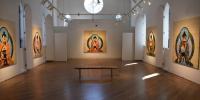
This is a series of paintings reflecting the struggle and sacrifices made by the Tibetan people for independence. The author is Tenzing Rigdol, who is a Tibetan and influenced a lot by the Dalai Lama and traditional Tibetan culture. The paintings are full of Tibetan cultural elements. For instance, the characters created in the paintings are Tibetan monks, who are the typical representatives of their culture.
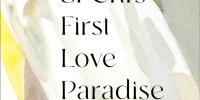
The author behind ‘The First Paradise of Fang Siqi,’ a novel that Han described as ‘a young girl falling in love with her rapist,’ has sent shockwaves through Taiwanese society.
On April 27, aspiring Taiwanese author Lin Yi Han committed suicide, leaving behind only her first, and sadly last, novel. The story, entitled “The First Love Paradise of Fang Siqi,” concerns the mental struggles of a young girl who is raped by her teacher.
The outbreak of the coronavirus has brought international scrutiny down on China’s political system. Again. A few commentators have applauded the efficiency of the Chinese Communist Party’s response, but most have zoomed in on its weaknesses. Some have even blamed the party itself for the outbreak, calling the disease a “Communist coronavirus” or “the Belt and Road Pandemic.”