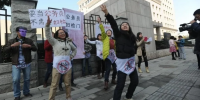
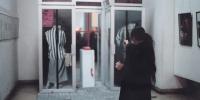
On November 26, 2012, about ten college students “flash mobbed” the front of the human resources and social welfare department of Hubei Province in central China. "Refuse to take off pants for inspection," "Ask about menstrual history, what does it have to do with being a civil servant." According to the current admission regulations, female candidates for civil service positions must go through a detailed gynecological examination.
The video DON’T COVER UP, STEP UP is a public service announcement raising the issue of gender-based violence. In the video, a vlogger teaches her fans how to cover up bruises with makeup after she has been beaten by her husband. There is a twist in the story as the husband enters the scene at the end of the video.
The New Culture Movement was initiated by Chen Duxiu, Li Dazhao, Lu Xun, Hu Shi, Cai Yuanpei, Qian Xuan and other writers who had received Western education (called the new-style education at the time). It is an ideological and cultural innovation and literary revolutionary movement.
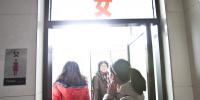
The young Chinese feminists shaved their heads to protest inequality in higher education and stormed men’s restrooms to highlight the indignities women face in their prolonged waits at public toilets.
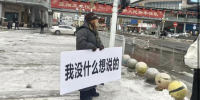
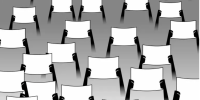
Feb 23 2024, on the streets in Henan, China, a girl holds a big sign with the black text "I've got nothing to say" on a white background, walking around in city center and malls. She live-streamed her walk and her account was banned after a few hours.
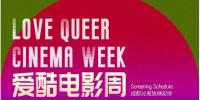
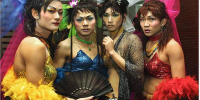
Founded 19 years ago, the Beijing Queer Film Festival (aka Love Queer Cinema Week) is one of the grassroots film festivals in China focusing on independent queer film screenings and cultural exchange activities. We aim to expand public discussions on sexuality / gender identity / gender expression, we aim to give a platform to sexual and other minorities in China and the World, and we celebrate diversity.
In early January, constructions workers in Wuhan, China staged a Gangnam Style protest in front of their employer's building. Using the Gangnam Style dance, the men sought to bring media attention to their mounting unpaid wages.
Zhang Huan is a very talented performance artist in China. In the famous work "Twelve Square Meters", he was covered with fish oil and honey sitting in a dirty public toilet in Beijing's East Village for an hour, not only making swarms of flies greedily surround him, but also People feel extremely uncomfortable and even nauseous.
A photography project on China's marriage market has recently reignited the debate about marriage in China, and the phenomenon of women deemed too old to marry, or "leftover women" in the country.
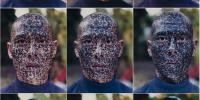
One of the most critical artists on the contemporary art scene is Zhang Huan. His works are of great social insight and unique in how he applies his artistic expression. He thus makes them an almost visual feast with a peek into the multilevel structure of modern society. One such work is the masterpiece "Family Tree," which shows how art can mould our social cognition through multilayered symbolism and profound imagery.
This is a series of paintings reflecting the struggle and sacrifices made by the Tibetan people for independence. The author is Tenzing Rigdol, who is a Tibetan and influenced a lot by the Dalai Lama and traditional Tibetan culture. The paintings are full of Tibetan cultural elements. For instance, the characters created in the paintings are Tibetan monks, who are the typical representatives of their culture.
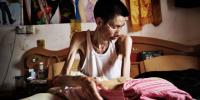
Photographer Sim Chi Yin spent more than three years documenting a Chinese gold miner who is suffering from the deadly lung disease silicosis. Despite the odds, his loving relationship with his wife has kept him alive much longer than anyone expected.
Song Dong's Waste Not consisted of a single installation comprising over 10,000 commonplace, domestic items of daily life that had been used and amassed by the artist’s mother (Zhao Xiangyuan) over fifty years.
Students at art colleges across China are taking a strong stance in the midst of the largest wave of protests to have gripped the country since 1989. As demonstrations against the government’s strict Covid-19 policies erupted across the country over the weekend, students rallied on campuses to create protest art and graffiti.
In 2009, the dissident artist created a work to honour the thousands of children who died in the Sichuan earthquake. He recalls how the project, Remembering, angered China’s rulers – and changed his career for ever
This is an edited extract from The Start podcast
“There are many problems in rural areas. For example, agriculture is declining, no one is farming, traditional things are falling apart, farmers are brainwashed by the idea of urbanization, and they don’t like their hometown. They all want to move to the city.”Activist Ou Ning said. Rural construction is an important issue. As an activist, he chose Bishan village in Anhui, China as the field to start his experiment, which is “Bishan Project”.
Women in China are covertly resisting government crackdowns on discussions over their Me Too movement with a clever workaround.
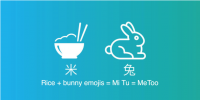
The phrase “rice bunny” (米兔), pronounced as “mi tu,” has popped up on social media networks after censors removed posts that mentioned sexual harassment or the hashtag #MeToo. While those phrases are heavily monitored, Rice Bunny isn’t.
Brother Gao are two China artists. Their works are aims at reflecting the reality of Chinese society in an artistic and critical view. In 2003, the brothers held an event to invite many strangers for a dinner.
The documentary film "The Two Lives of Li Ermao" recorded the bumpy life experience of a transgender Li Ermao and her unique and moving story.
"Others only live one life, I live two." Looking back, the "two lives" are not only the emotional disillusionment and the swing of identity that Li Ermao has experienced in the past 17 years, but also her helpless but accurate summary of her life.
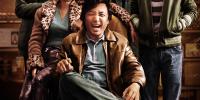
The screen portrayal of a cancer sufferer whose illegal import of foreign medicines into China spurred national policy changes has become a box-office smash as audiences flock to a rare Chinese film on a hot-button issue.
Dying To Survive is based on Lu Yong, who was arrested in 2013 after illegally importing a generic cancer drug in a case that sparked public debate about high medical costs.
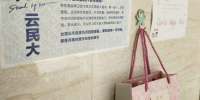
Since 2020, university students across China have launched a grassroots initiative to combat menstrual stigma by placing “menstrual pad mutual aid boxes” in campus restrooms. These boxes, often accompanied by signs reading “Take one if you need it, donate if you can,” provide free sanitary pads to anyone caught off guard by their period—offering both practical relief and a symbolic challenge to the cultural silence surrounding menstruation.
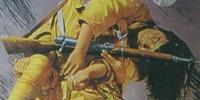
Chen Boer's first heroine film, which she co-wrote and directed, was "Daughter of China," about female soldiers in the Northeast Anti-Japanese United Army. They didn't have much filmed material at the time, but as a feminist, Chen Boer clearly wanted to record the sacrifices and contributions of Chinese women in the War of Resistance against Japanese Aggression.
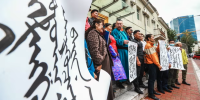
Thousands of ethnic Mongolians have protested across northern China in opposition to Beijing plans to replace the Mongolian language with Chinese in some school subjects.
Xiao Lu was one of the most influential women in contemporary Chinese art, better known for provoking performance art works and sharp social commentaries. Her works address sensitive social and cultural issues that counter mainstream attitudes and values. In 1989, she put her work "Dialogue" up for exhibition at the National Art Museum of China in Beijing.