The questions that London-based collective One Of My Kind (aka OOMK) explore are those of identity and belonging—issues that are experienced by everyone regardless of whether they grew up defining themselves based on the music they listen to, the hobbies they enjoy, or the religion they practice.
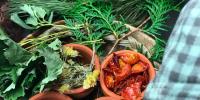
"a dinner cooked by six indigenous chefs, members of tribes from around North America, who are meeting together for the first time this week to launch a new indigenous activist group, called the I-Collective. Thursday’s dinner will be at Dimes, on Canal Street, and it will follow a dinner tonight for New York City’s local Native American community at the American Indian Community House, on Eldridge Street.
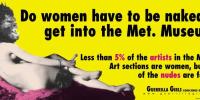
The Guerilla Girls are a group of feminist activist artists, who use facts, humor, and outrageous visuals to expose gender and ethnic bias and corruption in politics, art, film, and pop culture in their artworks. In 1989, they designed this billboard for the Public Art Fund (PAF) in New York, aimed to criticize the museum institutions for under-representing female artists and objectifying women.
A coalition of more than twenty national arts funders has launched an emergency relief fund that will provide millions of dollars to artists struggling financially in the wake of the COVID-19 outbreak in the United States, which has more than 400,000 confirmed cases of the virus. The Andrew W.
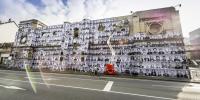
After winning the TED Prize on March 2, 2011, the French-artist JR launched the Inside Out Project, in his first TED Talk. Using his own artistic practice as inspiration, this participatory platform helps individuals and communities to make a statement by displaying large-scale black and white portraits in public spaces. Through their “Actions,” communities around the world have sparked collaborations and conversations.
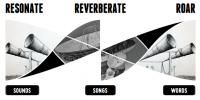
Resonate, Reverberate, Roar (Re-Re-Roar) is a growing archive of original sounds that express an experimental, independent, and socially progressive spirit. The sounds on Re-Re-Roar include field recordings, interviews, songs, speeches, experimental music, and more. Re-Re-Roar is a site for research and activ[ist] listening, with the purpose of distributing sounds of resistance to eager ears around the globe.
The new Oscar-nominated documentary, All the Beauty and the Bloodshed, focuses on world-famous photographer Nan Goldin, her life, her work, and the protests she led at museums that accepted funding from the Sackler family. Their company, Purdue Pharma, manufactured and unscrupulously marketed OxyContin. We'll talk with Goldin and director Laura Poitras.
In an endeavor to raise awareness at the local and international level, Razia organized the Mifohaza Masoala (Wake Up Masoala) music and environmental festival, which took place at the edge of the Masoala Rainforest in October 2011. The concert featured some of Madagascar’s most thrilling performers, and the festival was a tremendous success, with over 10,000 people in attendance.
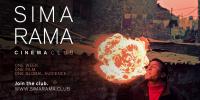
For the past five years, we’ve screened SIMA juried films in communities and classrooms across six continents and witnessed an increasing demand to use the inspirational force of documentary filmmaking to build a global digital community around today’s most pressing issues.
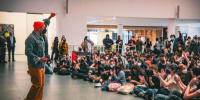
As the conflict between Israel and Hamas continues, hundreds of people gathered inside the Museum of Modern Art and outside of the Brooklyn Museum on Saturday for protests.
In Pittsburgh, Memphis and Los Angeles, massive billboards recently popped up declaring, “Birds Aren’t Real.”
On Instagram and TikTok, Birds Aren’t Real accounts have racked up hundreds of thousands of followers, and YouTube videos about it have gone viral.
Last month, Birds Aren’t Real adherents even protested outside Twitter’s headquarters in San Francisco to demand that the company change its bird logo.
Sarah Silverman Wants to Pop Your Bubble
With her new political variety show, “I Love You, America,” the stand-up comic aims to unite red and blue. But can TV really change minds?
By Jason Zinoman
Oct. 4, 2017
A converted school bus with the sawed-off top is taking Mexico City visitors on the "Corruptour", a visit to the country's seedy underbelly of murderous misdeeds and multibillion-dollar graft by public officials.
Mayday is a neighborhood resource and a citywide destination for engaging programming, a home for radical thought and debate, and a welcoming gathering place for people to work, learn, drink, dance and build together.
Two design students were awarded the Futurapolis prize last Wednesday for their project to adapt the Furan (underground river) , a response to the migration crisis.
Kendick Lamar is known as one of the most prolific, and socially conscious, rappers of our time. 'BLOOD.' is the second track off of Lamar's iconic album 'DAMN.' from 2017. What makes this song stand out is the sample used at the end of part one of the song.
From the two shores of the Mediterranean, Zoukak theatre company and cultural association (Beirut) and Center for cultural decontamination CZKD (Belgrade) collaborates by sharing their experiences and knowledge in working within sociopolitical contexts in the field of art and culture.
In May 2020, a team of artists, activists, folklorists, and people who lost loved ones to Covid-19 came together to make monthly memorial sites in New York City to remember victims of the Covid-19 pandemic. They continued installing memorials around New York City every month during the summer of 2020.
Shift Change Dress is a community fashion & art project that utilizes a shift dress sewing pattern as a medium for communication and action. Participants are encouraged to use the pattern as a blank canvas for their art or message and to share their work with the community.
WASHINGTON ― Sen. Elizabeth Warren (D-Mass.) was positioned to make a strong bid for president in 2020, but she infuriated tribal leaders by releasing the results of a DNA test to prove her Native ancestry and now her future is unclear.
Typical mediums of street art include spray paint, stickers and stencils. But mobilized digital media projection has become the latest tool in some activist's artilleries. Vanguards of this innovative technique include members of The Illuminator project. Created in March 2012, The Illuminator is a cargo van equipped with audio and video projection capabilities.
The language of music is common to all generations and nations,” Gioachino Rossini, the virtuosic opera composer, once said. “It is understood by everybody, since it is understood with the heart.” In recent weeks, Italians have embraced the language of music as a means to communicate with their neighbors and endure the ravages of covid-19 as a collective.
Private Dinner Party: Clothing Not Allowed
The Füde Dinner Experience gathers those who want to meet, eat and drink — only after leaving their clothes at the door.