Student loan debt in the US today totals over 1.7 trillion dollars and is collectively borne by more than 44 million Americans, including artist kelli rae adams. With her installation Forever in Your Debt, adams converts this abstract burden into a tangible volume. She has crafted hundreds of wheel-thrown vessels, sized to collectively hold the average individual student debt —$37,000—in the form of coins.
On July 2nd, 2013, after attending the Gas Exporting Countries Forum (GECF) conference, Bolivian President Evo Morales departed Russia from Vnukovo Airport in Moscow aboard his presidential plane. However, a "leak" suggested that Edward Snowden was aboard, which led Spain, France, and Portugal to close their airspace to the aircraft, to then be grounded in Austria.
Burners Without Borders (BWB) is a grassroots, volunteer-driven, community leadership organization whose goal is to unlock the creativity of local communities to solve problems that bring about meaningful change. Supporting volunteers from around the world in innovative disaster relief solutions & community resiliency projects, BWB is known for the unbridled creativity they bring to every civic project they do.
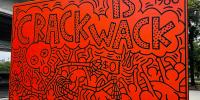
Without having been commissioned—or even given legal permission at all—Haring set out to create Crack Is Wack on the wall of an abandoned handball court in a park at 2nd Avenue and East 128th Street on June 27, 1986. Upon the completion of the mural, Haring was arrested by the New York City Police Department for vandalism of city property and faced potential jail time in addition to heavy fines.
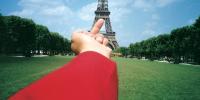
Ai Weiwei is a Chinese artist and activist. He has been vocal and openly critical of the Chinese government’s stance on democracy and human rights. His work has captured global attention and served to bring attention to social injustices, human rights violations and systemic violence. Ai never shies away from saying what he truly feels and he encourages people to state exactly what they want.
Cinema is a popular medium for people to escape the real world. It provides comedy, drama, and endless entertainment. But Kalpna Singh-Chitnis saw an even greater potential for film. She believed that this art form could be utilized as a means to highlight social causes, so she created the Silent River Film Festival.
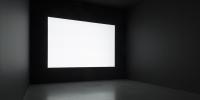
You enter a narrow corridor where backlit Plexiglas panels offer three compelling narratives about whiteness and blindness: Nelson Mandela’s imprisonment and hard labor in Robben Island’s limestone quarry under a blinding sun; Bill Gates’ purchase of the Bettmann and United Press International archives, consisting of 17 million images, and their subsequent burial deep underground in a limestone vault for the sake of preservation, after Gates’s company C
Our NGO “Voices from the Conflict” seeks to open a conversation about the Israel-Palestine conflict through the lens of activist art. The history of the conflict dates back to the UN partition plan in 1947, followed by Israel’s independence in 1948. Since then, there have been several armed engagements between the two actors- causing massive civilian casualties and terrorism.
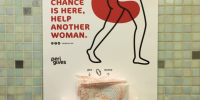
The public bathrooms at Penn Station in New York City are a dirty, depressing place. But now, there’s a bright spot: a poster that encourages women to donate menstrual products, like pads or tampon, to help the many homeless women who frequent the bathroom.
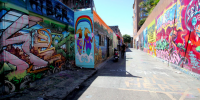
The Mission of CAMP is to support and produce socially engaged and aesthetically diverse public art as a grassroots community-based, artist-run organization based in San Francisco.
Clarion Alley Mural Project is a fiscally sponsored project of Independent Arts & Media.
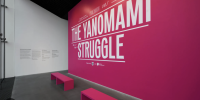
A new exhibition at The Shed in New York is a colour-soaked, eye-opening look into Yanomami life – an Indigenous culture in the heart of the Amazon rainforest
FEBRUARY 13, 2023
TEXT: Violet Conroy
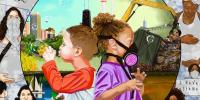
Two children stand back-to-back, but they are facing two very different Chicagos. One child blows bubbles in a park under blue skies. The other wears a gas mask against a backdrop of scrap metal and billowing smokestacks.
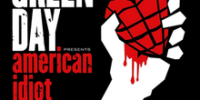
Mass media using propaganda to brainwash citizens. Confusion and ignorance causing a divide. People rising up against an oppressive government. Humans being torn between rage and love. These are the themes of Green Day’s widely successful 2004 album, “American Idiot.” These themes still sound familiar. Nearly two decades later, the world, especially the United States, faces these same issues.
VALDOSTA, Ga. — On an October morning in 2018, Eleanor Holmes and her husband left home to run an errand and found two men inside their front gate. They introduced themselves as detectives from Orlando, Florida, and said they needed the couple’s help.
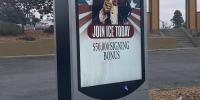
ICE [Immigration & Customs Enforecement] is now heavily recruiting, in part with offers of a $50,000 signing bonus. ICE has run roughshod over the Constitution, targeting people via racial profiling, failing to give people their constitutional rights of due process, and whisking them off to prisons abroad.
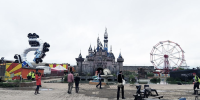
Dismaland was an experimental and interactive art installation that mimicked and mocked similar attractions and characters of the Disney franchise. He later referred to it as a ‘bemusement park.’ Although the bemusement park seemed to disappear as suddenly as it arrived, the exhibition lives on in the collective memory of the British public.
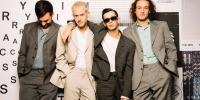
The 1975’s ‘Love It If We Made It’ is a dystopian love story that feels appropriate for the last 18 months. Even though it was written before the pandemic, its relevancy has only increased tenfold since its release in 2018.
The Yayoflautas, or Iaioflautas is an organized group of senior citizens from different cities and regions of Spain. Like many others, the movement started during the first months of life of the 15-M movement, in Barcelona.
Hair Nah (https://hairnah.com/) is a game created by Momo Pixel, a Black woman who wanted to represent how it feels for people to touch her hair without consent. The game is fun but also impactful, especially with the mechanic of "getting tired" of smacking away hands.
Local artist fnnch wants San Francisco to decriminalize certain types of art.
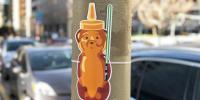
You’re not seeing things: A whopping 450 “honey bears”—variations on the immediately recognizable and widely imitated bear-shaped honey bottles sold in seemingly every store in America--appeared all over SoMa late Sunday night, from the Embarcadero to Fifth Street.
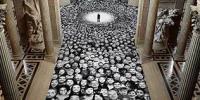
After winning the TED Prize on March 2, 2011, the French-artist JR launched the Inside Out Project, in his first TED Talk. Using his own artistic practice as inspiration, this participatory platform helps individuals and communities to make a statement by displaying large-scale black and white portraits in public spaces. Through their “Actions,” communities around the world have sparked collaborations and conversations.
The signature angst of our time was profoundly expressed in the poems submitted for WOMAWORDS Literary Press June 2020 edition, Imaging Life After COVID-19, offering women poets an opportunity to write about their experience of the pandemic and their vision of or for the future. The universal trauma wrought by this virus, invisible and silent and pouncing with madness and mendacity, brings us to a place we’d like to forget but never will.
The collective Ndaku Ya La Vie Est Belle, a group of Kinshasa street performers turn their bodies into living sculptures, and use them to political ends. Among the artists is Jared, who regularly takes to the streets dressed as Robot Annonce. The costume, made from broken radio parts, is designed to raise awareness of fake news. “People receive so much incorrect information and many inaccuracies are spread. I want to fight this,” says Jared.
We demand that AATA respond to Karen Pence's stated commitment to our field by asking her to publicly take action for the rights of LGBTQIA people, Native people, Black and Brown people, Muslims, survivors of sexual assault, people with disabilities, immigrants, refugees and all people who are in danger as a result of the policies of the current administration.