How would you describe Mixer?
Anis Bennaceur: It’s a professional network for creatives—people working in arts, fashion, film and media, and music. You can showcase your work, past projects to everyone else on the platform, and you can search, discover, connect, and collaborate with a lot of other incredible and talented people working in those industries. Also, every member is vetted by our team, so we ensure the quality of the userbase.
In 2019, Adeyemi Emmanuel began collecting bits of discarded plastic and used them to make a backpack. Seeing a way to raise environmental awareness in fashion-conscious Nigeria, Emmanuel in November launched a line of bags, wallets and gift boxes made of 20% leather and around 80% plastic waste, called ECO. He collects chips of used plastic by hand, such as leftovers from picture frames, primarily from craft workshops.
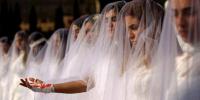
Women took to the streets of Beirut wearing blood-stained wedding dresses with signs that said "A white dress does not cover up rape. Undress 522," referring to the number of the penal article in question. The demonstration was an act by the Beirut-based Resource Center for Gender Equality (ABAAD) association on December 6.
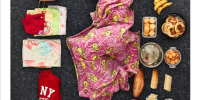
In response to an earlier project called "Daily Bread, Gregg Segal collaborated with the United Nations Refugee Agency to bring awareness to the crisis of refugees fleeing Venezuela through his project "Un-Daily Bread."
The elimination of Net Neutrality is a much bigger issue than most people would like to admit. This issue stems far from just an issue dealing with an open internet, free from biased control of the internet service providers, whom which we rely on.
Up Against the Wall: Art, Activism, and the AIDS Poster is the traveling version of the first major exhibition devoted to the University of Rochester's collection of HIV/AIDS-related posters. It illustrates to a broad audience that "AIDS affects everyone" and through the use of language and imagery, shows how messaging and information around HIV is shared to different groups, audiences, and people throughout the world.
This action was suggested in the workshop assembly by a neighbor of Arrayán street itself. At the end of this street giving the market there was a wall in a state of collapse that
concerned the neighborhood. On several occasions, either neighbors or from the same Peña Bética in front of them, they had
given by the City Council, but without results. And every day having to go all the way through that gorge with two
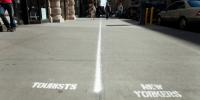
The Improv Everywhere team created separate walking lanes for tourists and New Yorkers on a Fifth Avenue sidewalk. Department of Transportation “employees” were on hand to enforce the new rules and ask pedestrians for their feedback on the initiative. Enjoy the video first and then go behind-the-scenes with the photos and report below.
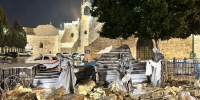
This year, Bethlehem is sombre and quiet. There is no Christmas tree and there are no holiday lights or tourists to see them.
Instead, the city of Jesus’s birth – which is in the middle of a war zone – is marking Christmas with a powerful and poignant message: solidarity with Palestine.
Camp Frack was a protest festival in Lancashire, UK, an area near industrial energy plants that produce shale gas. Around 150 activists from both Frack Off and Campaign against Climate Control (CCC) set up the festival, featuring food, music and conversation on environmentalism.
Beijing-based artist Liu Yi is working on a series of black-and-white portraits he knows will never be shown in a Chinese gallery. His varied subjects — men and women, young and old, smiling and pensive — have one thing in common: They are Tibetans who have set themselves on fire to protest repressive Chinese rule.
From March 14, 2010 to May 31, 2010, in the Museum of Modern Art, Marina Abramović held an activist art called The Artist Is Present. In the exhibition, there were simply a pair of chairs and a desk. Abramović sat on one chair, and the participators could sit on another chair voluntarily. Without a word, Abramović and the participators just looked at each other’s eyes.
In Borrando la Frontera (Erasing the Border)", Ana Teresa confronted the fence between the United States and Mexico by putting on her black dress and heels and painting the fence sky blue.
A young Black boy, wearing deep red livery with gold trimming, a gold earring, and red-and-white turban secured with a jeweled brooch, stares out at the viewer. Standing before a ship at sea, he hands a letter, addressed to “Monsieur le chevalier de Rohan, captain of the King’s ships at Rochefort,” to an older white man, dressed in regal-looking steel armor.
"Cats Against Cat Calling" began online as a movement under same slogan, powered through Hollaback! Hollaback! is an activist collective seeking to end street harassment. Working through a network of activists in various locations, Hollaback! encourages individuals to stand up for themselves against uncomfortable interactions in public.
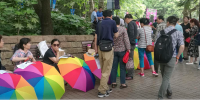
Sixth Tone - "A group of women trying to raise awareness of LGBT rights by advertising their single, gay sons and daughters at Shanghai’s “marriage market” were forced to disperse after a heated confrontation with other parents and security personnel.The so-called “marriage market” at Shanghai’s centrally located People’s Park draws a large crowd of parents who post signs each weekend describing their children in an effort to find a suitable partne
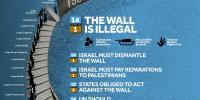
Over the past 2 years, Visualizing Palestine (VP) has harnessed visual storytelling to bring public attention to the daily injustices facing Palestinians, from demolition of homes to mothers forced to give birth at military checkpoints. VP wants to start 2014 by raising global awareness around two key issues.
This is the sixth piece of the series Tatlin’s Whisper which examines the relationship between apathy and anaesthetization of the images in the mass media. This series intends to activate images, well-known because of having been repeatedly seen in the press, but are here decontextualized from the original event that gave way to the news and staged as realistically as possible in an art institution.
Croatian artist Sanja Iveković started Women’s House (Sunglasses) in 1998 in collaboration with a women’s shelter in Zagreb and later with women’s shelters elsewhere in Europe and Asia. Iveković organised workshops with women in these shelters to produce plaster casts of their faces, as well as to give them the space to write their life stories.