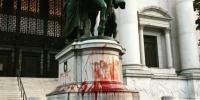
Just weeks after activists staged an alternative tour of the American Museum of Natural History to call for its removal, among other things, the equestrian statue of Teddy Roosevelt was vandalized early Thursday morning.
The long-awaited New Museum retrospective of conceptual art pioneer Hans Haacke fell victim to internet hackers over the weekend trying to make a political point. The intervention drastically skewed the results of an iPad-based artwork that was meant to record real-time visitor responses.
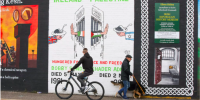
Palestinian and Israeli flags flutter in pro-Irish and pro-UK neighbourhoods in Northern Ireland, tapping into its own history of conflict and division that still affects everyday life despite a 1998 peace deal that largely ended violence.
From Jezebel:
Marley Dias is an 11-year-old New Jersey resident who’s rounding up children’s books that feature black female leads so that she and her peers have more fictional characters to look up to.
The project, titled #1000BlackGirlBooks, started when Marley complained to her mother about reading too many books about white male protagonists in school.
“Potholes!” That’s what Nikola Pisarev, a co-founder of the Contemporary Art Center (CAC) in North Macedoniona responded with when asked what sort of impact creative activism can have. Nikola went on to explain what he meant, describing a series of actions that they had staged in small towns and municipalities across the nation. As is the case in many countries, Macedonia is plagued with official corruption.
El Antimuseo es un proyecto curatorial que questiona los mecanismos de legitimación del arte. El grupo considera su trabajo " el proceso social donde se produce el valor simbólico y económico de la obra de arte, así como en el análisis de la estructura y límites de la institución."
En las palabras de ANTIMUSEO:
I must first come clean, I studied fine arts in high school from years nine to 12. Since my studies were concluded, I had never held a paintbrush again.
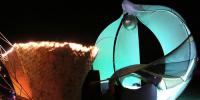
The Vulvatron was created specifically for Burning Man 2014. A multi-sensory experience, the Vulvatron attempts to communicate to those whom interact with it a distinctly feminine mystery. What is woman? In a world that has politicized, exoticized, sexualized, objectified, made their stake in women, what remains? Creating a gigantic object inspired by female anatomy in a world surrounded by phallic objects is a medicine story in itself.
Alice Paul, along with Lucy Burns, joined the National American Woman suffrage Association (NAWSA) in 1912. They were allowed to take over the NAWSA Congressional Committee in DC but were given no office or funds. For months Paul and Burns fundraised and significantly increased awareness for the cause. On March 3, 1913 (the eve of President Wilson's inauguration) Paul organized a parade, unparalleled in the capital.
Vermin Supreme is an American performance artist, anarchist and activist who is known for running as an alternative candidate in various local, state, and national elections in the United States since 1988. Supreme is known for wearing a boot shaped hat and carrying a large toothbrush. Vermin Supreme's four-plank platform is simple, yet elegant:
1) Mandatory tooth-brushing laws.
2) Zombie preparedness.
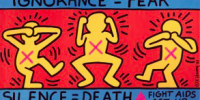
Keith Haring was an American artist and activist in 1980s New York, whose artwork raised awareness on social issues at the time. One the main awareness campaigns Haring participated on was AIDS awareness and activism.
Miles Greenberg is a performance artist from Canada who specializes in time, endurance, and the human body. His art is often complicated and deep into the human experience, with physical endurance mixed into visual metaphors that create deep, profound statements of the human condition.
To bring attention to the widespread apathy toward climate change, nonprofit group 350action and agency Barton F. Graf 9000 got a little personal. Tapping into the meteorological legacy of naming hurricanes after people–thereby marring the good names of unsuspecting Sandys, Irenes and Katrinas everywhere–“Climate Name Change” told the same storm story, but subbed in the name of prominent politicians who refuse to acknowledge climate change.
The project was based on the creation of a restaurant in the neighborhood of El Lewa, Cairo – one of the many neighborhoods built illegally, known as Ashguahiyats, a term meaning 'leaving things to chance'.
Kurokawa Cup is a protest against former head Tokyo prosecutor Hiromu Kurokawa's de facto immunity after he had played mahjong for money, which is an illegal act in Japan.
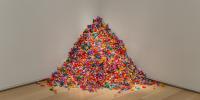
Felix Gonzalez-Torres produced meaningful and restrained sculptural forms out of common materials. “Untitled” (Portrait of Ross in L.A.) consists of an ideal weight of 175 pounds of shiny, commercially distributed candy. The work’s physical form and scale change with each display, affected by its placement in the gallery as well as audience interactions.
The Brooklyn Paper
March 26, 2012
BY ELI ROSENBERG
Occupy Wall Street wants to occupy your wall space.
A collective of poster printers in Gowanus is attempting to help reignite the social movement’s flames for a May 1 “General Strike,” with a handful of new pin-ups it hopes will be as arresting as the image of a ballerina atop a bull that kicked off the whole protest in September.
LONDON (AP) — An anti-migration protest outside a hotel housing asylum-seekers in northwest England turned violent and resulted in the arrests of 15 people, local police said Saturday.
The Merseyside Police department said a police officer and two civilians sustained minor injuries during the disturbance on Friday night in Knowsley, a village located 13.5 kilometers (8.4 miles) from the city of Liverpool.
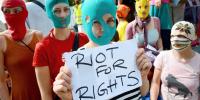
DEPENDING on your taste, punk died in 1979, or maybe 1994, or whenever studded leather cuffs became a must-have mall-girl accessory. Now, suddenly, punk has been resurrected, stitched together anew in the form of the well-accessorized Russian women who call themselves Pussy Riot.
The video DON’T COVER UP, STEP UP is a public service announcement raising the issue of gender-based violence. In the video, a vlogger teaches her fans how to cover up bruises with makeup after she has been beaten by her husband. There is a twist in the story as the husband enters the scene at the end of the video.