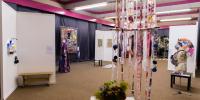
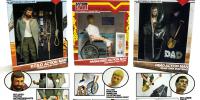
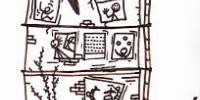
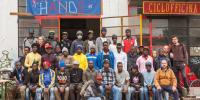
A disability / textile arts project, challenging assumptions about disabled artists & highlighting shoddy treatment of disabled people by current government:
https://shoddyexhibition.wordpress.com/
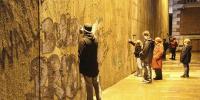
The Rev Lucy Winkett is having trouble sleeping. This is because her church on Piccadilly has decided to erect a full-size copy of the Israeli separation barrier to block off her Christopher Wren church. And because she lives above the shop, the grim presence of this temporary structure is with her all the time. "Politics aside, living beside the 26ft wall is having a curious effect on those who are here.
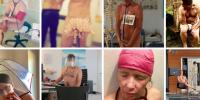
A group of German doctors have posed naked in an attempt to draw attention to shortages of protective clothing and equipment.
Calling their protest Blanke Bedenken, or Naked Qualms, members of the group said they felt at risk from coronavirus and claimed their calls for help over several months had gone unheeded.
Our project aims to show people that joy can be an act of resistance and resilience in the face of global justice issues when harnessed in the right way. The sharing of joy can also act as a connector in a society that continues to grow more polarised through the division of social media and mainstream media.
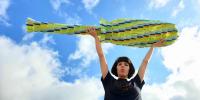
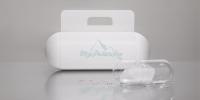
Environmental activist Ella Daish has created a giant tampon applicator as part of a protest against single-use plastic. The piece is made out of period plastic found polluting beaches, waterways, and local ecosystems in the UK. Daish sourced 1,200 applicators from 15 different locations across the United Kingdom. Of the plastic applicators collected for the project, 87.5 percent came from one brand, Tampax.
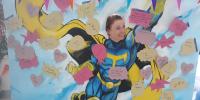
We were ‘Superheroes’ and had fun, colourful, engaging activities which had a high visual impact with a purpose to engage the head, hand and heart. We believe that everyone has superpowers within and they just need to be released but that all superheroes need a rest in order be at their best for themselves and others.
Danish-Icelandic artist Olafur Eliasson has extracted 30 blocks of glacial ice from the waters surrounding Greenland and placed them in public spaces across London, where they will be left to melt.
Called Ice Watch, the temporary installation is meant to serve as a visual reminder of the impact of climate change on the environment.
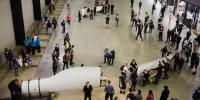
Tate Modern considers activists' wind turbine for art collection: Liberate Tate, an art collective who object to BP sponsorship, have offered the 16 metre turbine blade to the gallery
A 1.5 tonne, 16.5 metre-long wind turbine blade carried last month to the Tate Modern by artists objecting to the gallery's sponsorship by oil company BP is being considered for the national art collection.
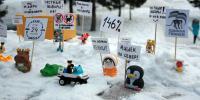
This demonstration was in response to a new law (as of June, 2012) imposing fines for unauthorized protest of up to $20,000 for organizers and $10,000 for participants. After activists were turned down for a more traditional protest, Lyudmila Alexandrova and others set up small dolls, teddy bears, and figurines with demonstration slogans. Two mini protests took place in January 7 and January 14, 2012.
The performance, “Lambrakis LivZ”, concerns the re-enactment of the political speech of Grigoris Lambrakis given in Athens in 1962. Grigoris Lambrakis was a peace-activist, assassinated by a paramilitary plot on June 1963 at Thessaloniki, Greece.
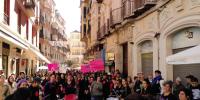
Even though Spain is constitutionally defined as a non-confessional nation, the Catholic Church still holds great power. For example, the Catholic Church is exempt from paying certain taxes, and can reclaim certain buildings as their property. This often creates frictions and conflicts with the activist groups and organizations that would prefer a more secular political environment.
At first glance, it seemed like any other Monday evening in Görlitz, the most eastern town in Germany — where Poland sits just across the river. It was July 31, and a couple hundred people had gathered as part of the so-called Monday demonstrations to protest refugees, the COVID-19 vaccine and the government’s green energy politics.
Street activity to encourage small actions to help the bees at a local level that can impact on a global scale. By engaging the public in badge making we aimed to connect the head, hands and heart. We did this by providing a leaflet with information about the bees, badge making and encouraging people to take small actions. We did this as part of the Creativity and Change course, for more information on the course see below.
Taking back the media. The Bristol Cable is a media co-operative shaking up local news with hard-hitting investigative journalism.
“In every single pub up and down the country people will be talking about how crap the media is,” says Alon Aviram, co-founder of The Bristol Cable, “but there aren’t many conversations around what the alternatives are and how we can remodel it.”
The project responds to the urgency that many asylum seekers and refugees have as soon as they touch a new country's soil: working and learning the language. The project, located in the former army barracks 'Caserma Piave' in Treviso, started as a grassroots initiative.
Criminal barristers in England and Wales have voted to stage mass walkouts and refuse new publicly funded cases in protest against sustained government cuts to the justice system.
In a poll organised by the Criminal Bar Association (CBA), 90% of its members backed direct action from 1 April. They are likely to be supported by solicitors working in the criminal courts and possibly other court staff.
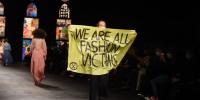
PARIS — At the end of the Dior fashion shown in Paris last September, a woman got up from the audience and walked down the runway carrying a yellow banner painted with the words “We Are All Fashion Victims.”
A Centro Social Okupado Autogestionado (Self-Managed Occupied Social Center) or CSOA is an occupied building dedicated to the development of social and cultural activities. They are part of the “movimiento okupa” (“squatter movement”), a label created and circulated by the mainstream press.
La Casa Invisible project was started in 2007 in Malaga, Spain, when a group of socially involved participants squatted in a run-down building, aiming to eventually claim the legal rights to the property (Moor & Smart, 2016). The space was opened to local artists and creators, quickly becoming a hub for free local music, performances, and seminars as well as creating an important meeting space for social groups (Moor & Smart, 2016).
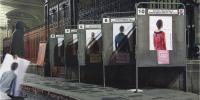
In France, abstention, vote of protest, lassitude or violent reactions rise from all over the crisis of our "representative democracy ».
What about thinking the other way round ? What if we reappropriate the iconography of the election?