Female Frequency is a collective dedicated to empowering women & girls through the creation of music that is entirely female generated. "We are making an album created entirely by females, start to finish --
this means that all writing, instrumentation, arrangement, performance, production, engineering, mixing, mastering, marketing and visual media will be carried out by females."
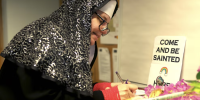
This performative art took place at a series called SUBLIME at the Brooklyn Museum, curated by the collective SAWCC (pronounced saucy)- South Asian Women's Creative Collective.
In 2016, photojournalist Gulnara Samoilova was running a successful wedding photography business. Her diverse portfolio of work spans two decades — with images in the permanent collections of The New York Public Library, 9/11 Memorial Museum and Houston Museum of Fine Arts — but weddings had become her staple business. By the year's end, she'd decided to pack it in.
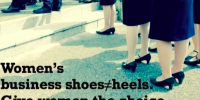
Yumi Ishikawa, a Japanese actress, freelance writer, and part-time funeral parlor worker, started the #KuToo Movement because she feels it’s unfair she has to wear heels at work. She also feels that being required to wear heels is rooted in a cultural problem, one much deeper than physical discomfort.
One film to change the world. Curated every month.
BURDEN OF PEACE follows Guatemala’s first female Attorney General Claudia Paz y Paz in her fight against impunity.
Throughout April 2018 a global audience came together to watch BURDEN OF PEACE, and to dig deep into the issues of women in power with our action kit, bonus features and Impact Talks podcast.
For those of you unfamiliar with the wonderful Worth1000, it’s a website that hosts creative contests of all kinds, most notably for photoshoppers who are outstanding at what they do. Hell, just look at the first question on the site’s FAQ list and you’ll have a basic idea of how good some of these people are at making terrific photoshops.
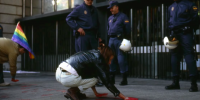
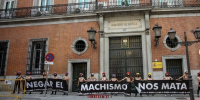
On December 1, 1994 also known as World AIDS day, participating members from LSD (Lesbianas Sin Duda), La Radical Gai, and other allies sought out to protest against the push back of rejection that many of them were receiving from the medical and social perspective.
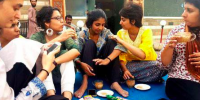
We are sitting at a dhaba – a roadside tea-shop in Pakistan often frequented by lower-to-middle income men. At our table: four women and camera crew. The reporter from ‘one of the most globally viewed’ [read: western], mainstream British outlets looks me in the eye: “So, how safe do you feel at the moment? We were just surrounded by a group of little boys [because of the cameras], do you think the situation can ever turn on you?"
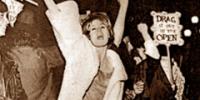
Compton's Cafeteria, 24 hour diner in S.F.'s Tenderloin was a hang out spot for trans women, drag queens, and sex workers. It was a place for the community to meet up for an expensive meal, a place to chit chat, and let each other know they made it through the night alive. They were often harassed by police and arrested for female impersonation. Finally one night in August the Compton's costumers weren't going to take it anymore.
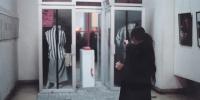
Adrian Piper disguised her identity, changing her race, sex, and social class in order to experiment in public situations and gauge people’s reactions. She investigated how outwardly visible identity markers (like skin color) impacted others’ perceptions of her character. By manipulating her (apparent) identity to produce reactions, she demonstrated the power and influence of stereotypes (Piper, 1996).
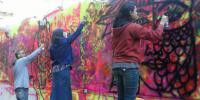
Last week, a dozen of female artists turned the walls of a downtown parking lot in Cairo into a street art gallery. Colourful group murals carrying personal stories and spreading messages to increase women’s visibility, and positively affect public consciousness.
Created by and for women, Broccoli is an independent print magazine based in Portland, Oregon. Although intended for cannabis users, Broccoli is an art and lifestyle magazine that bills itself as “playful, informed, eclectic, and thoughtful.” It encourages the discovery and appreciation of cannabis through explorations of art, culture, and fashion.
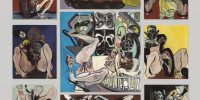
In recent years, a fashion for painting the human figure has preoccupied the art world, with an emphasis on race, gender and other urgent social issues. Yet another pressing topic in America has been curiously absent from art: abortion, which became all the more timely when the Supreme Court overturned Roe v. Wade in June.
In a private Tokyo dinner party artist Mao Sugiyama served his genitals to five of the events guests. Several months prior to the event he chose to have his genitals surgically removed. He released invitations to the event on social media, 70 paid attendees were present for the event.
Self-identifed as asexual, Sugiyama stated that he intended to raise awareness for "sexual minorities, x-gender, asexual people."
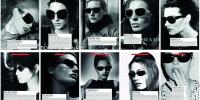
Croatian artist Sanja Iveković started Women’s House (Sunglasses) in 1998 in collaboration with a women’s shelter in Zagreb and later with women’s shelters elsewhere in Europe and Asia. Iveković organised workshops with women in these shelters to produce plaster casts of their faces, as well as to give them the space to write their life stories.
Brainstorm of ideas and collection of the group individual experiences and input.
Preparation and design of the action.
Interview of a member of local organization that is working with homeless.
Research of data,concrete stories.
Build up the scenario to establish the environment to raise awareness of the rising local issue of homeless, specifically female homeless and their challenges in daily life.
As she puts the finishing touches to her habit, Sister Clarita, a Mexican immigrant living in Los Angeles, tells me that there are more than 3,000 LGBT+ nuns around the world. They’re part of the Sisters of Perpetual Indulgence, an international network of activists who identify as secular nuns.
Artist Bryan Lewis Saunders took it upon himself to draw a self portrait every time he took a psychoactive substance. These ranged from zoloft to morphine to marijuana and it is an amazing subjective experience to witness. We can almost get a taste of what each drug must feel like on the inside, at least to Saunders, and an experiment like this raises some important questions like what are drugs and what place do they have in society?
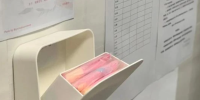
From October to December 2020, Chinese university students nationwide launched a viral movement to install “menstrual pad mutual aid boxes” in women’s restrooms—free, wall-mounted containers stocked with disposable pads on a take-one, replace-one basis. Nearly 250 campuses joined within weeks. Some sustained their boxes for over a year, while others saw them vanish after bureaucratic pushback, logistical hurdles, or dwindling volunteer resources.
The Harlem Festival of Culture not only pays homage to the past but also envisions a brighter future. It serves as a platform to showcase the rich diversity and dynamism of Harlem's artistic community, while also acting as a catalyst for social change and community empowerment. The festival boasts a lineup of artists from various genres and backgrounds, including jazz, soul, hip-hop, gospel, blues, rock, Latin, and Afrobeat.
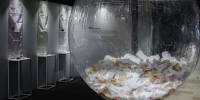
"100 Questions About Sex from Children" is an annual touring sex education exhibition founded and curated by Se A, a leading advocate of inclusive sex education in China. Since its launch in 2021, the exhibition has been held in major cities such as Shenzhen and Guiyang, with plans to expand into regions where sex education and gender awareness remain underdeveloped.
The Scheherazade Project is a Performing Arts Non-profit based in Washington DC. Co-founders Lisa Leibow and Julia Alvarez were inspired by Scheherazade in the Arab classic 1001 Nights and created The Scheherazade Project.
For more information, our website is https://thescheherazadeproject.org/The-Scheherazade-Project
FEMEN is an organization that is revolutionizing the feminist movement. Founded in Ukraine in 2008 and adopted in Spain in 2013, FEMEN protests gender-based issues such as inequalities, violence, patriarchy, etc. Since its creation, it has spread to several other countries, and there have been hundreds of organized protests.
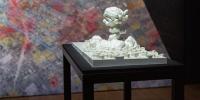
Forensic Architecture's Cloud Studies is a project that investigates the impact of toxic clouds on colonised and oppressed communities. The clouds, originating from sources like tear gas, industrial emissions, chemical weapons, and forest fires, often go unaddressed due to doubt and denialism.