MISSION
The mission of the Hip Hop Caucus is to organize young people to be active in elections, policymaking and service projects. We mobilize, educate, and engage young people, ages 14 to 40, on the social, issues that directly impact their lives and communities.
COMPANY OVERVIEW
Cassils has used clay, fire, photography, urine and the musculature of their own body as mediums to provoke, challenge and excite whoever experiences their singular creations.
On November twelfth, 2008, over 80,000 copies of a replica of the New York Times were distributed in several cities around the United States. The paper included 14 pages of “best case scenario” news set nine months in the future.
See the The New York Times Special Edition website.
From The NationBy Laura FlandersA new campaign calling itself Caring Across Generations has in mind
nothing less than a 180-degree turn in the way that Americans think
about themselves, one another, the economy and workers. This group aims
to create 2 million quality jobs in the process and put us all on track
for a happy, healthy old age too. But first we need to talk, out loud,
about care.
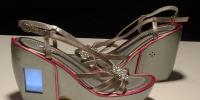
In the past, prostitution was intrinsically tied to religion ritual and public policy, and it wasn't considered a taboo. Taking up from the idea of ancient sandals worn by prostitutes, the artist has created platform shoes that specifically focused on their protection and safety nowadays, with a GPS tracker that can send emergency signals to 911 or a sex workers' rights group.
"White Noise explores the seductive power of extremism. Hatred feels good. But the fix is fleeting. As the film progresses, the subjects reveal the contradictions at the heart of their world. Lauren Southern advocates for traditional gender roles, but resents the misogyny and sexism of her peers. Mike Cernovich warns that “diversity is white genocide,” but has an Iranian wife and biracial kids.
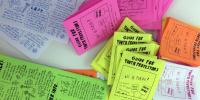
The project consists of a double-sided, hand-drawn 8.5" x 11" quarter-fold sheet available to print and distribute freely.
It features such topics as basic information on police tactics (kettling, LRADS, tear gas or pepper spray), ways cops might try to get you to talk to them, and your rights as a student.
"Lincoln Square — The runners tossed blankets, gloves, jackets and other gear onto the pile, each leaving a piece of where they came from. A French man donated his running shirt and pants, and noted that they were designer wear. Enybe Merritt, 32, contributed a West Virginia University Cycling sweatshirt.
The #LikeAGirl campaign was aired as a commercial during the 2015 SuperBowl. In the commercial, young girls were asked to act out certain phrases. They were told to "fight like girl", "throw a ball like a girl", "run like and girl", and so on. As an adolescent or an adult, these phrases carry a negative connotation. Girls are seen as weak, frilly, and inferior.
Brick x Brick is a public art performance that builds human “walls” against misogyny. It is organized by the Public Displays of Affection, a collective of artists, designers, educators and organizers that engages in nonviolent direct art action. During the wall performances, participants wear brick-patterned jumpsuits adorned with colorful brick patches bearing statements of misogynistic violence made by US President Donald Trump.
The AIDS pandemic began in the early 1980s and brought with it a surge of emotions from the public: they were afraid, angry, fearful and defiant. The arrival of AIDS also brought with it a condemnation of the LGBT community. These emotions, along with the view on the LGBT community, paved the way for a new generation of artists.
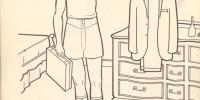
While adult coloring books are hitting a high note right now in 2016, this isn't the first time this has happened. Back in the 1960s, coloring books were so popular that one of them even made it to the New York Times bestseller list.
However, while modern adult coloring books are very geometric and abstract, intended to help adults destress and relax, adult coloring books from the 1960s were much more political.
Glowing softly in the West Texas desert night, artist Guadalupe Maravilla’s Mariposa Relámpago, was once an ordinary school bus but is now a richly decorated, mobile site for remembrance and healing. Like much of the artist’s work, this piece commemorates and confronts the artist’s journey to the United States as an unaccompanied, undocumented minor fleeing civil war in El Salvador in the 1980s.
Colorful portrait of a Muslim woman wearing an American flag colored head scarf. Image on back of a woman with a rose in her hair in black and white with text that states, "We are resilient. We are indivisible. We are greater than fear. We will defend dignity. We will protect each other." -- "The We the People campaign aims to restore hope, imagination, curiosity, and creativity into our country’s dialogue.
Despite the pushes to motivate more young girls into STEM (science, technology, engineering, and math) fields, women are still very underrepresented in almost every scientific field. Part of this motivation is because a lot of young girls would rather do something else.
The project provides somatic rituals to solve the problems of creative makers, offering specific somatic instructions for how to deal with breaks in (or lack of) creativity. Rituals available as a live, interactive performance and as limited-edition chapbooks, and broaden an understanding of creative “results,” “ends and means,” and the idea of a muse/magic as relates to creative labour.
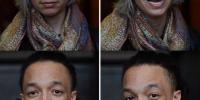
Shea Glover, age 18, began a senior project that became an activist/social campaign. Shea approached people throughout her high school and asked them if they would pose for her senior project. To each person she would say, I'm taking pictures of things I find beautiful". Recording the entire encounter revealed the diverse reactions of each student and teacher. Some erupted with laughter, others a huge grin, while some embarrassment.
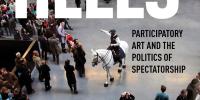
In 2006, art historian Claire Bishop lit a fire under the collective seat of the art world with her Artforum piece “The Social Turn: Collaboration and its Discontents.” It set off — as much as any essay in the hermetic and staid world of contemporary art theory can — an uproar. The article inspired Grant Kester, an art historian also specializing in relational art practices, to respond:
Brian Larney is an AI.tivist or American Indian artist. He is also an Artivist where he performs Artivism, a concept that includes art as a form of activism.
Pink seesaws were installed along the United States/Mexico border. The project, created by two professors sought to unite both sides of the fence by creating an activity that required a participant on either side. The seesaws were installed so there is one seat in El Paso, Texas and one in Ciudad Juárez, Mexico with the border fence acting as the fulcrum.
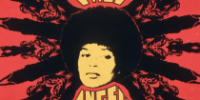
In Oakland, artists created murals and installations to honor activist Angela Davis, celebrating her legacy in fighting for racial and gender justice. These public artworks inspire new generations to continue the struggle for social change.
"Rainer’s early choreography celebrated, among other things, ordinary movements: the expressive capacities of kneeling, of shaking your head, of rolling on the floor. And when she went through periods of sickness, those movements became an even more important part of her repertoire. In her 1966 Hand Movie, an 8mm film she shot on her sickbed, we see a dance she choreographed for just her hand, while her body rests.
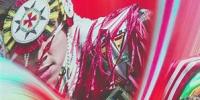
"The Red Power Movement of the 1960s and 70s was a time of profound social change and progress for American Indians in the United States and Canada. In her outspokenness about the injustices facing Indigenous people, Buffy Sainte-Marie also sang for peace, the environment, women and children—believing that art can have impact and make a difference.