Recurrent themes in Emily Jacir's practice—which spans a range of strategies including film, photography, interventions, archiving, performance, video, writing, and sound—are silenced historical narratives, resistance, movement, and exchange.
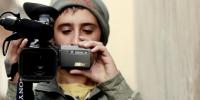
In 2005, Emad Burnat got a video camera to record the birth of his son. That same year, Israel's security barrier went right through his village of Bil'in in the West Bank. The fence cut off some fields and olive groves on the other side.
When protests broke out against the establishment of the barrier, Burnat became the unofficial cameraman for the weekly anti-wall protests that drew support from around the world.
Youngsters on the West Bank will have the chance to benefit creatively from a new project this summer. From the beginning of July, Handheld Stories plans to teach filmmaking skills to groups between eight and 16 years old from youth centres and refugee camps in East Jerusalem, Nablus and Hebron, while also giving them video equipment, computers and software.
Bashar al-Assad snores, his head twitching on a large white pillow. Suddenly, he wakes up. “The people want to overthrow me!” he screams, the pompom on his nightcap bouncing.
Welcome To Palestine
by Saed Bannoura
Israeli daily Haaretz, reported that 470 of the 1200 persons that Israel blacklisted as “pro-Palestinian” and part of the Welcome To Palestine campaign, were not activists; two of them were a French diplomat and his wife.
"Everyday Iran”, inspired by “Everyday Africa”, is the most widespread mobile photography project based on social networks in Iran which started since early in 2014.
We in Everyday Iran ask the whole people who live and work in Iran to send us their photos of daily life in the country with #everydayiran. Those photos which are selected by 5 Iranian curators are reposted on our social media pages.
There are over 200,000 migrant domestic workers living in Lebanon
today — a large number when you considered that Lebanon’s population is
only a little over 4 million. Most migrant workers live with their
Lebanese employers, cleaning their houses, washing their clothes,
cooking their food and looking after their children. Yet these workers
are not included under Lebanon’s labor laws — they are not entitled to
Often in military style video games we kill without much regard for the enemy. They are faceless or stereotypical, the Nazi or evil Cold War–era Russian. They are enemies that were fought on the battlefields of great wars, or they are aliens that have no resemblance to humans save for a general humanoid form.
Iran is a nation with a fine art tradition that stretches back thousands of years; its reputation for contemporary fashion design less so. Writing that from an external, Western perspective may read unduly dismissive, but it’s a statement that holds up even from within the country’s borders, Shiva Vaqar assures us. “Being a designer has never really been considered a serious job here,” she says over the phone from Tehran.
A Lebanese Olympic skier whose topless calendar prompted calls for a ministerial inquiry has unwittingly sparked a social media campaign backing her, with supporters stripping off in solidarity.
Three years ago, Jackie Chamoun posed for a calendar photo shoot. Behind-the-scenes footage recently was posted online, and Lebanon's sports and youth minister reportedly ordered an investigation.
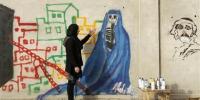
Meet Shamsia Hassani. At age 24, she is one of Afghanistan's first female graffiti artists.
An associate professor of sculpture at Kabul University, she was first introduced to graffiti in 2010 by British artist, Chu, during a week-long course in street art.
Meet also Malina Suliman, 23, who has been receiving threats from extremists due to her work in graffiti.
MoMA presents the first comprehensive American survey of the leading contemporary artist Walid Raad (b. 1967, Lebanon), featuring his work in photography, video, sculpture, and performance from the last 25 years.
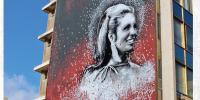
Yazan Halwani is a young Beiruti artist who paints murals of revered Lebanese and Arab figures on prominent walls in a bid to help overcome sectarianism in this fragmented city. “What I try to do,” he explains down a fuzzy line from Beirut, “is write the stories of the city, on its own walls – creating a memory for the city.”
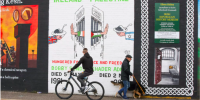
Palestinian and Israeli flags flutter in pro-Irish and pro-UK neighbourhoods in Northern Ireland, tapping into its own history of conflict and division that still affects everyday life despite a 1998 peace deal that largely ended violence.
Wafaa Bilal's childhood in Iraq was defined by the horrific rule of Saddam Hussein, two wars, a bloody uprising, and time spent interned in chaotic refugee camps in Kuwait and Saudi Arabia. Bilal eventually made it to the U.S. to become a professor and a successful artist, but when his brother was killed at a U.S. checkpoint in 2005, he decided to use his art to confront those in the comfort zone with the realities of life in a conflict zone.
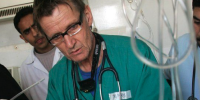
A Norwegian physician who has volunteered in Gaza for decades said Friday that Western leaders, including U.S. President Joe Biden, are complicit in Israel's intensifying assault on the Palestinian enclave's hospitals, which are overwhelmed with airstrike victims and displaced people seeking refuge.
This exhibition
is a collection of work by displaced Syrian artists. With the support of the British Council, 'Syria: Third Space' demonstrates the roles that artists play in supporting recovery and resilience. It seeks to show how artists can break boundaries, support and unite communities, re-interpret and offer alternative viewpoints through their practice.
Syria: Third Space
About us
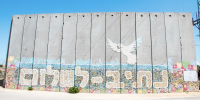
"Path to Peace" - is a joint mosaic creation, by thousands of people, towards hope, love, and happiness among all people. The creation is placed upon the border wall that divides the Gaza Strip and Israel, adjacent to the homes of Moshav Netiv HaAsara.
The creation is seen from both sides of the wall, spreads on the gray security wall and completely changes the place's atmosphere.
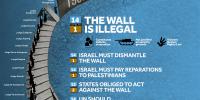
Over the past 2 years, Visualizing Palestine (VP) has harnessed visual storytelling to bring public attention to the daily injustices facing Palestinians, from demolition of homes to mothers forced to give birth at military checkpoints. VP wants to start 2014 by raising global awareness around two key issues.
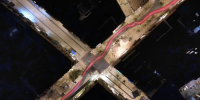
The "Day of Disruption" kicked off earlier than planned early on Thursday morning when dozens of Israeli artists painted a red line on the road to Israel's High Court of Justice in Jerusalem.
Creative activism and the remaking of Palestine
While policy wonks and media pundits wallow in endless debates about Jewish settlements and the threat of terror, Palestinian groups are creatively exploring alternative ways to realise their national aspirations.