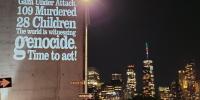
As the death toll from Israel’s attacks on the besieged Gaza Strip continues to rise, a guerrilla projection on May 13, 2021 illuminated a building in Brooklyn’s Dumbo neighborhood with messages of solidarity with Palestinians.
Decolonizing Architecture/Art Residency (DAAR) is an art and architecture collective set up by Alessandro Petti, Sandi Hilal and Eyal Weizman, based in Palestine. Their work is a critical examination of the role played by architecture in the occupation of the Palestinian territories.
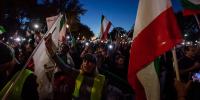
“Baraye,” the anthem of Iran’s “Woman, Life, Liberty” protest movement—a song woven together entirely from a Twitter hashtag trend in which Iranians express their investment in the current protests—continues to unite Iranians in their opposition to the Islamic Republic several weeks after it was first released online.
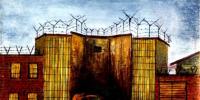
Charged with participating in demonstrations against the Islamic Republic of Iran, Soudabeh Ardavan was held for eight years (1981-1989) in Iran’s notorious Evin Prison. She found sanity and solace through the forbidden activities of drawing and painting, secretly producing paint from flower petals and tea, using brushes made from toothpicks and human hair.
The post (r)evolutionary exercises are the outcome of a meeting/friendship/project that started in summer 2010, when we took part in "Goings on" seminar in Beirut, Lebanon. In this seminar, curated by Cecilia Andersson, Scandinavian and Middle east art groups were invited to meet and learn about each others practices. That's what we did, we got along really well, and we started at once to think of ways to do something together again.
“I am the dishes, the ironing, I am everything, I am nothing. But remind me: Who are you?” So plays the hook of a new feminist anthem released by the Palestinian rappers, DAM. The video for “Who You Are” plays on sexist attitudes by having men and women switch domestic roles typical in the Middle East, but also familiar across most cultures.
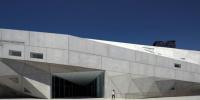
The Tel Aviv Museum of Art is joining the countrywide judicial overhaul protests planned for Thursday, March 23, and will darken the halls and galleries of the museum, closing exhibits to the public and canceling planned tours and lectures.
The only exhibit that will be open to the public, for free, is the exhibit of Israeli art from the museum’s collection, “Material Imagination: Center of Gravity,” which has been open for a year.
The U.S./Iraq War Memorial is an augmented reality public art project and memorial, dedicated to the thousands of individuals who have died on both sides of the conflict.
For third world artists who are forced into exile, the creativity process could be greatly challenged due to displacement in language, community and history. Many filmmakers in exile tend to look at their connection to the homeland in strictly political terms, or give up making films overall.
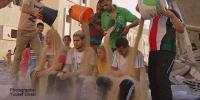
As the rest of the world continues to dump buckets of cold water over their heads in support of ALS research, some Palestinians have created their own version of the Ice Bucket Challenge to raise awareness about the ongoing crisis in Gaza.
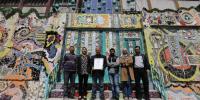
A group of Syrian artists in Damascus has created the world's biggest mural made of recycled materials, a rare work aimed at brightening public space in a city sapped by war and sanctions.
The brightly coloured, 720-sq metre work was constructed from aluminum cans, broken mirrors, bicycle wheels and other scrap objects and displayed on a street outside a primary school in the centre of the Syrian capital.
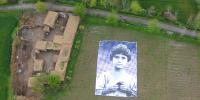
A giant art installation targets predator drone operators
In military slang, Predator drone operators often refer to kills as ‘bug splats’, since viewing the body through a grainy video image gives the sense of an insect being crushed.
Thousands of animal rights activists marched against a draft law on Sunday that would make changes to Turkey's Animal Protection Law No. 5199, seeking to introduce practices currently used in other countries such as collecting stray animals from the streets and euthanizing members of the “excess” population.
In a sleepy town in Iranian Kurdistan, people take off their winter coats. It is evening, and outside one can just about discern the silhouettes of the mountains that lead to the Turkish and Iraqi borders. Inside, some 60 people fill the small community centre with a clammy heat. But it is not just warmth they are after. They have come for poetry.
Bashar al-Assad snores, his head twitching on a large white pillow. Suddenly, he wakes up. “The people want to overthrow me!” he screams, the pompom on his nightcap bouncing.
Unfortunately, those who struggle for a more equal and democratic society are not the only ones who can make use of creative forms of activism. The following example shows how creative strategies can also be employed by those who have less wholesome intentions in mind.
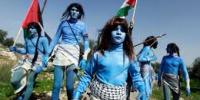
Bil'in is a Palestinian village located 12 kilometres west of the city of Ramallah in the central West Bank. In 2005, the Israeli government began constructing the security barrier in the Bil’in area, and since then approximately 55 percent of Bil’in’s former land has been used for the construction of the Modi’in Illit settlement.
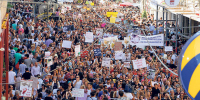
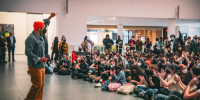
As the conflict between Israel and Hamas continues, hundreds of people gathered inside the Museum of Modern Art and outside of the Brooklyn Museum on Saturday for protests.
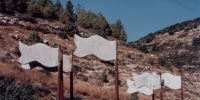
Utilizing excess construction cement that was being dumped into a creek near Beit Shemesh, Israel, Shai Zakai harnessed the unclaimed cement to create an art installation that brought awareness to the ongoing pollution. The project was entitled, 'Concrete Creek' aimed to bring the community closer to their environment. Zakai installed cement flags and set them among the river.
#ChallengeAccepted, also known as the Challenge Accepted campaign, is an Instagram tagged challenge as well as an awareness campaign on empowering women involving sharing posts of black-and-white selfies.
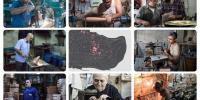
Craftsmanship in Istanbul is under the danger of extinction with all the knowledge accumulated with generations of masters and apprentices. After visiting some workshops in the city, craftsmen shared with the initiators how their condition and businesses have changed since they started working.
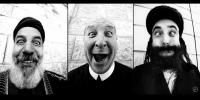
In 2007, anonymous French photographer JR embarked on the Face2Face project - the largest unauthorized photo exhibition ever conceived. JR and his collaborator Marco engaged Israelis and Palestinians employed in the same profession to be photographed making funny faces. They then enlarged the photos to grand proportions and wheat pasted juxtaposed portraits onto both sides of the security Separation Wall and in surrounding cities.