Shortly after the close of this year’s International Women’s Day, China’s Twitter-like service Sina Weibo shut down Feminist Voices. With 180,000 followers, the group’s social media account was one of the most important advocacy channels for spreading information about women’s issues in China, but in an instant, it was gone. A few hours later, the private messaging app WeChat also shuttered an account for the group.
Nadya Tolokonnikova is a Siberian artist and a creator of the feminist protest art collective Pussy Riot. Tolokonnikova’s political actions and wide-ranging performance interventions have established her as a leading voice in the fight against authoritarian power. During her residency, she will compose performances that demonstrate her multifaceted approach to resisting systems of oppression and dehumanization.
Photography has long been associated with acts of resistance. It is used to document action, share ideas, inspire change, tell stories, gather evidence and fight against injustice.
This group exhibition at the SLG, organised in collaboration with the V&A, brings together works by international artists and collectives who are using the camera to challenge and move beyond traditional protest photography.
When people think of feminist protests of the 1960s, they most often think of bra burning at the Miss America pageant. This is super lame because bras weren’t even burned at that protest, just discarded into a trash can. It’s hard to imagine why this trope has persisted over the decades. Bras are an investment, so I have a hard time believing that any of my friends would willingly burn expensive (and sometimes really fun) garments.
Miku is a Japanese virtual idol. She is 16 years old. Miku is created in 2007 and has been heavily promoted since 2008 and was originally aimed at professional musicians. On September 12, 2007, Amazon.co.jp reported sales of Hatsune Miku totaling 57,500,000 yen, making her the number one selling software of that time. She was the first vocal to be developed and distributed by Crypton Future Media and sung in Japanese.
In keeping with his activist turn on 2016’s 4 Your Eyez Only, J. Cole’s new album, KOD, is an exploration of addiction. The title has three different meanings that all speak to this aim: Kids On Drugs, King OverDosed, and Kill Our Demons. Each feeds into the next in this narcotic odyssey.
A press release from the non-profit organization - Women on Waves - regarding the intention of the creation of the Diesel for Women hoax website, pointing out the mistreatment of women workers in the fashion industry. This blurb and included images are taken directly from the Diesel for Women website:"BY Women on waves on February 4, 2012
When Behnaz Babazadeh was young, her family moved from Afghanistan to the US. She loved almost everything about her new home — especially America’s amazing selection of candy — but she also loved wearing her familiar pink-flowered headscarf, which she’d grown used to wearing as part of her school uniform in her old home.
Today’s Bad Bitch Award goes to Karmenife Paulino, a 22-year-old graduate of Wesleyan University. Raped at a fraternity during her freshman year, she reasserted her sexual agency in a photoshoot entitled “Reclamation,” where she poses as a dominatrix on fraternity grounds.
Lady Gaga showed up to the 2010 MTV Music Video Awards wearing a dress made out of raw meat. She claimed that the dress showed her disgust towards the Don't Ask Don't Tell policy, but missed the media opportunity to clearly string her thoughts together.
Acknowledging that sexual harassment is a serious problem in Egypt, the volunteer based organization HarassMap has created a series of strategies -both on site and online- to stamp out the social acceptability of sexual harassment in the country.
“The Feminist Zine Fest showcases the work of artists and zine makers of all genders who identify on the feminist spectrum, and whose politics are reflected in their work. For the second consecutive year, Barnard proudly hosts the zine fest, welcoming approximately 40 zine-makers eager to share their work.
The statistics in regards to older men marrying young girls is mind boggling and disgusting. Every day 33,000 girls are married to older men, denied their rights to education and opportunity and robbed of their childhood.
Many countries around the world find this practice normal, thankfully we do not find it normal here in the United States. More than 91 countries allow girls as young as six-years-old to be married. This is a problem.
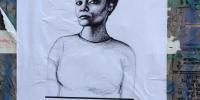
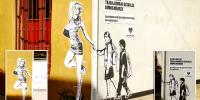
Stop Telling Women to Smile is a street art project by Tatyana Fazlalizadeh that addresses gender based street harassment.
Street harassment is a serious issue that affects women world wide. This project attempts to take women's voices, and faces, and put them in the street - creating a presence for women in an environment where women are a lot of times made to feel uncomfortable and unsafe - outside in the street.
Started by UK resident Laura Bates, The Everyday Sexism project is an open forum for women to record their stories of experienced sexism. The project was started as a means to show that gender inequality and sexism pervade contemporary society.
The Girl Effect 2010 video "The Clock is Ticking" receives premiere at Clinton Global Initiative
• "The Girl Effect: The Clock is Ticking" video shown to world leaders at the Girls and Women opening plenary of CGI, Tuesday 21 September
• Video highlights need for urgency: reach a girl before she reaches the age of 12 and stop poverty before it starts
Background:
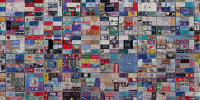
The Quilt was conceived in November of 1985 by long-time human rights activist, author and lecturer Cleve Jones. Since the 1978 assassinations of gay San Francisco Supervisor Harvey Milk and Mayor George Moscone, Jones had helped organize the annual candlelight march honoring these men. While planning the 1985 march, he learned that over 1,000 San Franciscans had been lost to AIDS.
"University of Miami students, mostly male, walked a mile in red high heeled shoes. They are walking a mile in her shoes.
The mile long walk was in support of Walk a Mile in Her Shoes®, an international men’s march to stop rape, sexual assault and gender violence.
The organization, which says on Facebook that they were founded in 2001, has walks around the world.
Catcalls of NYC is an organization that uses Instagram and everyday intervention as a platform of raising awareness about street sexual harassment. The group receives direct messages from people who have been catcalled on the street. The group goes to the location of the harassment and writes the catcall on the sidewalk in chalk. The Instagram account CatcallsofNYC then posts on their account a picture of the chalk writing.
Both the Michelle Obama, the First Lady of the United States of America, and David Cameron, the Prime Minister of the UK, have been photographed holding signs with this hashtag in support of the still missing, kidnapped Nigerian girls.
Cleve Jones's powerful vision for memorializing those lost to AIDS was realized in October 1987 in Washington D.C. It showcased the artistic contributions of people who'd lost loved ones to the virus from a number of US metropolitan centers. The quilt has continued to grow for the nearly 40 years since. By 1992, the AIDS Memorial Quilt included panels from every state and 28 countries.
At the end of June of this year, as France sweated through record high temperatures, a group of men took a moment to escape the heatwave and compete in the inaugural Mr Triton France competition.
Organised by Merman Ludo, the event – which organisers believe might be the first of its kind in the world – saw ten competitors from all over the country face off in a battle to be the best merman France has ever seen.