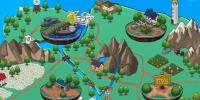
From Konami Digital Entertainment (makers of Dance Dance Revolution, Castlevania, and other hits) comes a significant expansion of their long-running support of the World Food Programme’s gaming initiatives. The result is the re-emergence of Food Force, one of the most successful early games for change titles.
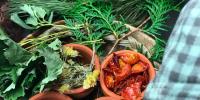
Desi is giving all she has to the project Women In the Making (WIM). From rooftop farming and summer education, to her radio show and online presence. She is an advocate for better health, food, and policy in Brooklyn, and nurturing young activists.
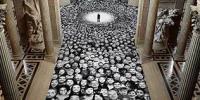
After winning the TED Prize on March 2, 2011, the French-artist JR launched the Inside Out Project, in his first TED Talk. Using his own artistic practice as inspiration, this participatory platform helps individuals and communities to make a statement by displaying large-scale black and white portraits in public spaces. Through their “Actions,” communities around the world have sparked collaborations and conversations.
Share Your Water Story invites every global citizen to participate in a creative conversation around the different ways in which water impacts our lives. The project encourages people to contribute original expression of any kind via online platforms on the global justice issue of water and sanitation.
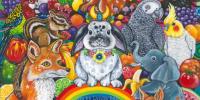
Children in marginalized communities often lack access to healthy foods, especially fresh fruits and vegetables. Poor nutrition, in turn, has significant negative impacts on a child’s health and ability to focus in school. Learning and academic achievement often plummet.
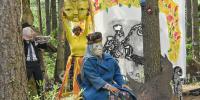
The Insurrection-Resurrection Service Circus is this summer’s [started in 2020 and is ongoing] contribution to the iconic Bread and Puppet Circus tradition beloved by audiences worldwide for nearly 2 generations — a bright, raucous melee of short acts governed by a brass band, addressing the heart of the current moment using diverse puppetry styles and spanning many moods, from slapstick to the sublime.
The Fundred Dollar Bill Project, initiated by artist Mel Chin, is a collaborative art project aimed at raising awareness and mobilizing action against the environmental and health threat of lead contamination. It encourages individuals to create their own unique interpretations of $100 bills, symbolizing the value of human lives and the need for a lead-free future.
Since the 1980s, revitalizing the economy has always been the country's development strategy. Although China's economy has grown rapidly in just twenty years, attracting worldwide attention, environmental destruction has also become a problem. For example, the Fu Nan River in Chengdu, like many rivers nationwide, is severely polluted.
Animal rights activists march in downtown L.A.
By Kelly Goff
Ann Bradley is a passionate vegan. The 60-year-old Silver Lake resident said she wasn’t always, though. “I ate it, I wore it, I sat on it, I went to circuses, the whole thing,” she said.
José Bové, a sheep farmer/activist in Aveyron in the Midi-Pyrénées region of France, is a modern day Astérix, a mythical Gaul who drubbed foreign intruders centuries ago. In Bové's case, the intruder was McDonald's, the American fast food chain.
As the cold air bit our faces, and we hid deeper into our layer of sweaters, my family and I continued to wander around Manhattan, seeking a place which would provide warmth and food. And there it was, dimly lit: the Michelin-starred ramen restaurant, Tonchin. We ordered the highly-sought after ramen bowl, Tonkotsu, and awaited our meal. Out of the kitchen, the steam arose from a bowl of a warm, salty pork broth.
"a dinner cooked by six indigenous chefs, members of tribes from around North America, who are meeting together for the first time this week to launch a new indigenous activist group, called the I-Collective. Thursday’s dinner will be at Dimes, on Canal Street, and it will follow a dinner tonight for New York City’s local Native American community at the American Indian Community House, on Eldridge Street.
I must first come clean, I studied fine arts in high school from years nine to 12. Since my studies were concluded, I had never held a paintbrush again.
Drake has released an emotional video for "God's Plan" in which he donates the music video budget to people in need.
Shot in Miami and directed by Toronto's Karena Evans and Jordan Oram, the video features a bunch of generous, grand gestures.
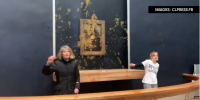
Leonardo da Vinci's Mona Lisa (around 1503-19) was attacked at the Musée du Louvre, in Paris, today by environmental activists who threw soup over the world's most-recognised and most-viewed painting. The celebrated portrait, which has been protected by security glass for the past 70 years, was not damaged in the attack.
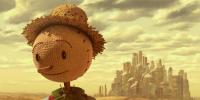
Fast-casual chain Chipotle Mexican Grill added some spice to its long-running "Food With Integrity" sustainable farming campaign by teaming with Academy Award-winning design firm Moonbot Studios for The Scarecrow, an animated short film and accompanying mobile game created to increase consumer awareness of animal confinement, synthetic growth hormones, toxic pesticides and other fixtures of industrial food production.
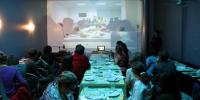
"A few months ago artists John Peña, Jon Rubin, and Dawn Weleski opened Conflict Kitchen, a take-out restaurant that only serves cuisine from countries that the United States is in conflict with. Nowadays the Iranian food is served at the counter. More precisely, the kubideh, a dish made of grilled ground meat in freshly baked barbari bread with onion, mint, and basil.
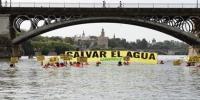
A protest on June 18, 2022 took place in the Guadalquivir River in Seville, where fifty Greenpeace activists used their bodies and environment to stage a demonstrative performance, highlighting the water crisis that the Andalusian region is predicted to face as a result of anthropogenic climate change. The area is at extreme risk of increased temperatures and pervasive droughts, which will impact the river that is the subject of the demonstration.
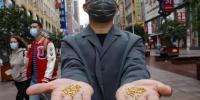
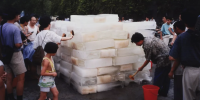
By throwing away 1,000 pure gold rice grains into a river, a Chinese artist, who wanted to raise public awareness about food waste, found his behavior was not well received by the general public who called the performance "fake art and a waste of money."
Today over 40 people gathered at the Ministry for Internal Affairs in the centre of Tirana, the capital of Albania. The issue is Tirana's drinking water, which is not clean, unreliable as it comes out of the tap only a few hours a day and that sewage systems continue to pollute the water sources.
In this game, you own and operate McDonald's. You have the choice to try to operate ethically or make decisions like using genetically modified soy or administering bovine growth hormone. If you go the ethical route, you bankrupt the company and lose.
The game then forces players to become "the bad guy" gleefully firing workers, plowing over rainforests, and bribing nutritionists in order to stay profitable.