ScareMail is a web browser extension that makes email “scary” in order to disrupt NSA surveillance. Extending Google’s Gmail, the work adds to every new email’s signature an algorithmically generated narrative containing a collection of probable NSA search terms. This “story” acts as a trap for NSA programs like PRISM and XKeyscore, forcing them to look at nonsense.
At the New Orleans Swing Dance Festival the all African-American dance troupe The Rhythm Ambassadors were presented along side an African-American iteration of the Preservation Hall All-Star band with African-American vocalist Taryn Newborne to deliver the message that the African-American Lindy Hoppers were going to be protest until their rhythm is better presented...i.e.
From Black Power to Migrants’ Power
BY Robin Cembalest POSTED 01/22/13
As ’60s activist art enters museums, a new generation is creating an iconography of protest for today
For some, October 14, 1968, was a clarion call to the future.
On that day, a group of 12 black students at UC Santa Barbara, tired of the unequal treatment and passive-aggressive racism they received as Black athletes — and as members of the campus community at large — barricaded themselves in the university’s North Hall.
The theatre has luxurious red velvet upholstered seats, grand ceilings and gilded trimmings. The rows of chairs stretch back into the ostensible blackness, with light beaming from the projector room. Ahead, archival footage of stylish black travelers pack the screen as an unseen narrator discusses the hardships of mid-20th-century black travel.
Dogs featured in one ruse to ridicule the regime—pictures of dictator Than Shwe were hung around the necks of the stray dogs that roam the streets of Rangoon. The pictures, which rapidly found their way onto the Internet, are the work of an exiled Burmese satirist who goes by the name of Mr Creator. Downloaded copies of his pictures and cartoons are popular items among cyber dissidents.
Brother Gao are two China artists. Their works are aims at reflecting the reality of Chinese society in an artistic and critical view. In 2003, the brothers held an event to invite many strangers for a dinner.
An erroneous tip called into law enforcement authorities in 2002 subjected Hasan Elahi to an intensive investigation by the FBI and after undergoing months of interrogations, he was finally cleared of suspicions. After this harrowing experience, Elahi conceived “Tracking Transience” and opened just about every aspect of his life to the public.
Sophie Calle's works discuss the issue of "privacy", the composition of an individual's identity at the social level, and the relationship between "private" and "public/group/society", including personal information, personal records, public surveillance, and other topics. An obvious feature of her works is the unique and extremely subjective criteria of judgment and reference for measurement.
Note before the post: This article is great in highlighting a specific case of creative activism in the streets of New York City, but also gives some contextual background to how this project manifested.
On a sidewalk in the Village in downtown Manhattan, an African-American woman leans on her elbows and knees, wearing only black underpants. Scrawled in black marker all over her body are the words "Ain't I a Woman?"
By David Gonzalez
Leslie Thomas wants to shock you. She wants to anger you. And above all, she wants you to do something.
She’s not talking about run-of-the-mill, “Hey buddy, watch your step” angry or TMZ sleaze shock. She’s talking about the great humanitarian and social crises of our time, like in Darfur, Afghanistan or Myanmar. And yes, she’s talking to you.
“It might not seem that an act of public laundry could unsettle a president with a well-deserved reputation for inflexibility, corruption, and brutality. But mass washing ceremonies were a key element in getting rid of Peru’s unpopular president, Alberto Fujimori, after more than a decade in power.
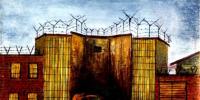
Charged with participating in demonstrations against the Islamic Republic of Iran, Soudabeh Ardavan was held for eight years (1981-1989) in Iran’s notorious Evin Prison. She found sanity and solace through the forbidden activities of drawing and painting, secretly producing paint from flower petals and tea, using brushes made from toothpicks and human hair.
This is a photographic work of Shanghai during the period of the city's lockdown, in which the artist uses rope as a medium to explore the themes of government coercion and individual survival. In the image, the artist ties a small amount of vegetables distributed by the government for the following week with a rope and ties an antigen test to the rope as well.
A toothless garbageman who once wandered Hong Kong’s streets with dingy bags of ink and brushes tied to his crutches is now the subject of a major retrospective. About 300 calligraphic works by the late Tsang Tsou-choi — who is best known by his self-dubbed title, the King of Kowloon — are showing at the ArtisTree art space in a high glass tower.
Creative Time, Social Practice Archive: Brinco is an art project, product, and intervention created by the Argentinean artist Judith Werthein for the 2005 inSITE Biennial held on the border of Tijuana and San Diego. Brinco—Spanish for "jump"—is a specially designed shoe the artist created for illegal migrant workers and immigrants who navigate the border region at night.
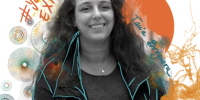
The beginnings of the #YoTambienExijo movement were born on 17 December 2014, when President Obama announcement a landmark warming of the 53-year chill between the United States and Cuba.
The enforcement of city and state law pertaining to graffiti, advertising, and other signage has enormous power to visually shape public space. In New York City, enforcement is heavily skewed to ignore illegal commercial advertising, while simultaneously aggressively targeting graffiti and, in some cases, symbols of dissent.
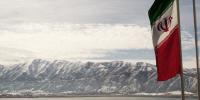
In a sleepy town in Iranian Kurdistan, people take off their winter coats. It is evening, and outside one can just about discern the silhouettes of the mountains that lead to the Turkish and Iraqi borders. Inside, some 60 people fill the small community centre with a clammy heat. But it is not just warmth they are after. They have come for poetry.
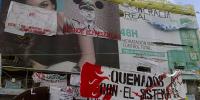
Just over a decade ago on May 15, 2011, a wave of social outrage began as the Spanish people collectively decided that they had had enough of the corruption, cuts, and inequalities affecting their country.
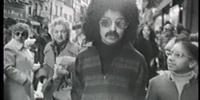
Adrian Piper disguised her identity, changing her race, sex, and social class in order to experiment in public situations and gauge people’s reactions. She investigated how outwardly visible identity markers (like skin color) impacted others’ perceptions of her character. By manipulating her (apparent) identity to produce reactions, she demonstrated the power and influence of stereotypes (Piper, 1996).
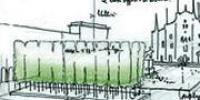
Claudio Abbado was an Italian orchestra director (1933 - 2014) who served as chief director at La Scala Theater in Milan from 1968 - 1985. After 18 years of absence, in 2009, he was invited to conduct a concert there. He accepted upon condition that, instead of paying him a monetary honorarium, the city would commit to the planing of 90.000 trees in the city of Milan.
Wajiha Jendoubi is an actress and one of Tunisia's best-known comedians. To be a woman comedian in this North African nation can be a challenge, but the country's gender gap is narrowing for the first time in almost a decade and Wajiha sees Tunisia as a country that stands for women's rights and supports it.