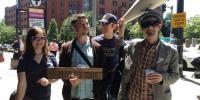
The collective Ndaku Ya La Vie Est Belle, a group of Kinshasa street performers turn their bodies into living sculptures, and use them to political ends. Among the artists is Jared, who regularly takes to the streets dressed as Robot Annonce. The costume, made from broken radio parts, is designed to raise awareness of fake news. “People receive so much incorrect information and many inaccuracies are spread. I want to fight this,” says Jared.
Students from the School of Communication and Art of the University of Sao Paulo perform a skit titled 'Blind Ones' as a protest against consumerism inside a shopping mall of Natal, capital of Rio Grande do Norte state, December 9, 2013.
Related Story:
Brazil shopping malls: New epicenter for social protest?
by Natalie Pompilio
Natalie Jeremijenko wants you to feed the animals. She encourages you to text the fish—and makes sure they'll text you back. She turns moths into movie stars and believes the next big thing in urban transportation is human flight.
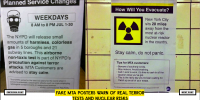
What would a chemical attack on NYC look like? How would poisonous gases spread, through the lines of the subway and above ground? These are some of the questions the NYPD and a team of researchers hope to answer this July, when they’ll disperse colorless, odorless, and apparently harmless gases called perflourocarbons around the city and track their movement.
In early 2012, a group of artists, activists and assorted other odd balls got together to form People's Tours. The idea was to give walking tours in the Boston area. Standard enough. But instead of the usual history, we would talk about social justice, contested spaces, important protests, and shady corporations.
So far, the group has consisted of Dave Taber, Heather McCann, Kristin Parker, Neil Horsky, and Tim Devin.
Delhi- based graffiti artist who goes by the name Daku went around South Delhi, one of the poshest places in the city, and painted on overflowing garbage cans.
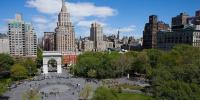
On the afternoon of September 11th, nearly a hundred people hugged each other to feel the beauty of the hug on the Paris Square in front of the Brandenburg Gate in Berlin, under the leadership of the Chinese artist Gao Brothers. At the beginning of the event, the Germans have not yet adapted to the behavior of embracing strangers, but encouraged by Gao brothers, people have opened their arms and gave the strangers around them a warm hug.
The Atacama Desert in northern Chile — the setting of Patricio Guzmán’s transfixing cinematic essay “Nostalgia for the Light” — is a place where heaven and earth converge. Or some might say heaven and hell.
#NYTIMES Why are there no U.S. anti-slavery monuments? http://antislaverymonument.org project is an answer.
Standing 60 feet tall, corten steel of two hollow chain links the upper one broken.
This blogger documents all the cool things that are on their way to extinction in New York. A mix of preserving history and nostalgia through old school photography and new media. This website creates a nostalgic internet record of pre-internet New York.
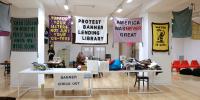
The Protest Banner Lending Library is a space for people to gain skills to learn to make their own banners, a communal sewing space where we support each other’s voices, and a place where people can check out handmade banners to use in protests.
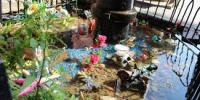
The Bed-Stuy Aquarium (also known as the Hancock Street Bed-Stuy Aquarium) is a makeshift goldfish pond located on a sidewalk in the Bedford-Stuyvesant, Brooklyn neighborhood of New York City. The pond, originally formed by a puddle from a leaky fire hydrant, garnered attention from locals and the press beginning at the time of its creation in August 2024.
In São Paulo, just like in many other metropolitan regions, public transport is not as effective as it could be. Buses and trains usually run overcrowded, late and on limited hours, so that owning a car increases a lot one’s comfort. But not everybody can afford to have one, so a clear and recurrent class distinction occurs: public transport is mostly used by poor people.
Troy, Michigan couldn't afford to keep its library open, so it scheduled a vote for a tax increase. A strong anti-tax group waged a dominating campaign against it. Posing as a political group, an outside advertising agency posted signs around town that said, "Vote to close Troy library Aug 2, book burning party Aug 5." We invited everyone to our Facebook page, adding Twitter, Foursquare, want ads, flyers and more to drive engagement.
Demonstrators aligned with the Occupy Wall Street movement sang their way into handcuffs during a Bronx foreclosure auction Monday to protest the housing crisis that continues to plague the borough.
They serenaded a courtroom of real estate investors with the lyrics, "Y'all are speculating off people's pain. With all due respect, you should be ashamed."
For his latest project, Mark Manzi found himself outside of his comfort zone. For the Amsterdam-based photographer and designer, People of Japan was an attempt to break from his photography-first portfolio. “In the past, my work was very image-focused, whereas with this book I wanted to scan objects, collect receipts, record noises, add copy, and really create something visually striking,” he says.
The initiators collaborated with the Street Vendor Project (SVP) of the Urban Justice Center to campaign against New York City Council Member Jessica Lappin’s 2010 law project. The bill, intended to revoke permits issued to street vendor trucks if they got parking tickets, was so restrictive that it threatened to put most food trucks out of business.
A group of young adults under the name of "Love Tijuana" (Amemos Tijuana) celebrated the one year "Birthday" of a pothole located at the Via Rapida (Tijuana's Freeway) with balloons, banners, and even hats.
This was a protest posted on Change.org in response to NYU's forced eviction deadline on students living in on-campus housing.
The following was the information posted on the site:
We, the undergraduate student body of New York University, strongly urge NYU to rescind the call for students to evacuate NYU residence halls before March 22nd.
Our City is a startup nonprofit based in Oakland and working with cities everywhere. They work with governments, cultural institutions, companies, community organizations, designers, and residents to produce
events, installations, and workshops that use public design to improve cities.
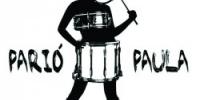
Parió Paula is an all women’s percussion group based in Lima, Peru. These women are truly artistic renegades defying the social norms of Lima’s predominantly male music scene. With a bold message on emphasizing female expression, these ladies have transformed their countless styles of drumming into something effective for their city.
(see full article and short documentary at link below)
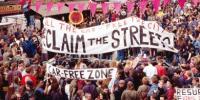
A collective resistance movement dedicated to reasserting communal ownership of common spaces, Reclaim the Streets staged its first action on Camden High Street in 1995, when activists closed the road to vehicle traffic to make way for a street party. Combining the tactics of non-violent direct action with 90's UK rave culture, organizers kept the location secret until the last moment to preempt police interception.
The protagonism of the body in the dramatization of marginalized groups is also central to Emilio García Wehbi's Proyecto Filoctetes, an urban intervention staged November 15, 2002, on the streets of Buenos Aires. The project consisted in placing twenty-five lifelike latex mannequins in central, highly trafficked locations around the city in varying positions of injury, physical distress, and abandonment.