In 2006, art historian Claire Bishop lit a fire under the collective seat of the art world with her Artforum piece “The Social Turn: Collaboration and its Discontents.” It set off — as much as any essay in the hermetic and staid world of contemporary art theory can — an uproar. The article inspired Grant Kester, an art historian also specializing in relational art practices, to respond:
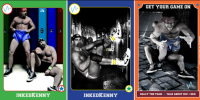
Play Smart a series of yearly events where photographers and designers are gathered and designed cards to trade. It has lasted from 2010 to this year. Play Smart 2010 is the first in the series. In 2010, Play Smart featured photographers Aaron Cobbett, inkedKenny, Greg Mitchell and Slava Mogutin and was designed by John Chaich.
(Honoring our Origins, Ourselves and our Dreams) is an all-womyn and womyn-identified crew from the northeast San Fernando Valley dedicated to creating awareness through public art.
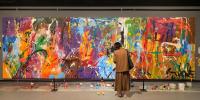
At a gallery within a shopping complex in the South Korean capital, a couple saw paint cans and brushes at their reach and use next to what was actually a finished portrait worth hundreds of thousands of dollars. Thinking the available paint and brushes was a signal to be a part of the art, they ended up technically vandalizing the artists' work.
Sing for Hope is bringing its renowned Sing for Hope Pianos back to the streets of New York City this summer. From June 5-25, as a celebration of the work Sing for Hope does in communities year-round, 60 Sing for Hope Pianos will be placed in parks and public spaces in high traffic locations across all five boroughs in New York for anyone and everyone to play.
In the four years since launching his eponymous label, Kozaburo Akasaka has established himself as a leader of New York’s new guard of fashion designers. In 2017, just months after graduating from Parsons’ prestigious Fashion MFA programme, his tailored silhouettes -- knife-sharp and steeped in retrofuturistic grunge -- earned him the LVMH Special Prize.
Counterspace is an independent curatorial platform functioning as the first decolonial thinktank mapping cultural activism worldwide. It shapes collectively decolonial toolkits with common tools and resources, and a global directory browsable by continent, praxis, and social construct, as a Beuys-inspired ‘social sculpture’ revisited, and an alternative map of the universe.
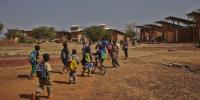
Not far from the Burkina Faso capital of Ouagadougou, approximately 30 kilometers, lies Operndorf Afrika, a village that’s governed by art and a global exchange of culture.
We all learn art in school. Every kid loves to draw at some point. People get fascinated with the details of their new camera, or spend free time writing poems. But eventually, there’s a not a teacher telling you how great your are, or the camera gets put away, or you just plain get busy and stop. Years could go by before you start again, if you ever do at all.
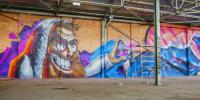
These graffiti artists were given carte blanche over an entire warehouse to do with what they wanted. The result? Everything from the soundtrack from the videography, editing and the painting is just absolute brilliance.
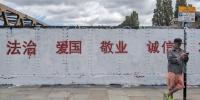
The graffiti made up of 24 stenciled Chinese characters sprayed in red paint against a white backdrop across walls appeared in East London’s street art haven Brick Lane on August 5, 2023. It was created a group of young people from mainland China, including several art students at London’s Royal College of Art.
Estados de excepción (States of Exception) is series of participatory cultural interventions created for women to freely and joyfully exercise our rights in public and secure environments, currently being produced in Mexico and abroad.
NOT READY TO MAKE NICE: GUERRILLA GIRLS BIRTHDAY
30 YEARS AND STILL COUNTING!
BLOWOUT PARTY WITH DJ AND CAKE!
Friday, May 15 8-10 PM • ABRONS ARTS CENTER 466 GRAND ST, NY
ALSO AT ABRONS ARTS CENTER 466 GRAND ST, NY
• May 1-17, 2015: Pop Up Exhibition of GG work 1985-2015
• May 17: Exhibition walkthroughs 3pm
Cosmic Generator presents a network of characters working in nonsensical, and at times absurd, economies. Artist Mika Rottenberg uses footage from actual discount dollar stores in Calexico, CA; Mexicali, Mexico; and Yiwu, China to recreate the imaginary “life” of a product, from its production in the factory to the moment it is sold.
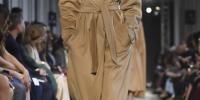
A woman dressed in western clothes and a hijab is a common sight across Europe’s capital cities – a fact now reflected on the catwalk at Milan fashion week.
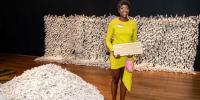
Halima Aden, a Somali-American model, is fast becoming fashion’s face of 2017, currently stealing the show at fashion week from the catwalk superstar Gigi Hadid.
Local artist fnnch wants San Francisco to decriminalize certain types of art.
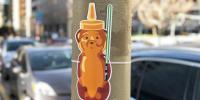
You’re not seeing things: A whopping 450 “honey bears”—variations on the immediately recognizable and widely imitated bear-shaped honey bottles sold in seemingly every store in America--appeared all over SoMa late Sunday night, from the Embarcadero to Fifth Street.
In March of 2022, JR, with the help of 100 volunteers, unfurled the portrait of five-year-old, Ukrainian refugee Valeriia in Lviv, Ukraine. Leaving Ukraine, JR saw firsthand how difficult it was for women and children to get to safety due to long queues at the border. In response, he released two NFTs of Valeriia as part of his solidarity project titled: Can Art Change the War?
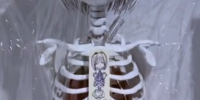
A unique piece captured significant attention at the Central Academy of Fine Arts undergraduate graduation exhibition in June. The work featured an "anime-style" girl's skull linked to a human skeleton and internal organs, all encased within a thin film. As visitors entered the exhibit area, her breathing and gaze would alter accordingly.
"The Second October Revolution"
105 NY-110, Melville, NY 11747
August 14, 11 am – September 8, 7 pm
Tuesday – Saturday, 11 am – 7 pm, free admission
Please write to racc.ny@mail.ru or call (347) 662 1456
The artist is available for interviews
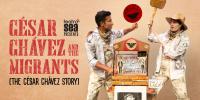
The play celebrates the life and legacy of the Mexican-American labor activist César Chávez. His early life as well as his partnership with Dolores Huerta, activism with the National Farm Workers Association, the 1968 grape boycott, and his ongoing commitment to nonviolent civil rights work.
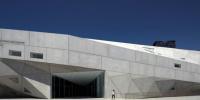
The Tel Aviv Museum of Art is joining the countrywide judicial overhaul protests planned for Thursday, March 23, and will darken the halls and galleries of the museum, closing exhibits to the public and canceling planned tours and lectures.
The only exhibit that will be open to the public, for free, is the exhibit of Israeli art from the museum’s collection, “Material Imagination: Center of Gravity,” which has been open for a year.
Converse Rubber Tracks is a global community of professional recording studios, which provides free studio time to emerging artists. Bands and artists record without any fee whatsoever and maintain all the rights to their music.
"'Shake the Dust' is a feature documentary that tells the stories of break-dancers in struggling communities around the globe that, although separated by cultural boundaries and individual struggles, are intrinsically tied to one another through their passion for break-dancing and hip-hop culture.
The purpose of this project was the permeate stock images with more depictions of Black people. Stock images are usually easily found and utilized, showcasing people doing everyday activities or scenes. To boost representation of Black people in this particular image field, were left out, so the artist chose to recreate popular stock images with Black models to showcase representation and shed light on the lack of diversity in these photos.
Cheril Linett is a female artist from Chile, with a background in performance art and stage performance, who primarily focuses her artwork on feminist issues in Chile, especially ones involving violence, murder, hate crime and different kinds of oppression and assault, but also creates artwork reflecting issues in other parts of Latin America.