Elisa and Lily chose to create StyleLikeU as an alternative to this disempowering status quo. In 2009, the duo picked up a home video camera and launched their "Closet" series, documenting diverse individuals who were challenging fashion industry norms in their style.
Matthew “Levee” Chavez sits at a table in New York City’s Union Square, sporting a thrift store suit and tie, holding a sign that reads “Subway Therapy.” This act of social practice, which started as an invitation for conversation, went viral after he set up shop at the subway the day after the 2016 presidential election. He wrote “Express Yourself” on a Post-It and stuck it to the tiled wall.
Cheril Linett is a female artist from Chile, with a background in performance art and stage performance, who primarily focuses her artwork on feminist issues in Chile, especially ones involving violence, murder, hate crime and different kinds of oppression and assault, but also creates artwork reflecting issues in other parts of Latin America.
“Piano Stairs” is an interactive playful musical stairway installation created into the Odenplan underground station of Stockholm to make people use stairs more often than elevator. The project was part of a Wolkswagen initiative called “The fun theory” whose main objective and mission is to “change people’s behaviour for the better by making it fun to do.”
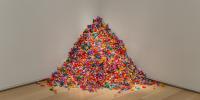
Felix Gonzalez-Torres produced meaningful and restrained sculptural forms out of common materials. “Untitled” (Portrait of Ross in L.A.) consists of an ideal weight of 175 pounds of shiny, commercially distributed candy. The work’s physical form and scale change with each display, affected by its placement in the gallery as well as audience interactions.
Los Angeles is at a critical moment when it comes to art. Not because it's "underappreciated as a world art center" as The New York Times informed us in 2011. Or because it's a "burgeoning art capital" as The New York Times revised in 2014. No, it's because L.A. has actually moved past the "up-and-coming" stage into a fully integrated part of the art world.
Our NGO “Voices from the Conflict” seeks to open a conversation about the Israel-Palestine conflict through the lens of activist art. The history of the conflict dates back to the UN partition plan in 1947, followed by Israel’s independence in 1948. Since then, there have been several armed engagements between the two actors- causing massive civilian casualties and terrorism.
The New York-based artist has created a free-to-download poster in support of the ESEA community. Produced in response to the Covid-related surge in anti-Asian hate crimes, it can be used in a variety of ways to raise awareness and support the cause.
When Patricia Stonefish returned home to the United States from Egypt in 2014, she brought with her a new outlook for conceptualizing women's self defense. Having seen firsthand the benefits and empowerment of Taekwando/ Hapkido/ Gumdo classes for Egyptian women during and after the revolution in 2011, she decided to put her decade of martial arts training to good use on home turf.
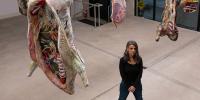
For artists exploring themes of violence towards humans and animals, there is a fine line between thoughtfully engaging and needlessly shocking the viewer; being sensationally explicit can turn people away while being tacit or innocuous may fail to make an impact.
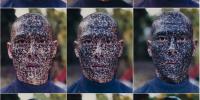
One of the most critical artists on the contemporary art scene is Zhang Huan. His works are of great social insight and unique in how he applies his artistic expression. He thus makes them an almost visual feast with a peek into the multilevel structure of modern society. One such work is the masterpiece "Family Tree," which shows how art can mould our social cognition through multilayered symbolism and profound imagery.
It can be important to reflect on the artistic recounts of activists experiences under state imprisonment. In a revealing interview with Artspace, Chinese artist and dissident Ai Weiwei reflects on his 81-day secret detention in 2011 and the psychological strategies used to dismantle identity and autonomy.
In her 2021 graduation project from the Central Academy of Fine Arts (CAFA), Chinese performance artist Zou Yaqi staged a provocative social experiment titled “21-Day Survival Challenge.” For three weeks, Zou assumed the persona of a wealthy socialite, using counterfeit luxury items, strategic self-presentation, and social engineering to access elite spaces in Beijing—such as five-star hotel lobbies, first-class airport lounges, and high-end restaurants
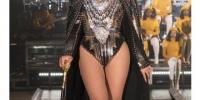
Beyoncé delivered an intensely, unapologetic celebration of Black and HBCU culture at the Coachella Festival 2 weekends in a row. Not only were her performances some of the best live performances to date but they sent a pretty significant message to the world.
Here are some assessments of this beautiful demonstration of Blackness and Black Girl Magic:
From BBC News:
It’s the radiant baby, the barking dog and the dancing man; the badges and the t-shirts; the unmissable mural spelling out CRACK IS WACK. Keith Haring’s career was short but spectacular, and he leaves behind a lasting legacy. From his chalk drawings in city-wide subway stations, to his collaborations with the superstars of his day, Haring’s life was founded on a belief in the power of people to change the world.
First cut the banks! In 2012 Bankia declared itself bankrupt and, almost immediately, asked the Government of Spain for €23 billion. The Government accepted, yet that very same week ordered €20,000 million worth of cuts in health and education. It was then that we realized that what they called a crisis was actually a scam. You wouldn’t believe how pissed off we were. So we threw a party, because there is nothing like partying to relieve your anger.
On an unnamed part of the internet, young adult author Gwen C. Katz found a delightfully deluded male author claiming that his facility with writing natural women characters constituted an unassailable rebuke to the idea that we need diverse authors to write diverse viewpoints. If a male author can write a woman this convincing, surely there’s no need for the #OwnVoices movement!
Simple Wedding Movie is an organization in China that cares about love and marriage and offer marriage service. It made a short video with the theme: experience getting old before getting married. Most people would get married in a young and beautiful age. During that time, they are young and beautiful. Because of that, young couple may more likely to have passion and love for each other.
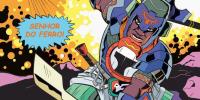
Imagine if back in the 1960s, creators Jack Kirby and Stan Lee had found inspiration for The Avengers in Yoruba mythology. Instead of Iron Man, we'd have the warrior Oxaguiã. Taking the place of the blue-eyed, blonde-haired Norse god Thor would be the equally strong and black-skinned Xangô, the ruler of justice — who also happens to carry a hammer.
Back after a five year hiatus, V-Day Sedona joins with hundreds of other productions across the globe in celebrating V-Day’s 20th anniversary with an act of artistic activism. For its 20th anniversary, V-Day is calling on activists around the world to Rise, Resist and Unite.
(Honoring our Origins, Ourselves and our Dreams) is an all-womyn and womyn-identified crew from the northeast San Fernando Valley dedicated to creating awareness through public art.
In the early 1970s, Denmark was hit by the energy crisis sweeping the globe. A rise in the price of oil led by the nations of OPEC (Organisation of Petroleum Exporting Countries) led to a global economic slow-down, especially in industrialised nations.