Shackles. Cotton. The Big House.
Americans tend to think of slavery in terms of chattel slavery. Plantation Slavery. Slavery where human beings are bought, sold, and owned. The kind outlawed in the United States by the Emancipation Proclamation in 1863.
Slavery as a relic of the 19th Century.
“Six of us lived, worked, slept in a 10-by-10 (foot) room without a bed, bathroom, or clean water,” Nasreen Sheikh remembers.
In May 1992, a series of 24 billboards displaying an identical image began appearing throughout New York City. They featured a giant close-up black-and-white photograph, without text, of a rumpled bed, pillows still indented from the heads that had rested there.
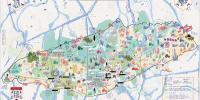
The ZAD (zone à défendre, or “zone to defend”) in Western France is 4000 acres of wetland, farmland and forest that was originally intended to be built into an airport in 1965 but is now an autonomous territory occupied by 40 different collectives looking to reclaim the land. There are around 200 people living permanently on the zone, in addition to some 2,000 people coming and going.
Topless queer men light spliffs on the beach. A trans man injects testosterone on the toilet. Drag queens nonchalantly scroll through their phones and smoke. These are just some of the images that make up the new book from Leo Adef. Titled WARP, it’s comprised of photographs captured across four years spent in Barcelona's queer underworld
Mis(s)placed Women? (2009-2022), is a collaborative art project, consisting of performances, performance series, performance art workshops and delegated performances, including contributions by over 180 individuals from six continents. Many of them are artists, mainly identifying themselves as women from diverse backgrounds. Mis(s)placed Women?
In Pittsburgh, Memphis and Los Angeles, massive billboards recently popped up declaring, “Birds Aren’t Real.”
On Instagram and TikTok, Birds Aren’t Real accounts have racked up hundreds of thousands of followers, and YouTube videos about it have gone viral.
Last month, Birds Aren’t Real adherents even protested outside Twitter’s headquarters in San Francisco to demand that the company change its bird logo.
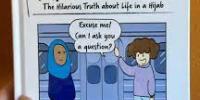
Comic artist Huda Fahmy has been breaking down walls with her hilarious comic "Yes, I'm Hot in This."
In her own words, "What started as my therapeutic way of dealing with the Islamophobia and prejudice I encounter on the daily has now turned into this amazing opportunity to tell the story of the American hijabi."
"Built from the ground up by Black trans coders and developers, The Black Trans Archive takes the form of a video game, allowing visitors to interact with its content in real-time, making their own contributions in the process. It’s also specifically designed to ensure that this work can never be deleted, allowing everything contained within it to persist long beyond anyone who was involved in its creation.
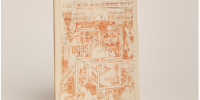
"Las Carpetas looks at the bureaucratic residue of a 40-year-long secret surveillance program that aimed to destroy the Puerto Rican Independence Movement. Through still-lives, archival appropriation, and investigation, Christopher Gregory-Rivera provides a counter-history to the way many understand this period of time and its aftermath.
Richard Bell has often called himself ‘an activist masquerading as an artist’. Aboriginal journalist and radio broadcaster Daniel Browning has suggested that Bell is also ‘a megaphone.
Dogs featured in one ruse to ridicule the regime—pictures of dictator Than Shwe were hung around the necks of the stray dogs that roam the streets of Rangoon. The pictures, which rapidly found their way onto the Internet, are the work of an exiled Burmese satirist who goes by the name of Mr Creator. Downloaded copies of his pictures and cartoons are popular items among cyber dissidents.
El Sistema, also known as The National System of Youth and Children’s Orchestra and Choir, was established in Venezuela in 1975 by José Antonio Abreu, a Venezuelan educator, musician and activist. The music education program operates within the voluntary sector and is funded publicly.
In 1900, Montgomery, Alabama had passed a city ordinance to segregate bus passengers by race, and conductors were empowered to assign seats to achieve that goal. The first four rows of seats on each Montgomery bus were reserved for whites, and buses had "colored" sections for black people generally in the rear of the bus, although blacks composed more than 75% of the ridership.
In 1996, filmmaker John Akomfrah created the character of the Data Thief as a narrative device to offer an insightful study of Afrofuturism in his film The Last Angel of History, which links Black musicians including George Clinton, Derrick May, and Sun Ra to Akomfrah’s thesis about the role of technological fantasy in Black artistry across genres and mediums.
In May, the horrific mass shooting in Isla Vista, CA, triggered national conversations about violent misogyny. After some Twitter users began using the hashtag #NotAllMen to defensively derail the conversation, the hugely popular hashtag #YesAllWomen emerged, getting tweeted over 1 million times within just a few days.
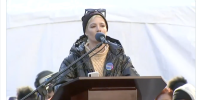
Halsey Delivers Emotional Speech About Sexual Abuse, Rape at New York Women’s March: Here Is Her Full Poem
Halsey penned a powerful, heart-wrenching poem about her own experiences with sexual assault and rape for the 2018 Women's March in New York City. Watch and read it here.
By Ashley Iasimone
01/20/2018
A widespread but illegal campaign by a group calling itself “the Gluers” uses posters to denounce violence against women. It has become an effective — and ubiquitous — tool to raise awareness.
On a recent mild night, a squad of four young women wandered through a peaceful neighborhood in eastern Paris, armed with a bucket of glue, a paintbrush and backpacks loaded with posters.
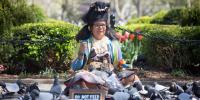
Tina Piña, better known as Mother Pigeon (@motherpigeonbrooklyn), is an artist and self-described “high priestess of the pigeon religion,” whose passion for New York City’s often-overlooked bird has helped her carve out a unique creative niche centered around pigeons—as well as a lifestyle geared towards helping New Yorkers appreciate the misunderstood creatures.
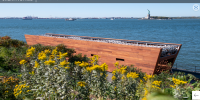
Moving Chains is a monumental 110-foot long kinetic sculpture that evokes the hull of a ship, built from steel and Sapele, a tree native to West Africa commonly referred to as African Mahogany. Inside of the sculpture, nine chains run overhead: rotating on a maritime sprocket system, eight of the chains represent the pace of the currents in New York Harbor, while a ninth central chain moves more quickly, mimicking the pace of a ship in transit.
World Microphone (世界麦克风) is an organization created by students (most of them are Chinese) located in London. The organization has an account in RED, which is a popular social media in China. It often holds interviews and movements on the street in London, talking about world culture, food, and travel. Then, it makes short videos based on these interviews and movements and posts the videos on RED.
The signature angst of our time was profoundly expressed in the poems submitted for WOMAWORDS Literary Press June 2020 edition, Imaging Life After COVID-19, offering women poets an opportunity to write about their experience of the pandemic and their vision of or for the future. The universal trauma wrought by this virus, invisible and silent and pouncing with madness and mendacity, brings us to a place we’d like to forget but never will.
From Public Delivery:
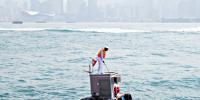
Kacey Wong has a knack for creating art that investigates the space between people and their surrounding environment. Paddling Home, which was performed on the Hong Kong Victoria Harbor, was a star feature in the Hong Kong contemporary art scene.
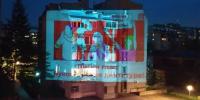
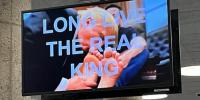
An A.I. generated video of Donald Trump sucking Elon Musk's toes was broadcast at the Department of Housing and Development headquarters in DC in February of 2025. As an actual art piece, we can debate if the video itself is art. However, the caption, subject matter of the fake video, and chosen location to broadcast is definitely a strategic work of creative activism.
From the New York Times:
For the past few years around election time in Serbia, people have taken to the streets to protest government corruption, attacks on free press and voter suppression. This Spring, despite a nationwide lock-down to combat the COVID-19 pandemic, activists are finding new ways to protest the country’s increasingly-repressive government.
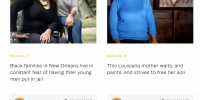
Independent producer and longtime WWNO collaborator Eve Abrams brings us Unprisoned: Stories From The System. From New Orleans and Louisiana, the world’s incarceration capital, we meet those serving time inside and outside the criminal justice system.