Josep Renau Berenguer was a Spanish painter, photomontager, muralist and communist militant.
Renau was the son of an Art teacher. Due to his father’s low income, he had to work various jobs during his youth and teenage years to maintain a middle class position.
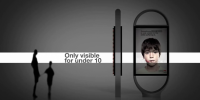
In an effort to provide abused children with a safe way to reach out for help, a Spanish organization called the Aid to Children and Adolescents at Risk Foundation, or ANAR for short, created an ad that displays a different message for adults and children at the same time.
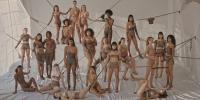
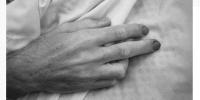
From intimate portraits to urban performance art, the through line of photographer Carlota Guerrero’s work has always been her stripped back sense of feminine reverie: rumpled sheets and broken shells, translucent tights and long braids, dusty floors and bare chests.
"If you want something different, do something really different."
And they did it!
Spain, January 1st 2013, an anonymous device was launched through the networks combining a communication guerrilla with a political-electoral aesthetic. The video used for take-off went viral receiving 200.000 visits in 48h: https://youtu.be/90deuJiQfTw
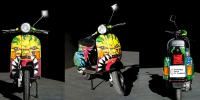
Fundacion Voces and Festival Mulafest got together to promote creative ideas for social change. They started a campaign in social media to ask people to donate their Vespa motorcycles. After they collected the Vespas donated by the people, they put them together again and invited known artists to intervene them.
In 2019 before the annual San Fermin festival 54 protesters from around the world representing AnimaNaturalis and PETA held a demonstration against the cruel sport of bullfighting. The celebration of culture and religion subsequent to the murder and torture of dozens of bulls is the spectacle of San Fermin that draws an army of international tourists to the small city of Pamplona.
Spain’s most devastating environmental disaster took place 20 years ago, on the evening of November 13th, 2002. The Prestige oil spill occurred off the coast of Galicia, part of northern Spain. The spilled oil, in time, covered around 2,000 kilometers of the Galician coast.
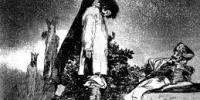
Francisco Goya created “The Disasters of War” from 1810-1820. These 80 etchings and aquatints show scenes from the Spanish struggle against the French army under Napolean Bonaparte, who invaded Spain in 1808. When Napolean tried to install his brother Joseph Bonaparte, as King of Spain, the Spanish fought back, eventually aided by the British and the Portugese.
David Wojnarowicz was born on September 14, 1954, and died on July 22, 1992, at the age of 37 due to AIDS-related complications. Before he became an artist, he attended a Performing Arts high school from which he dropped out of in order to make a living as a farmer in Canada. This was up until he made a name for himself as an artist in New York’s cultural scene.
El movimiento 15M ha abierto la veda a una protesta insistente, que mantiene la presencia en la calle. Según la delegada de gobierno, Cristina Cifuentes, en Madrid hay ocho manifestaciones diarias.
The Yayoflautas, or Iaioflautas is an organized group of senior citizens from different cities and regions of Spain. Like many others, the movement started during the first months of life of the 15-M movement, in Barcelona.
"Surround Congress”: as soon as we’d heard this, in our minds we were there. To make the Government resign and demand they start a new constituent process seemed like a great idea. We immediately got to work.
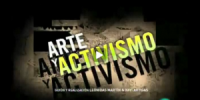
On 6 January 2012, Metrópolis (TVE 2) broadcast "Activismo y Ficción", a report directed by Enmedio members Leónidas Martín and Núria Campabadal. It looks at a series of creative projects that lie somewhere between fiction and social activism.
La Casa Invisible project was started in 2007 in Malaga, Spain, when a group of socially involved participants squatted in a run-down building, aiming to eventually claim the legal rights to the property (Moor & Smart, 2016). The space was opened to local artists and creators, quickly becoming a hub for free local music, performances, and seminars as well as creating an important meeting space for social groups (Moor & Smart, 2016).
Just over a decade ago on May 15, 2011, a wave of social outrage began as the Spanish people collectively decided that they had had enough of the corruption, cuts, and inequalities affecting their country.
Zoo Portraits is a humorous photo series by Barcelona-based photographer Yago Partal that matches animal heads with human bodies. Partal amazingly matches animals to appropriate human bodies and even manages to match their personalities and styles.
Spanish soccer has witnessed and engaged in a variety of conversations in the last few years: Racism, politics, xenophobia, territorial issues, corruption, inmigration. However, there is an issue that remains untouched, and this issue is homophobia. Soccer is still a context where it is acceptable to use the word "marica" ("queer") in a pejorative way.
Showcasing death to defend life
El Pais, Madrid
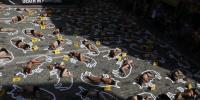
Activists protested with the organization Animal Equality (Igualdad Animal) in Puerta del Sol, Madrid, Burgos, and Toledo on December 10, commemorating the international Animal Rights Day.
The crisis is here, let the party begin! April 30, 2009. At first the crisis was just a state of being, a kind of social sadness that paralyzed everything. To break this atmosphere we couldn’t think of anything better than to throw a party. The first thing you need for a party is a good location, so we set out to find a place where social sadness and fear were extremely present. It didn’t take us long to find one: an unemployment office.
A television report written, directed and produced by Enmedio members Leónidas Martín and Xavier Artigas. Collective projects that see art as a kind of social relationship. Artistic interventions that target consumption, media guerrilla tactics, creative mobilisations and protest, critical projects brimming with humour and disobedience, new narratives capable of changing the existing symbols and codes.
El albañil anarquista Lucio Urtubia falsificó miles de cheques del First National City Bank, en la segunda mitad de los años setenta, hasta prácticamente llevar el banco a la ruina. Urtubia donó el dinero así generado a diversos movimientos de guerrilla europeos y latinoamericanos.
The Spanish 15M/INDIGNADOS social movement represents a citizen break-up with the current political system while proposing an alternative one, creatively transforming the prevailing participation and action patterns in its society.
La huelga general europea del #14N no sólo nos dejó un importante seguimiento y abrumadora movilización en España y otros PIG's, sino que también desplegó la habitual fuerza y originalidad creativa de la cual se vienen dotando las protestas en España desde el 15 de mayo.
This piece is fascinating because of its use of just a few words and country names, muted colors, and the recreation of famous art. The artist used this canvas to depict a concern about events happening in the Gaza strip.
This project was born a few days after a demonstrator lost an eye after being hit by a rubber bullet shot from police guns in Barcelona. Unfortunately, it was not the first time. "Cop d' ull" means a "a blow to the eye" and also "at a glance”, which is a perfect description of this project.