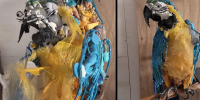
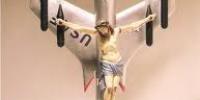
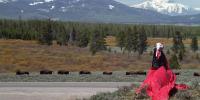
A series of performances orchestrated by Lila Roo, to bring awareness to the past, present and future issue of the physical and energetic violence against the First Nation of the native buffalo and peoples of the United Sates of America in the past few hundred years. Lila worked alongside activists, the buffalo and First Nation musicians and spiritual leaders to create multi-sensory blessings for the blood spilt.
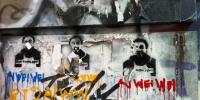
I went on a graffiti tour that went through NOHO, SOHO and the Lower East Side last weekend. We saw works by street artists - Space Invader and Roa - that were remarkable. Roa had created a commissioned mural of a bird on the side of a building, and the former artist derived his work from the unforgettable arcade game, Space Invader.
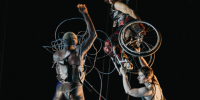
Serene colors and technical set pieces create a surreal ambience as performers delicately hover into the black void above the stage. These performers belong to Kinetic Light, an "internationally-recognized disability arts ensemble". In 2022, the ensemble performed Wired, a "potent contemporary aerial dance performance that explores race, gender, and disability stories of barbed wire in the United States".
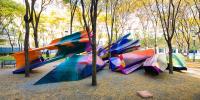
Katharina Grosse's public exhibition "Just Two of Us" consists of eight large meteor looking sculptures painted in bright technicolors. The sculptures, which have been placed in the public plaza at Metro Tech Commons, have transformed downtown Brooklyn. Grosse is a German artist based in Berlin, who is known for her use of spray gun techniques to create abstract colorful paintings on unconventional surfaces.
“Works in Progress” highlights artists across a range of disciplines whose work deals with ecological themes. Considering the particular role that artists play in the climate movement, this column shares their voices and provides a glimpse behind the curtain into their creative processes and experiences.
The Haitian Creole word "konbit" denotes the idea of similar talents joining together to work towards a common goal. The founders — a group of photographers, educators, and artists — came up with the idea for Fotokonbit a few years ago to "empower Haitians to tell their own stories and document their community", but it was the 2010 earthquake that gave the group new urgency.
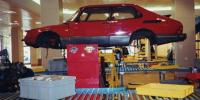
Artist Michael Landy catalogued, inventoried, and systemically destroyed all of his possessions for the 2001 public installation Break Down, commissioned by British arts organization Artangel. It took him three years just to itemize the 7,227 objects included in the project.
Decolonize Me features six contemporary Aboriginal artists whose works challenge, interrogate and reveal Canada’s long history of colonization in daring and innovative ways.
This past Valentine's Day the Fresh Juice Party pulled another "art prank;" this time sending chocolate shaped as dead American soldiers and sent them to U.S. government officials, especially to the previous Bush administration. This prank while very effective in its message, is not so effective in terms of timing.
Located within Boston’s historic (brick) core, and using the history of Boston as example, this kinetic, site-specific, public art installation is a humorous commentary on our use and trust of the internet for learning.
The aim is to create an on line community that seeks to find new ways to articulate what it means to be an international women in relation to art and sexuality.
International visual artists who are making cutting edge fine art, with an erotic edge, please upload your work onto the web site for free. (see link) Also a competition has been launched, giving you a chance to win £300.