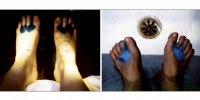
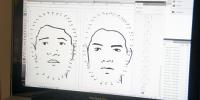
Two reflective stickers in a bathroom stall. When you sit down you can see your face in the bottom one. When you stand you can see your face in the top one, your groin in the bottom one. The top one says "Public", the bottom one says "Private". Or maybe the top one says "Private", and the bottom one says "Public". Which one is correct?
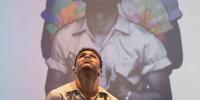
"WILD: Act I" is a film demonstrating the power of creativity in constraint. Using moving choreography performed by Elijah Lancaster and vivid imagery displayed on three walls in a mock cell, Jeremy McQueen gives voice to young Black and Brown men caught in the criminal 'justice' system.
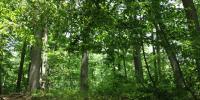
After decades of fighting to preserve many of the old woods of Staten Island and years of fighting for the preservation of Pouch Camp, the Boy Scout camp and 100 wooded acres in the middle of the Greenbelt is officially saved!!
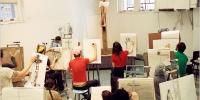
The Bruce High Quality Foundation University (BHQFU) is an unaccredited, free collaborative school founded by the eponymous artist collective and presented by Creative Time.
In 1987 with AIDS deaths in the thousands and government policy still criminally indifferent, activists formed ACT UP (AIDS Coalition to Unleash Power) with the purpose of turning grief and fear into rage and action.
Greg Jobin-Leeds, a long-time social activist, collaborated with AgitArte, a collective of artists and organizers, to capture the stories of today’s social movements and the activists behind their success with the release of When We Fight, We Win: Twenty-First-Century Social Movements and the Activists That Are Transforming Our World.
Tina Takemoto is an artist and associate professor of visual studies at California College of the Arts in San Francisco. Her work examines issues of race, queer identity, memory, and grief. Her current project explores the hidden dimensions of same-sex intimacy and queer sexuality for Japanese Americans incarcerated by the US government during World War II.
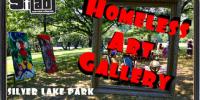
During 2008-2009, when the United States was entering a recession, the idea of the Homeless Art Gallery was popping up across Staten Island, New York City's least populated borough and biggest underdog. This is an example of art intervention, disrupting space to question the economic and political systems of capitalism. It was also an excellent community building project.
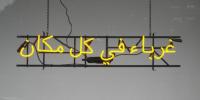
The Paris-based collective Claire Fontaine displays a neon sign that spells the words ‘Foreigners Everywhere’ in Arabic. Since this sign was installed strategically above the gallery’s wall-length window – facing in the street – in the edition of the show I saw, at Parsons in New York, it interacted not only with Parsons’ exhibition site but also with the urban environment beyond it.
On December 2014 I've been artist in residence at MANY MINI RESIDENCY a short-term residency program organized by Sarrita Hunn and Ryan Thayer and hosted by GYB BYG in Mexico City. During my 12 hour residency I’ve worked on the case of the 43 students from Normal Rural de Ayotzinapa who went missing while in the custody of Iguala’s police force in September 2014.
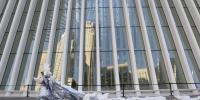
At 12:00 noon (New York time) on November 19, 2016, Chinese artist Ning Kong, wearing a wedding dress with hundred dove, appeared at the 911 site in New York. Even though the theme of performance art is calling for peace, the police banned it and showed the handcuffs because doing performance art was not allowed at the 9/11 site. So Kong Ning turned to Times Square, New York, successfully completing her performance art.
Games for Change is a community of game designers, activists, artists and individuals focused on creating and using digital games for purposes of social change. Games for Change is a large and loose community, but it has a major nonprofit organization at its center, who organizes the majority of the meetups and work of the movement.