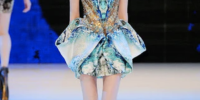
The upcoming year of fashion shows look set to be charged with climate change and environmental themes.
This year, more than ever before, we have seen that the business of fashion, at the highest levels, is responding to the push to take the very pressing issue of climate change and environmental damage seriously.
Grammy nominee and Rolling Stone cover star Sam Smith unveiled the video for his new single "Lay Me Down," the latest track off his platinum-selling debut album In the Lonely Hour. The video, filmed at the parish church of St.
The Brat Summer movement can be directly traced back to the release of Charli XCX's album "Brat" in 2024. Known for her boundary-pushing pop sound and fierce persona, Charli XCX used "Brat" as a platform to explore themes of defiance, self-empowerment and the rejection of societal expectations.
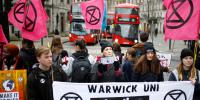
Protesters from Extinction Rebellion disrupted London Fashion Week last weekend (15 February).
The group called on the industry to change its approach to protecting the planet: “We are asking not for sustainability but a complete reinvention of this industry in a way that regenerates the environment,” Extinction Rebellion spokesperson Sara Arnold said.
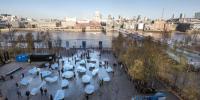
Is it possible that through affective design we can change our consumer behavior? Yan Lu and his "Little Fish Project" offer a design inspired solution to excess use of water. "As consumption is incalculable, saving is often neglected through daily consumption.
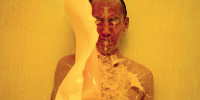
Singaporean artist Lee Wen’s series Journey of a Yellow Man (1992–2012), one of his most famous and long-standing performances, was not simply a personal affront, it was a political affront. At the intersection of Asian art history, critical race theory, and migration and diasporic studies, one is never far (enough away) from the chromatic framing of race and ethnicity: yellow race, yellow peril, yellow face, the forever foreigner.
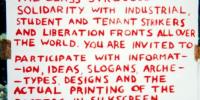
Between the late 1960s and 1970s numerous alternative printshops were set up across the UK, with the founding objective of producing, providing or facilitating the cheap and safe printing of radical materials. They were started by libertarians, aligned and non-aligned Marxists, anarchists and feminists, and as such were constitutive of the fractured and fractious politics of the post-1968 left.
The group Art Not Oil did a campaign to raise awareness about the oil industry, and their funding of Art. "Art Not Oil has campaigned against Big Oil cultural sponsorship since 2004.
In partnership with Southwark Council, Peckham Settlement, Peckham Space and Resonance FM. Supported using public funding by the National Lottery through Arts Council England and Kickstarter Campaign supporters.
Trade School is a self-organised, alternative learning space that runs on barter. It was started in 2010 in New York’s Lower East Side by Rich Watts, Louise Ma, and Caroline Woolard of OurGoods.org, a creative barter network. Over 800 students participated in 76 single-session classes during 35 days. Anyone can teach a class, and students sign up by agreeing to meet the barter requests of teachers.
Fifty-six-year-old Dan Witz — who originally hails from Chicago but lives in Brooklyn — has been producing street art in New York since the seventies. And not just any street art. Wondrous works that trick the eye and often elude passersby altogether. Oh, but when one realizes what he or she is seeing, it’s pure revelation.
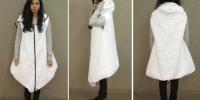
UK design students focusing on the use of design that moves beyond exclusivity, wealth, entitlement, and privilege, have created a coat that is also a shelter. The functional pocketed coat that converts into a tent and a sleeping bag, is intended for Syrian refugees. The students under the guidance of Dr.
Colony collapse disorder is a colossal issue – and artist Louis Masai wants you take notice. His street art project “Save the Bees” aims to catch your attention by covering the walls of London with bees. Bees are extremely important to agriculture as they pollinate plants - yet entire colonies are disappearing without a solid reasons (there are theories, mostly about pesticide ingredients).
The Vivienne Foundation exists to honour, protect and continue the legacy of Vivienne's creativity and activism.
Since the start of her career in the 1970s, Vivienne was renowned not only for her fashion design, but also her activism. Vivienne always utilised her platform of prestige to make the world a better place.
On March 10, 1914, Mary Richardson slashed Velasquez's "Rokeby Venus" with a small axe during public hours at the National Gallery in London. A militant suffragette protesting the force-feeding of imprisoned suffragettes in prison (and the Cat and Mouse Act which released the starving women only until they were slightly healthier only to imprison them again), Richardson released this statement after her arrest:
Doris Salcedo talked extensively with victims of the violence in Colombia. For the project titled Unland she spoke specifically with children who had witnessed the murder of their parents. This piece was a poetic response and representation of their testimony. Salcedo combined halves of tables together to make a whole. In the seam where the tables joined Salcedo meticulously sewed the tables together using white silk thread, dark hair and bone.
"Members of the Reclaim Shakespeare Company jumped on stage at the Noël Coward theatre to deliver another surprise anti-BP performance. Just before the second half of a BP-sponsored Royal Shakespeare Company (RSC) performance of Much Ado About Nothing was due to begin, the three actor-vists performed a short Shakespeare-inspired piece.
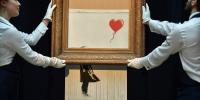
On Friday night, a painting by the anonymous street artist known as Banksy sold at Sotheby’s auction house in London for $1.4 million. But as soon as the auctioneer dropped the gavel, something unexpected happened: a beeping alarm went off and the frame began eating the painting, spitting half of it out the bottom in what may be the first instance of a self-destructing painting, reports Scott Reyburn at The New York Times.
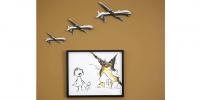
A new piece of art by Banksy was unveiled in London on Monday in a protest targeting one of the world's largest arms fairs. The work will be displayed for a week at Art the Arms Fair, an exhibition set up to oppose the Defence Systems & Equipment International (DSEi) exhibition being held in the British capital this week.
Olafur Eliasson , the Danish-Icelandic artist. Some of his exceptional artworks focus on climate and environmental changes. In 2003, he installed The Weather Project , which remains one of Tate Modern’s popular installations. He is also known for his freestanding waterfall in Versailles , his installation in which he installed a riverbed in a museum , and his gigantic rainbow installation in Aarhus, Denmark.
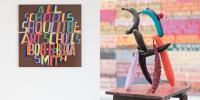
Bob and Roberta Smith has been at the forefront of activist art for 2 decades; so who better to ask about how art is responding to these politically bleak times?
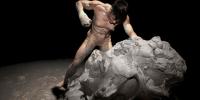
Cassils' Becoming an Image confronts issues of queer and trans visibility, bodily violence, and the politics of witnessing. The performance uses a powerful blend of media—including live action in darkness, flash photography, clay sculpture, and sound—to explore how trauma and resilience are physically and symbolically inscribed onto the queer body.
When Tracey Emin aired her dirty laundry in the 1999 Turner Prize exhibition at Tate Britain, she set a new standard for confessional art. She conceived of the installation, titled My Bed (1998), after a long, bedridden bender following a bad break-up. When Emin finally left her sheets, she examined the mess she’d created.
Protesters bathed an entrance to the Tate Britain in mock oil provoking anger from guests attending a party to mark 20 years of BP's sponsorship of the flagship gallery. A dozen veiled artists, angered by the Tate's continuing involvement with the oil giant, spat vats of treacle before covering the area with feathers as guests arrived.