The AIDS pandemic began in the early 1980s and brought with it a surge of emotions from the public: they were afraid, angry, fearful and defiant. The arrival of AIDS also brought with it a condemnation of the LGBT community. These emotions, along with the view on the LGBT community, paved the way for a new generation of artists.
Fabled Asp is a multimedia online archive that documents forty years of activist history and creativity. Disabled lesbian activism is a radical assertion of self in the face of societal stigma and marginalization. The project illuminates the myriad ways disabled lesbians have been moving against invisibility through civil rights actions, theater, dance, sports, and visual arts.
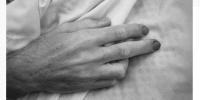
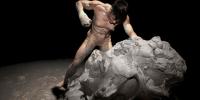
Cassils' Becoming an Image confronts issues of queer and trans visibility, bodily violence, and the politics of witnessing. The performance uses a powerful blend of media—including live action in darkness, flash photography, clay sculpture, and sound—to explore how trauma and resilience are physically and symbolically inscribed onto the queer body.
David Wojnarowicz was born on September 14, 1954, and died on July 22, 1992, at the age of 37 due to AIDS-related complications. Before he became an artist, he attended a Performing Arts high school from which he dropped out of in order to make a living as a farmer in Canada. This was up until he made a name for himself as an artist in New York’s cultural scene.
Mary Fisher wears many hats: Artist, author, and HIV/AIDS activist are just a few. The latter is perhaps what she's known best for—her influential speech at the 1992 Republication National Convention is regarded as one of the greatest American speeches of the century, spurring a push toward treatment and compassion towards those who are HIV-positive.
Following the backlash of Netflix's support of Dave Chappelle's "The Closer" comedy special, which featured racist transphobic "jokes", Hannah Gadsby took a deal with Netflix to create a comedy special featuring genderqueer comics. The show, titled 'Gender Agenda', was tapped in the Alexandra Palace Theatre in London and released on Netflix on March 5, 2024.
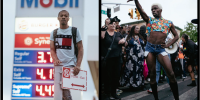
There were still bloodstains outside the Midwood Mobil gas station on Friday night; a fresh sign taped to a lamppost read “A Hate Crime Happened Here.” This is the place where, less than a week prior, 28-year-old O’Shae Sibley, a gay Black dancer and choreographer, made a pit stop with friends after a Jersey beach day.
Spain is known for its beautiful scenic views, rich history, and rich culture. When we focus on Spain it mainly for the things that attract tourism. Often when living in paradise you forget the shadows that hold secrets are not far behind. I have uncovered a deep dark truth that hides within the cities - Sexual violence and the brutal inequality that women face in Spain.
Beyoncé’s album Renaissance is grounded in black queer ballroom culture. It debuted at no. 1 on the Billboard 200 and had the third highest album debut of 2022.
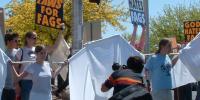
Matthew Shepard was attacked by Aaron McKinney and Russell Henderson on October 7, 1998, the victim of an anti-gay hate crime. He was pronounced dead on October 12th. Shepard's funeral was protested by Fred Phelps, notorious leader of the Westboro Baptist Church. The protesters bore signs with phrases such as, "God hates Fags", "No tears for Queens", and "Fag Matt in hell".
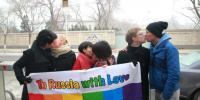
A small group of gay rights activists gathered outside the Russian Embassy in Beijing on Valentine’s Day to protest Russia’s antigay laws.
Behind a rainbow banner that read “To Russia with Love,” a dozen activists cheered as three couples puckered up and kissed in front of a countdown clock for the Sochi Winter Olympics outside the embassy’s tall walls.
The "I'm Not A Joke" campaign from Daniel Arzola is a series of images inscribed with compelling truths about human diversity that encourages individuals to live as their authentic selves. He wants the images to eventually appear on buses and subways, exposing audiences to the realities of queer experiences in an attempt to break down prejudice in a form of activism that he calls "Artivism."
The TRANSummer Camp on the Croatian coast inspired members of the Croation trans community to become creative activists, and led to a public media campaign, video series and event advertising the “opening” of a (fake) clinic for trans health. The project included an ambitious survey on the healthcare experiences and needs of trans and gender variant people in the Balkans in multiple languages.
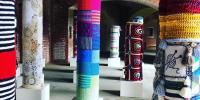
The Immigrant Yarn Project (IYP), organized and created by Cindy Weil was a massive work of public and democratic (crowd-sourced), yarn-based art honoring our immigrant heritage and promoting tolerance, difference, and community. Weil reached out across the state and beyond to collect yarn-based creations by immigrants and their descendants.
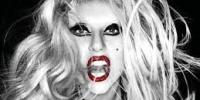
Lady Gaga said something interesting about her song “Born This Way” during a March 2011 interview at Google headquarters. “What's so funny [is] when I put that song out, everybody was like, ‘Oh, the lyrics are so literal,’ and I'm like, ‘Yeah,’” she shared, almost with a fuck-you cadence. She wasn't angry—but you could tell how important the track was to her, and how she didn't want its message muddled.
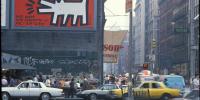
It’s the radiant baby, the barking dog and the dancing man; the badges and the t-shirts; the unmissable mural spelling out CRACK IS WACK. Keith Haring’s career was short but spectacular, and he leaves behind a lasting legacy. From his chalk drawings in city-wide subway stations, to his collaborations with the superstars of his day, Haring’s life was founded on a belief in the power of people to change the world.
Horror stories about treacherous boat journeys from Africa to the Mediterranean far too often make headline news. The men, women and children fleeing their homes to start a new life in Europe become faceless numbers in the media, and are ‘othered’ by conservative politicians for their own agenda.
As a result of the social stigma of homosexuality, lesbian feminists were rejected and silenced as a radical minority within the mainstream Movimiento Feminista (MF). Lesbianas Sin Duda (LSD) is a queer activist group based in Madrid that arose in the early 1990s as a response to this erasure.
São Paulo went through a process of privatization of the public spaces. The local government implemented several rules that beneficiated the real state speculation, the city is expensive, and it's not for the poor.
Besides that, in october the elections were a hard game for the progressive party, PT, since two conservative candidates had big shares.
Julius Eastman was a Black and Queer avant garde, minimalist composer and performer from the 1960s-1980s. He used his platform to advocate for the rights and livelihoods of Black and queer people through his unique musical aesthetic and the controversial naming of his pieces, including "Gay Guerrilla," "Evil N-word" and "Crazy N-Word"
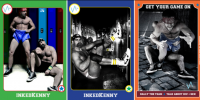
Play Smart a series of yearly events where photographers and designers are gathered and designed cards to trade. It has lasted from 2010 to this year. Play Smart 2010 is the first in the series. In 2010, Play Smart featured photographers Aaron Cobbett, inkedKenny, Greg Mitchell and Slava Mogutin and was designed by John Chaich.
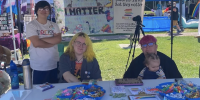
Realizing the lack of a safe community within the Northern Utah Area, Sammy, a highschooler from NUAMES in Davis County, started his project “I Matter” with a series of interviews in which he found this sentiment echoed. That’s why Sammy created “I Matter”, I Matter is an organization just for Northern Utah Teens.
By Latoya Peterson, Racialicious
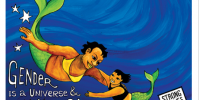
Looking for a way to celebrate the folks who raised you–but from a slightly different perspective than you would get down at Hallmark? The good people over at Strong Families (a project of Forward Together/Asian Communities for Reproductive Justice) present Mama’s Day, a multicultural, queer-friendly celebration of the folks who do some of the most significant (and unpaid) work in our society.
"Built from the ground up by Black trans coders and developers, The Black Trans Archive takes the form of a video game, allowing visitors to interact with its content in real-time, making their own contributions in the process. It’s also specifically designed to ensure that this work can never be deleted, allowing everything contained within it to persist long beyond anyone who was involved in its creation.
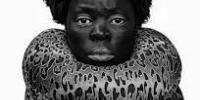
Zanele Muholi, the self-proclaimed visual activist and photographer, investigates the fraught relationship between post-apartheid South Africa and its queer community, who, despite being constitutionally protected since 1996, remain a constant target of abuse and discrimination.