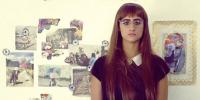
It was October 31st, 2012, when a new artist appeared on social media. In a series of video clips, she proposed with a soft and slow speech that Peru hide its poverty. Her project consisted of installing vinyl pieces to avoid what she called "the visual pollution." She titled the project Don't be poor, be fashion(able).
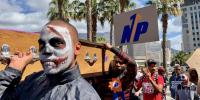
The Yes Men join Reclaim the City in their fight against unjust housing policy. On September 30, 2019, a horde of zombies attended a "#natsneverdie rally" at the Cape Town Civic Centre in order to celebrate Mayor Dan Plato and the Mayoral Committee and to support their policies, which are increasingly similar to those of the National Party under Apartheid.
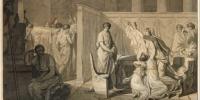
Jacques-Louis David was an active member of the French Revolution, and his works often depicted his political affiliations. David’s painting The Lictors Bring to Brutus the Bodies of His Sons portrays the scene of Brutus, an important figure of the Roman Republic, reacting to the death of his sons. Since they wanted to overthrow the government and restore the monarchy, Brutus ordered their death.
During the economic crisis of 2008, bankers in Spain took advantage of the economically disadvantaged, and the artwork La Fiera en Sevilla, or the Wild Animal in Sevilla in English, brings attention to this money-centric act from the bankers. La Fiera refers to the bankers at the time that used predatory methods in their actions to forcibly evict poor people from their houses.
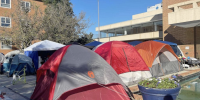
Dozens of Howard University students are sleeping outdoors in a tent encampment on campus grounds to protest what they describe as "poor" and "unlivable" conditions in the college dormitories.
Students told ABC News that portions of the university living quarters have mold and insect and rodent infestations, as well as leaky ceilings and flooding -- all of which they say put their health at risk.