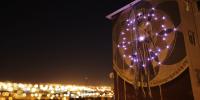
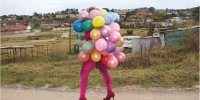
In Cape Town, South Africa the design firms Design Indaba Trust and Thinking have teamed up with artist Faith47 to help raise funds to bring more light to their urban city. Their goal is to raise funds to light up 700 meters of Manwabisi Park, which will ultimately reduce the crime rate in the area through more light. In order to get the community involved in the project, they have combined street art with community engagement.
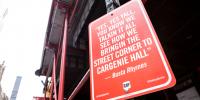
JAY SHELLS DROPS “RAP QUOTES,”
HIS MOST SITE-SPECIFIC STREET ART PROJECT YET
By Aymann Ismail | March 25, 2013 - 12:30PM
After schooling New Yorkers on etiquette via numerous unsanctioned interventions, artist Jay Shells channeled his love of hip hop music and his uncanny sign-making skills towards a brand new project: “Rap Quotes.”
The community is invited to join with local climate activists in the “Earth Day Sing Out” from noon to 1 p.m. and 5 to 6 p.m. Wednesday, April 22, to celebrate the 50th anniversary of Earth Day.
The event is designed to call for an economic stimulus to help prevent future climate crisis.
CLEVELAND, Ohio – Dana Schutz, the acclaimed New York artist who trained at the Cleveland Institute of Art, famously stirred controversy at the 2017 Biennial at the Whitney Museum of American Art with “Open Casket,’’ her painting depicting Emmett Till’s body in its coffin.
Till, a black 14-year-old, was murdered and mutilated by white men in Mississippi in 1955 after having been falsely accused of flirting with a white woman.
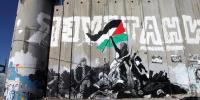
In June 2002, the Israeli Government decided to construct a physical barrier separating Israel and the West Bank. The declared purpose of this (as yet unfinished) 709 kilometers long barrier—which came to be known as Gader Ha’hafrada (The Separation Wall)—was to prevent the entry of Palestinian terrorists from the occupied territories into Israel in order to protect Israeli citizens.
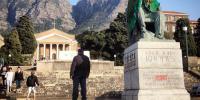
On August 14th 2014 several prominent statues within the city centre and the southern suburbs of Cape Town got redressed in green blankets, equipped with miner gear or carrying grocery bags. The statues – mainly of which represent colonial figures – were redressed in light of what has come to be known as the Marikana Massacre: the shooting of 34 miners by the local police force of Marikana, South Africa on August 16th, 2012.
Before Chance the Rapper performed at sold-out concert venues, he practiced his rhymes in front of an intimate crowd of roughly a dozen people at Harold Washington Library. Now the rapper is trying to return the favor, one open mic at a time.
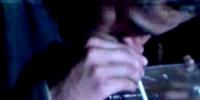
Renowned Cuban artist Tania Bruguera surprised a Bogota audience in September when she lined up three people directly involved in the Colombian conflict for a chat. The real performance however, started when a waitress emerged with a tray of neatly organised lines of cocaine, and began offering them to members of the audience.
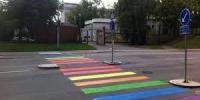
Swedish lesbian, gay, bisexual and transgender (LGBT) rights advocates offered their colorful stance on Russia's controversial anti-gay legislation over the weekend.
In her curatorial project Making Way, Ruth Simbao brought together works that complicated the idea of globalization’s effect on African nations, especially the idea that the new phase would usher in an almost frictionless movement of labor and capital across borders. Works by artists like Athi-Patra Ruga reflected on questions of how bodies moved through settler colonialist spaces.
Play Safe is a documentary film series created and directed by NYU alum Eddie Einbinder. The film, much of which now appears for free on YouTube, was originally released in 2013 after being filmed between 2011 and 2012. It debuted at the International Harm Reduction conference in Vilnius, Lithuania in 2013.
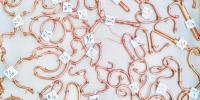
According to the World Health Organization, China is home to two-thirds of the world's women who wear IUD devices. This is a form of contraception that was developed after World War II, and in essence, comes from discrimination against women. In 2014, artist Zhou Wenjing made a work of IEDs, which was recently exhibited in Beijing.
A village shop in Coniston is stocked by local producers with everything from farm meat and vegetables to paintings and knitted goods. The produce is all homemade and brought in by local suppliers. Customers are invited to buy goods in the shop for an 'honest' price, there are guideline price tags attached to the items by the producer but customers are expected to pay what they consider an honest, suitable price for the item.
Art of the Umbrella movement refers to artistic works created as part of the Umbrella Movement in Hong Kong which demanded democracy in the election of the territory's top leader. Most of the physical works of art are located within the three main protest sites of Admiralty, Causeway Bay and Mong Kok.
'Learning To Love You More' is a digital and physical presentation of artistic responses from the general public. These "assignments" were facilitated under the creative direction of Harrell Fletcher and Miranda July, managed on a website by designed and curated by Yuri Ono. In 2010, the San Fransisco Museum of Modern Art acquired the website to persevere it as an archive.
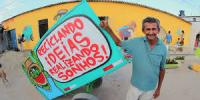
With the intention of recognizing the work of the Latin American carreteros (garbage pickers) that collect recyclable materials in wheel carts, and increase environmental consciousness, artist Mundano created “Pimp My Carroça"
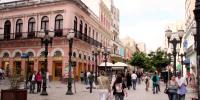
In the 1970s, Jaime Lerner, the former mayor of Curitiba, Brazil, transformed six blocks of the main downtown shopping street into a pedestrian zone in 1972, despite fierce objections from the merchants. He quickly accomplished this change in just three days by installing paving, lighting, planters, and furniture. The once-resistant merchants were impressed by the increase in their business and soon demanded an expansion of the traffic-free district.
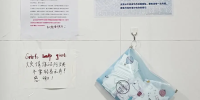
HONG KONG — It started when a single box of free sanitary pads appeared in a middle school classroom in October. Then a plastic container with pads was attached to the walls of four bathrooms in a university in Shanghai. By Monday, boxes and bags of individually wrapped pads had popped up outside bathrooms in at least 338 schools and colleges across China. Each carried a version of the same instructions: “Take one, then put one back later.
You could hear their chants from the White House.
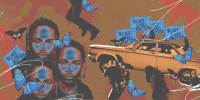
On June 6, hundreds of activists and protesters gathered on Black Lives Matter Plaza, a two-block section on 16th Street in Washington D.C. that was renamed amid BLM protests.
On March 21, just days after eight people, including six women of Asian descent, were killed in the Atlanta-area shootings, thousands gathered at Columbus Park in Manhattan for a rally against anti-Asian violence. Activists took turns addressing the surge in hate crimes and hate incidents toward the Asian American and Pacific Islander (AAPI) community, when an 8-year-old stepped onto the stage. “Stop the hatred!” Chance yelled into the mic.
World Microphone (世界麦克风) is an organization created by students (most of them are Chinese) located in London. The organization has an account in RED, which is a popular social media in China. It often holds interviews and movements on the street in London, talking about world culture, food, and travel. Then, it makes short videos based on these interviews and movements and posts the videos on RED.
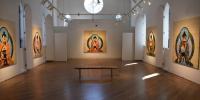
This is a series of paintings reflecting the struggle and sacrifices made by the Tibetan people for independence. The author is Tenzing Rigdol, who is a Tibetan and influenced a lot by the Dalai Lama and traditional Tibetan culture. The paintings are full of Tibetan cultural elements. For instance, the characters created in the paintings are Tibetan monks, who are the typical representatives of their culture.
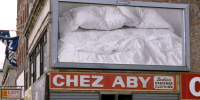
In May 1992, a series of 24 billboards displaying an identical image began appearing throughout New York City. They featured a giant close-up black-and-white photograph, without text, of a rumpled bed, pillows still indented from the heads that had rested there.
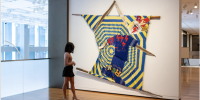
Natalie Ball’s work challenges dominant stories of Native American identities, taking to task the historical and visual legacies that misrepresent what it means to be “Indian.” She dives deeply into Indigenous histories and forms of knowledge, the use of language, and a wide range of materials—including animal hides, clothing, and synthetic hair—to create a new narrative around Indigenous experiences and identities.