The Amplification Project: Digital Archive for Forced Migration, Contemporary Art, and Action (https://theamplificationproject.org) is a crowdsourced community digital archive aiming to raise the visibility of art and cultural productions inspired, influenced, or affected by forced migration and refugeehood.
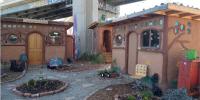
Members of three organizations – Artists Building Communities, Essential Food and Medicine, and Living Earth Structures – have built a kitchen, clinic, free store, stage, toilet, oven, and shower with and for a homeless community near Wood Street in West Oakland.
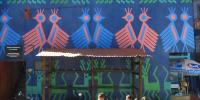
Nestled on the banks of Lake Atitlán in Guatemala, Santa Catarina Palopó is a small town brimming with vibrant colors and stunning natural views. Despite its natural beauty and cultural heritage, the community struggled with economic development and poverty for years until they had the opportunity to harness the power of art and transform the town.
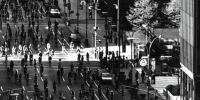
On April 7, 1973, some 400 cyclists chanting “Bikes don’t pollute” rode through midtown Manhattan in a “Bike-In” that called for separate lanes to encourage bicycling and provide safety on city streets.
In March of 2022, JR, with the help of 100 volunteers, unfurled the portrait of five-year-old, Ukrainian refugee Valeriia in Lviv, Ukraine. Leaving Ukraine, JR saw firsthand how difficult it was for women and children to get to safety due to long queues at the border. In response, he released two NFTs of Valeriia as part of his solidarity project titled: Can Art Change the War?
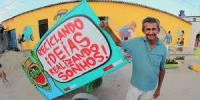
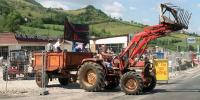
With the intention of recognizing the work of the Latin American carreteros (garbage pickers) that collect recyclable materials in wheel carts, and increase environmental consciousness, artist Mundano created “Pimp My Carroça"
To call attention to bullying, the Singapore Coalition Against Bullying for Children and Youth has released a video that gets shorter each time it is viewed.
Hosted on a site called Share It To The End, the short animated video depicts a boy getting bullied at school and telling us he always feels alone and doesn’t feel safe anywhere.
"Politaoke is non-partisan political karaoke project in which participants can respeak real contemporary political speeches from local, national and international politicians. Now you too can deliver the great rhetoric filled speeches of today’s most important politicians in this audience participation performance! Just come to a show, select a speech and take the mic when your name is called.
"To that end, in the Spring of 2014 we launched the Chasing Ice Ohio Tour in an attempt to use the film to shift the political conversation around climate change. As a society, for us to address climate change properly, we need our leaders in Washington to stop debating about whether or not it is actually happening and start taking action.
From Creative Time, Social Practice Archive: Produced by the Windsor, Canada-based collective Broken City Lab—an artist-led interdisciplinary research group—Cross-Border Communication was a performative public art project that took place in November 2009 between the cities of Windsor and Detroit, which are separated by the Detroit River. For three nights, Broken City Lab projected a series of messages across the river which were visible in Detroit.
In 2009, the dissident artist created a work to honour the thousands of children who died in the Sichuan earthquake. He recalls how the project, Remembering, angered China’s rulers – and changed his career for ever
This is an edited extract from The Start podcast
When Behnaz Babazadeh was young, her family moved from Afghanistan to the US. She loved almost everything about her new home — especially America’s amazing selection of candy — but she also loved wearing her familiar pink-flowered headscarf, which she’d grown used to wearing as part of her school uniform in her old home.
In May 2020, a team of artists, activists, folklorists, and people who lost loved ones to Covid-19 came together to make monthly memorial sites in New York City to remember victims of the Covid-19 pandemic. They continued installing memorials around New York City every month during the summer of 2020.
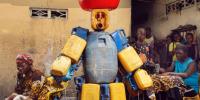
“So dramatic, so strong, so visual,” artist Stéphan Gladieu said of his first encounter with the revival of an ancestral folk art movement in Kinshasa, Democratic Republic of Congo. Kinshasa is the capital of Congo but also one of the many places American and European countries send their waste.
At first, you don’t know what you’re looking at. A gray expanse of uneven geometry surrounded by undulating brown. Shift your perspective a bit and it might be a close-up of a distressed textile, with subtle hues and textures surfacing as your eyes adjust.
And then the horizon comes into focus. Now you know where you are. In the distance are the classic jutting buttes of Monument Valley, familiar to anyone who’s ever seen a John Ford Western.
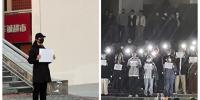
Direct Cause: The event that on November 24, several people died in a fire in a residential building in Urumqi, Xinjiang province, due to delayed disaster relief due to the COVID-19 lockdown policy in China, and the indifference of the government towards the incident and the block of message.
Primary Cause: The three-year-long lockdown policy and the government’s excessive control over speech and thought led to social discontent.
José Bové, a sheep farmer/activist in Aveyron in the Midi-Pyrénées region of France, is a modern day Astérix, a mythical Gaul who drubbed foreign intruders centuries ago. In Bové's case, the intruder was McDonald's, the American fast food chain.
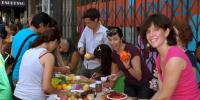
"Fallen Fruit invites the public to bring homegrown or street-picked fruit and collaborate with us in making a collective fruit jams. Working without recipes, we ask people to sit with others they do not already know and negotiate what kind of jam to make: if I have lemons and you have figs, we’d make lemon fig jam (with lavender). Each jam is a social experiment.
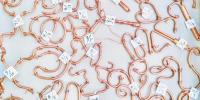
According to the World Health Organization, China is home to two-thirds of the world's women who wear IUD devices. This is a form of contraception that was developed after World War II, and in essence, comes from discrimination against women. In 2014, artist Zhou Wenjing made a work of IEDs, which was recently exhibited in Beijing.
For the past five years, we’ve screened SIMA juried films in communities and classrooms across six continents and witnessed an increasing demand to use the inspirational force of documentary filmmaking to build a global digital community around today’s most pressing issues.
SomeGoodNews is a Youtube channel started by actor John Krasinski. The videos in the channels are aimed at discussing and sharing good news happening these days. The channel was set up as a way to help alleviate the mental health strain the COVID-19 epidemic has had on many people.
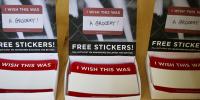
I Wish This Was is a participatory public art project that explores the process of civic engagement. Inspired by the limited dynamics of community meetings where the loudest people ruled, as well as the volume of abandoned buildings, Chang posted thousands of “I wish this was ___” stickers on vacant buildings across New Orleans to invite residents to easily share their hopes for these spaces.
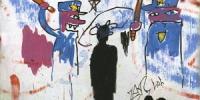
Jean-Michel Basquiat was an American artist who rose to fame in the 1980s. He is known for his graffiti-inspired paintings that often engage with issues surrounding racism and inequality. Basquiat's work challenged the status quo and incited a powerful social commentary on the struggles of marginalised social groups.
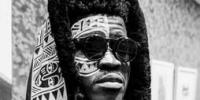
The story of an artist. Laolu Senbanjo grew up surrounded by the culture and mythology of the Yoruba, an ethnic group from the southwest of Nigeria, but he never imagined how it would influence the artist he is today. After a career as a human rights attorney, Senbanjo moved to New York City to pursue art full time. “With my art, I like to tell stories, I like to start a conversation,” says Senbanjo, but life as an artist in New York was tough.
"The Red Power Movement of the 1960s and 70s was a time of profound social change and progress for American Indians in the United States and Canada. In her outspokenness about the injustices facing Indigenous people, Buffy Sainte-Marie also sang for peace, the environment, women and children—believing that art can have impact and make a difference.